Order: Anseriformes, Family: Anatidae
Common Merganser (Goosander)
Mergus merganser
A large, sleek duck with a crestless or shaggy-crested head and a long, thin, serrated red bill specially adapted for catching fish.
Explore Common Merganser (Goosander) in the encyclopedia →Identify your own birds.
Get a report just like this from any photo or call, free.
Plumage & appearance
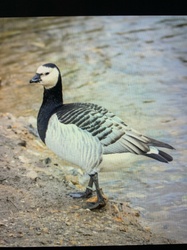
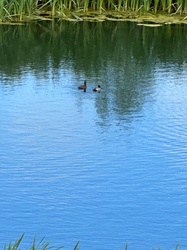
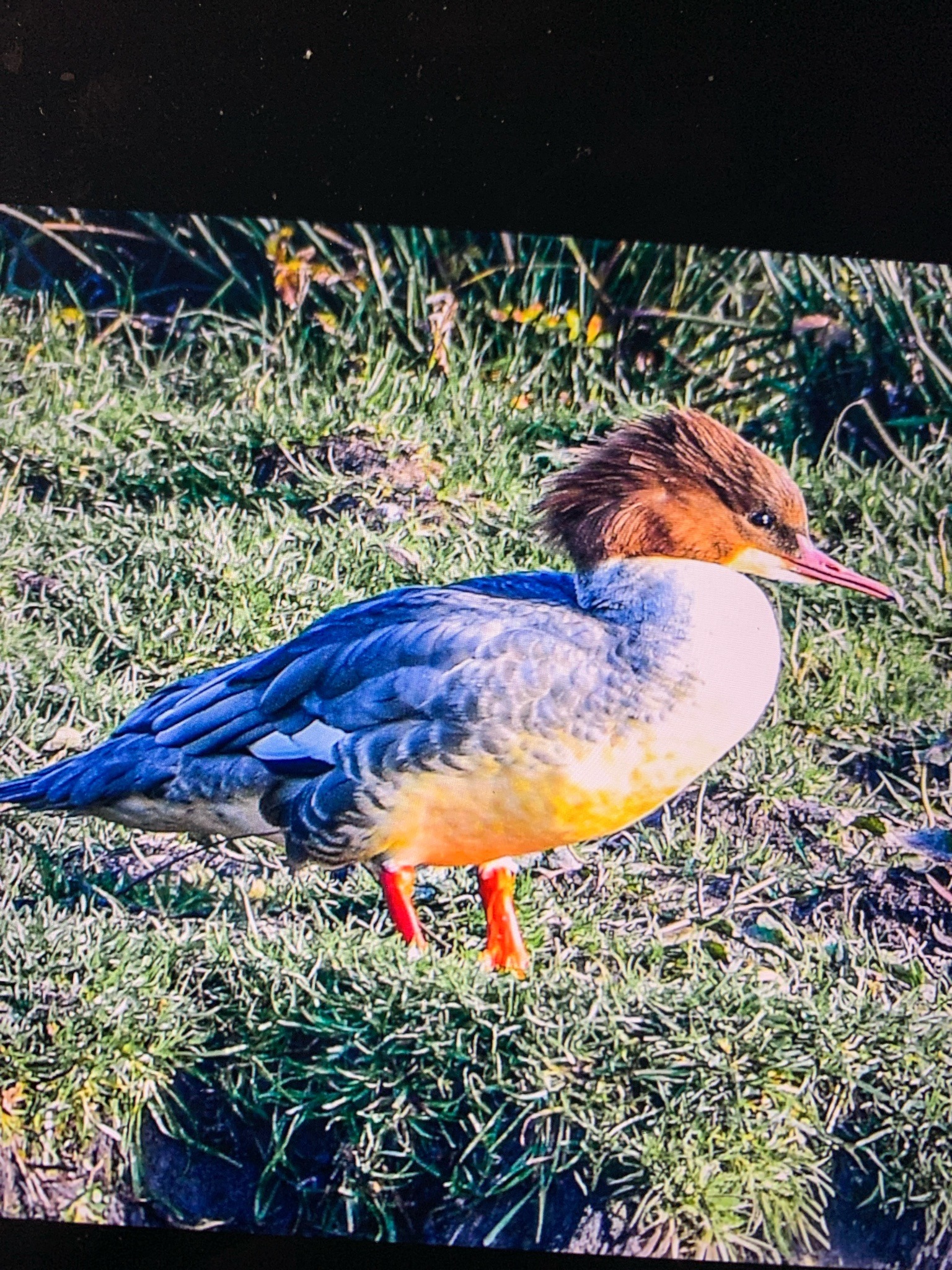
Adult males have a dark green head, white body with delicate pinkish flush on the breast, black back, and bright red bill. Females and juveniles (pictured) have a rich cinnamon-brown shaggy head, grey back, white throat, and greyish-white underparts.
Key field marks
Large size, streamlined shape, thin red serrated bill, and contrasting plumage (green head and white body in males; cinnamon head and grey body in females).
Size & weight
Length: 58-70 cm (23-28 in), Wingspan: 78-97 cm (31-38 in), Weight: 900-2100 g (2-4.6 lbs)
Voice — call & song
Usually silent, but males give a low, grating croak during courtship, and females emit a harsh, hoarse quack or karr when alarmed.
Diet & foraging
Primarily fish, but also consumes aquatic insects, crustaceans, frogs, small mammals, and occasionally plants.
Habitat
Clear, large freshwater lakes, rivers, and streams surrounded by forests, occasionally found on sheltered coastal waters in winter.
Migration & movement
Partial migrant. Northern populations migrate south to ice-free waters, while southern populations are year-round residents.
Nesting & breeding
Nests in natural tree cavities, rock crevices, or large nest boxes, often close to water. Clutch size ranges from 6 to 17 eggs.
Similar species
Red-breasted Merganser, which is smaller, has a more pronounced wispy crest, and a narrower bill. Females have less sharply defined white throat.
Ecological significance
Acts as an apex predator in many freshwater aquatic ecosystems, helping to regulate fish populations and maintain aquatic health.
Conservation status
Least Concern (IUCN), with stable or increasing population trends.
Observation tips
Look for them diving in clear lakes and rushing rivers. They can be shary, so use binoculars and keep a respectful distance when they are hauled out on banks.
Interesting facts
Common Mergansers have serrated edges on their bills called 'dentes' which help them grip slippery fish securely. Ducklings will jump from high tree cavity nests to the ground just a day after hatching.
More like this