Order: Passeriformes, Family: Fringillidae
American Goldfinch
Spinus tristis
A small, active seed-eating finch known for the brilliant yellow and black breeding plumage of the male and its undulating flight pattern. They are gregarious birds, often seen in flocks.
Explore American Goldfinch in the encyclopedia →Identify your own birds.
Get a report just like this from any photo or call, free.
Plumage & appearance
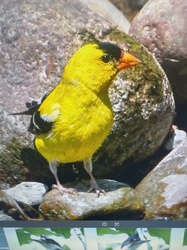
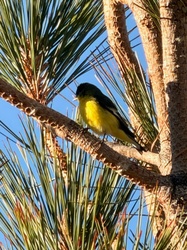
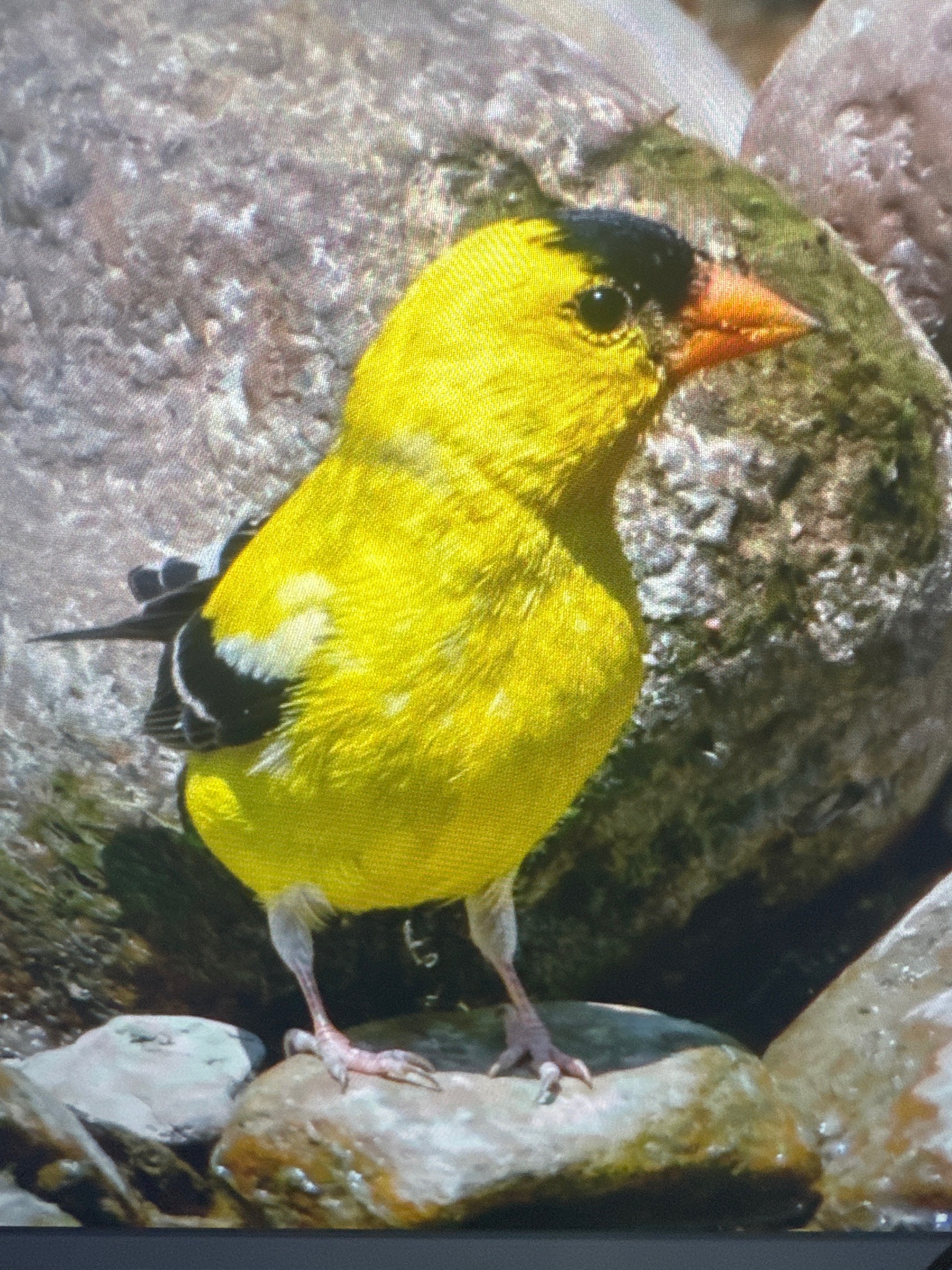
Adult males in breeding plumage are bright lemon-yellow with a jet-black cap, black wings with white wing bars, and white under-tail coverts. Females and wintering birds are a much duller olive-brown with yellowish underparts and dark wings retaining white bars. Males in winter lose their black cap, becoming more brownish-olive like the females.
Key field marks
Bright yellow body (in breeding males), distinct black cap, black wings with prominent white wing bars, and a conical orange bill.
Size & weight
Length: 11-14 cm (4.3-5.5 in), Wingspan: 19-22 cm (7.5-8.7 in), Weight: 11-20 g (0.4-0.7 oz)
Voice — call & song
A complex series of musical warbles, twirps, and chattering notes, often incorporating a distinctive 'per-chick-o-ree' call given in flight.
Diet & foraging
Primarily granivorous, eating seeds from weeds, grasses, trees, and wildflowers such as thistles, dandelions, sunflowers, and asters. Occasionally consumes insects and tree sap during breeding season.
Habitat
Weedy fields, cultivated lands, floodplains, roadsides, orchards, and open suburban areas where shrubs and deciduous trees are present.
Migration & movement
Short to medium-distance migrant. They are partial migrants; northern populations move south for the winter, while southern populations are largely resident.
Nesting & breeding
Late nesters, typically starting in late June or July to coincide with the peak availability of thistle down and weed seeds. Constructs a tightly woven, cup-shaped nest in the fork of a deciduous tree or shrub, lined with plant fibers and down. Lays 2 to 7 pale bluish-white eggs incubated solely by the female.
Similar species
Lesser Goldfinch (smaller with a dark back in males), Pine Siskin (streaked brown plumage), and Yellow Warbler (entirely yellow with no black cap or wings, and a thin, insect-eating bill).
Ecological significance
Acts as an important seed disperser for various weed and wildflower species, particularly thistles and asters, and serves as a prey species for small raptors.
Conservation status
Least Concern, with stable populations.
Observation tips
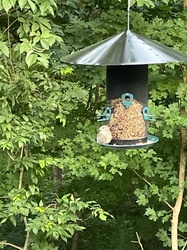
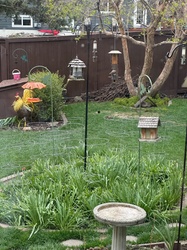
Attract them to backyards by providing nyjer (thistle) seed or sunflower seeds in tube feeders. Listen for their distinctive flight calls near overgrown fields and meadows.
Interesting facts
American Goldfinches are strictly vegetarian for almost their entire lives, feeding seeds even to their nestlings, which is unusual for songbirds. They are also one of the last North American songbirds to begin breeding each year.
More like this