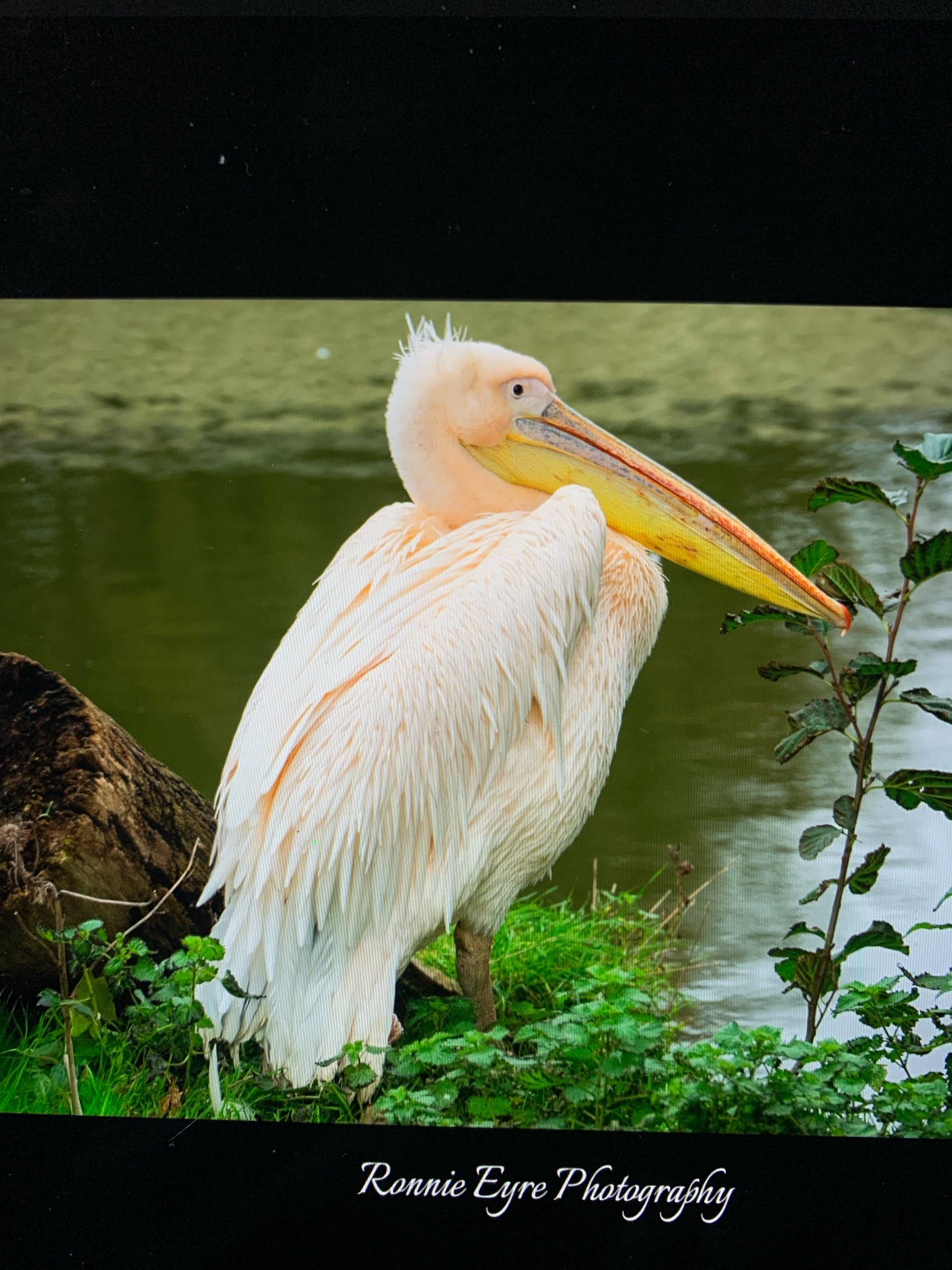
Order: Pelecaniformes, Family: Pelecanidae
Great White Pelican
Pelecanus onocrotalus
A massive water bird with a very long bill and a large throat pouch used for catching fish. They are social, graceful in flight, and often soar in flocks.
Explore Great White Pelican in the encyclopedia →Identify your own birds.
Get a report just like this from any photo or call, free.
Plumage & appearance
Adults have brilliant white plumage with a slight pinkish tinge during the breeding season. The primaries and secondaries are black. Juveniles are darker with brownish-grey plumage and brownish flight feathers.
Key field marks
Massive size, white body with contrasting black flight feathers, pinkish face skin, and a massive yellowish-pink bill with a large throat pouch.
Size & weight
Length: 140-180 cm (55-71 in), Wingspan: 226-360 cm (89-142 in), Weight: 9-15 kg (20-33 lbs)
Voice — call & song
Generally silent away from the breeding grounds, but emits low-pitched grunts, croaks, and groans at colonies.
Diet & foraging
Primarily fish, consuming up to a kilogram or more daily. They often forage cooperatively by forming a semicircle to drive fish into shallow water.
Habitat
Shallow freshwater lakes, swamps, deltas, and occasionally coastal lagoons and estuaries.
Migration & movement
Migratory in the northern parts of its range, wintering in Africa and southern Asia; resident in much of sub-Saharan Africa.
Nesting & breeding
Breeds colonially on islands in lakes or extensive reed beds. Constructs a crude mound of vegetation on the ground. Clutches usually contain 2-3 chalky white eggs.
Similar species
Australian Pelican (darker wings and pink bill), Dalmatian Pelican (larger, grayer, with curly head feathers and a silvery-grey bill).
Ecological significance
Acts as an apex predator in aquatic food webs, helping regulate fish populations and indicating overall wetland ecosystem health.
Conservation status
Least Concern, with stable to fluctuating population trends depending on the region.
Observation tips
Look for them near large, shallow lakes, deltas, and coastal wetlands. They are best observed early in the morning when they begin foraging.
Interesting facts
Despite their heavy look, pelicans are exceptionally light for their size because their bones are hollow and have internal air sacs to aid in buoyancy and flight.
More like this