Order: Pelecaniformes, Family: Pelecanidae
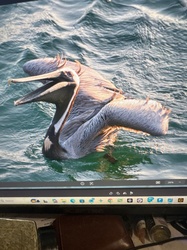
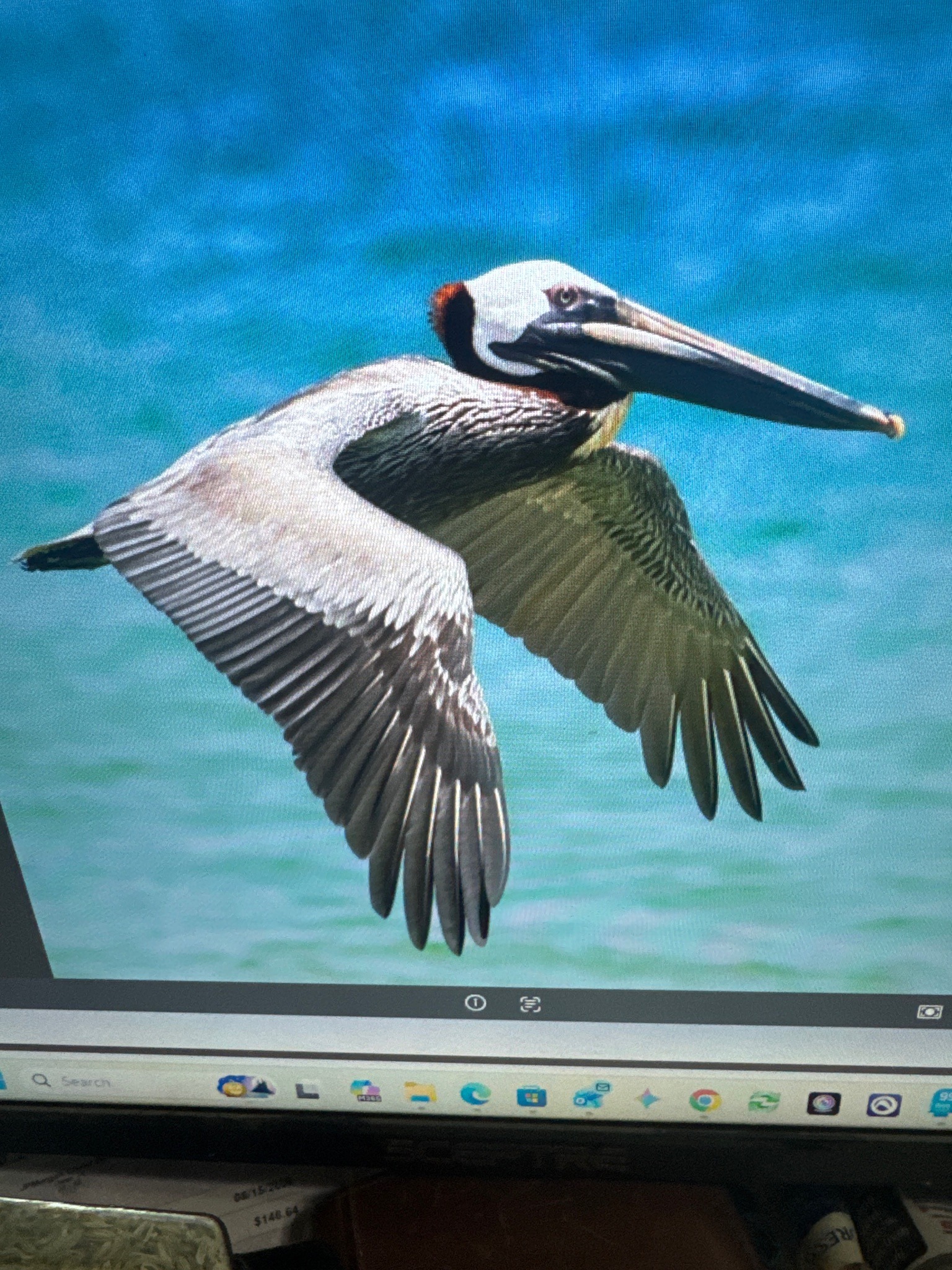
Brown Pelican
Pelecanus occidentalis
A large, dark waterbird with a long bill and expandable throat pouch used for catching fish. Known for its spectacular high-speed plunge-diving into the ocean.
Explore Brown Pelican in the encyclopedia →Identify your own birds.
Get a report just like this from any photo or call, free.
Plumage & appearance
Adults in breeding plumage feature a white head with a yellowish crown, a dark velvety hindneck, a grayish-brown body, and a reddish-brown to black pouch. Non-breeding adults have a white head and neck. Juveniles are mostly brown with grayish-brown heads and lighter bellies.
Key field marks
Dark overall body, massive bill with a dark pouch, white head (in adults), and the unique habit of plunge-diving headfirst into the water from the air.
Size & weight
Length: 105-137 cm (41-54 in), Wingspan: 203-228 cm (80-90 in), Weight: 2.75-5.5 kg (6-12 lbs).
Voice — call & song
Generally silent, but adults produce low croaking or grunting sounds at the nest, while nestlings emit loud squawks when begging for food.
Diet & foraging
Primarily fish, especially schooling species like menhaden, herring, and anchovies, caught via plunge-diving from the air.
Habitat
Marine coastal environments, estuaries, mangrove swamps, and occasionally large inland saltwater lakes; rarely found far inland or on freshwater.
Migration & movement
Partial migrant or nomadic; northern breeding populations move south for the winter, while tropical populations are largely sedentary.
Nesting & breeding
Breeds in colonies on remote islands, cliffs, or mangroves. Constructs a bulky nest of sticks and weeds on the ground or in shrubs. Lays 2 to 3 chalky white eggs incubated by both parents.
Similar species
American White Pelican, which is much larger, entirely white with black wingtips, and feeds by scooping water while swimming rather than plunge-diving.
Ecological significance
Acts as an apex marine predator indicator species, helping monitor the health of coastal fish stocks and marine ecosystems.
Conservation status
Least Concern, with stable or increasing populations following recovery from historical pesticide (DDT) declines.
Observation tips
Look for them soaring gracefully in V-formations just above the waves along ocean beaches, piers, and bays.
Interesting facts
Unlike other pelicans, the Brown Pelican is the only species that dives from the air into the water to catch its prey, protected by a network of subcutaneous air sacs that cushion the impact.
More like this