Order: Pelecaniformes; Family: Threskiornithidae
Giant Ibis
Thaumatibis gigantea
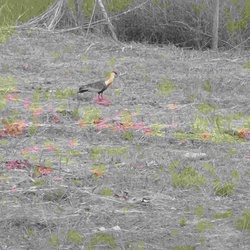
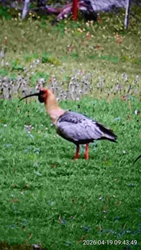
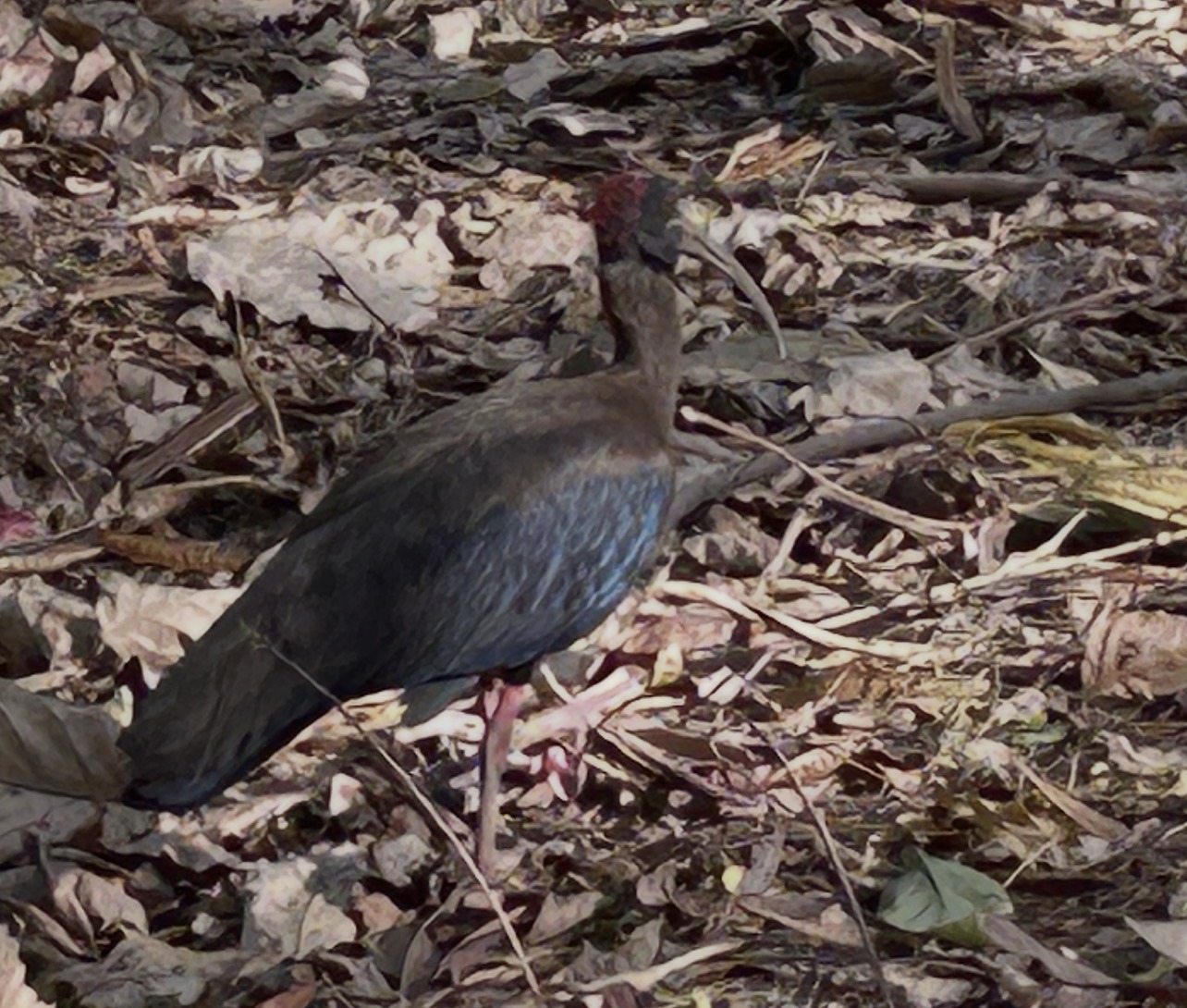
The world's largest ibis, recognized by its massive size, long down-curved bill, and bald head. It is a shy, terrestrial bird that forages in forest pools and marshes.
Explore Giant Ibis in the encyclopedia →Identify your own birds.
Get a report just like this from any photo or call, free.
Plumage & appearance
Adults have dark greyish-brown plumage with a greenish-bronze sheen on upperparts. The head and upper neck are bare and greyish, showing dark bands on the nape. Juveniles are duller with short feathers on the head and a smaller bill.
Key field marks
Massive size, bald grey head with black stripes on the nape, and a long, heavy, downward-curving bill.
Size & weight
Length: 102–106 cm (40–42 in); Weight: approximately 4.2 kg (9.3 lbs).
Voice — call & song
A loud, haunting, ringing 'a-leur a-leur' or 'a-ga-loh', typically heard at dawn or dusk.
Diet & foraging
Feeds on aquatic invertebrates, crustaceans, small amphibians, reptiles, and seeds by probing the mud with its long bill.
Habitat
Lowland deciduous dipterocarp forests with scattered seasonal wetlands and marshes.
Migration & movement
Non-migratory/Resident, though it may move locally in response to water availability.
Nesting & breeding
Nests high in large trees (often Dipterocarpus trees) during the rainy season. Usually lays two eggs; breeding pairs are highly sensitive to human presence.
Similar species
White-shouldered Ibis (Pseudibis davisoni), which is significantly smaller and has a distinct white patch on the shoulder and a pale collar.
Ecological significance
As a large predator of invertebrates and small vertebrates in seasonal wetlands, it plays a key role in the nutrient cycling of dipterocarp forest ecosystems.
Conservation status
Critically Endangered (IUCN Red List); population is extremely small and declining due to habitat loss and disturbance.
Observation tips
They are extremely wary of humans. Best observed from hides near 'trapaengs' (seasonal forest pools) in the Northern Plains of Cambodia at dawn or dusk.
Interesting facts
The Giant Ibis is the national bird of Cambodia. It was once thought to be extinct until it was rediscovered in the late 20th century.
More like this