Order: Psittaciformes, Family: Cacatuidae
Cockatiel
Nymphicus hollandicus
A small, crested parrot known for its expressive yellow crest, slender tail, and cheerful disposition. Highly social and intelligent.
Explore Cockatiel in the encyclopedia →Identify your own birds.
Get a report just like this from any photo or call, free.
Plumage & appearance
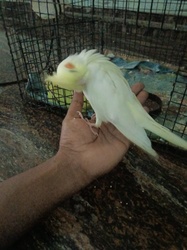
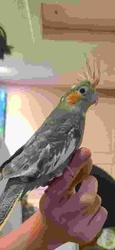
Wild-type cockatiels are primarily grey with prominent white wing patches, a yellow face, and orange ear-patches. Males generally have brighter yellow faces and more distinct orange patches, while females and juveniles often have barred tails and duller faces. Color mutations such as lutino (yellow/white), pied, and pearl are very common in captivity.
Key field marks
Erectile yellow crest, prominent orange ear patches, long tapered tail, and grey body (in wild-type).
Size & weight
Length: 30-33 cm (12-13 inches), Wingspan: approx. 35 cm, Weight: 75-125 grams.
Voice — call & song
A variety of chatters, cheerful whistles, and a distinctive loud, piercing alarm call.
Diet & foraging
Primarily seeds, grains, fruits, and vegetation in the wild; pellet-based diets, seeds, and fresh vegetables when kept as pets.
Habitat
Arid and semi-arid Australian bushlands, scrublands, and open woodlands, almost always close to water.
Migration & movement
Nomadic rather than truly migratory, moving in flocks following water and food supplies in response to erratic rainfall.
Nesting & breeding
Nests in tree hollows near water; clutch size is typically 4-6 eggs, incubated by both parents who also share chick-rearing duties.
Similar species
Belongs to the cockatoo family (Cacatuidae); easily distinguished from other cockatoos by its much smaller size and long tail feathers.
Ecological significance
Acts as a seed disperser and plays a part in the local ecosystem of its Australian range, though heavily impacted by human cultivation.
Conservation status
Least Concern (IUCN), with stable wild populations.
Observation tips
In the wild, look near water sources in the Australian outback during early morning or late afternoon. In captivity, observe gentle interactions and enjoy their whistling capabilities.
Interesting facts
Cockatiels are the smallest members of the cockatoo family and can express their emotions—like excitement or fear—through the position of their head crest.
More like this