Order: Psittaciformes, Family: Cacatuidae
Cockatiel
Nymphicus hollandicus
A small, slender parrot with a prominent, expressive head crest and a long tail. Known for being social, gentle, and affectionate.
Explore Cockatiel in the encyclopedia →Identify your own birds.
Get a report just like this from any photo or call, free.
Plumage & appearance
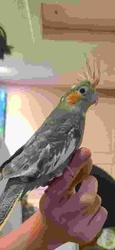
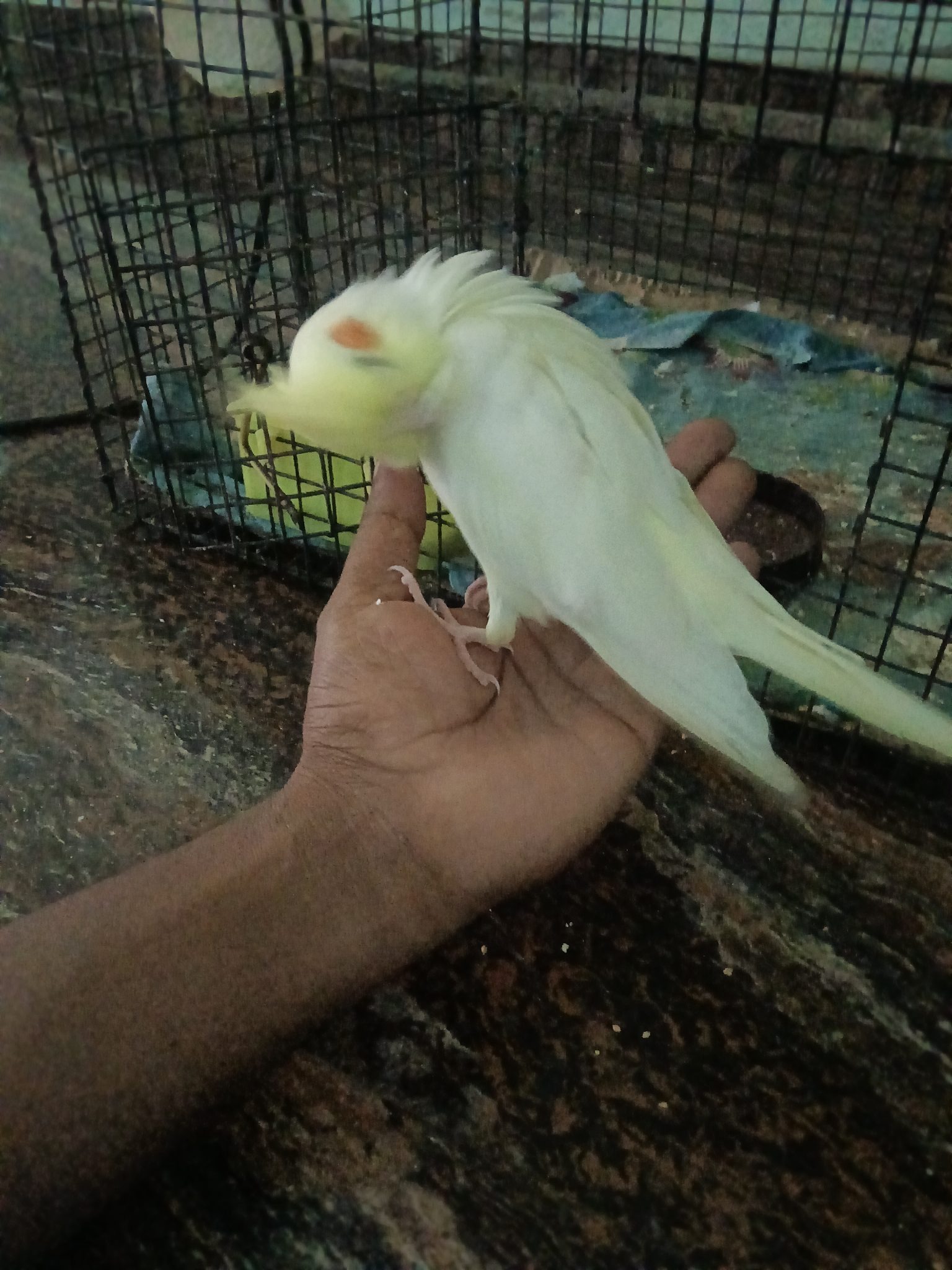
Wild-type cockatiel plumage is predominantly grey with prominent white wing patches, a yellow crest and face, and orange cheek patches. In this specific Lutino color mutation, the melanin is absent, resulting in a pale yellow to white body, an all-yellow head and crest, and characteristic bright orange cheek patches.
Key field marks
Prominent yellow-to-white erectile crest, long tapering tail, and distinct orange ear-coverts (cheek patches).
Size & weight
Length: 30 to 33 cm (12 to 13 inches) including the long tail. Wingspan: Around 30 to 35 cm. Weight: 75 to 125 grams.
Voice — call & song
Comprises a variety of sharp contact calls, cheerful whistles, and sometimes mimicked tunes, especially in males.
Diet & foraging
Primarily granivorous, feeding on grass seeds, grains, and occasionally fruits and insects. In captivity, a balanced diet of seeds, pellets, and fresh vegetables is recommended.
Habitat
Arid and semi-arid open country, scrublands, farmlands, and areas near water sources.
Migration & movement
Nomadic; they move constantly in search of food and water in response to seasonal rainfall patterns.
Nesting & breeding
Nests in hollows of mature trees, usually near water. Clutch size is typically 4 to 7 eggs, incubated by both parents for about 18 to 21 days.
Similar species
Other small cockatoos or parakeets, but easily distinguished by its distinct erectile crest and prominent orange cheek patches.
Ecological significance
Acts as a seed disperser and forager in its native Australian shrublands and grasslands, influencing local plant populations.
Conservation status
Least Concern (IUCN), with stable wild populations.
Observation tips
In the wild, look for them near water sources in arid Australian outback regions during early morning or late afternoon. In captivity, they are easily observed interacting with handlers.
Interesting facts
The cockatiel is the smallest member of the cockatoo family and is renowned for its ability to express emotions through its crest position—a flat crest indicates anger or fear, while a fully upright crest denotes curiosity or excitement.
More like this