Order: Psittaciformes; Family: Cacatuidae
Cockatiel
Nymphicus hollandicus
A small, slender parrot with a prominent erectile crest and long tail. It is highly social and often seen in pairs or small flocks.
Explore Cockatiel in the encyclopedia →Identify your own birds.
Get a report just like this from any photo or call, free.
Plumage & appearance
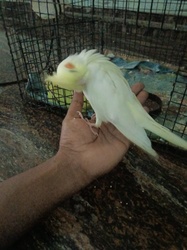
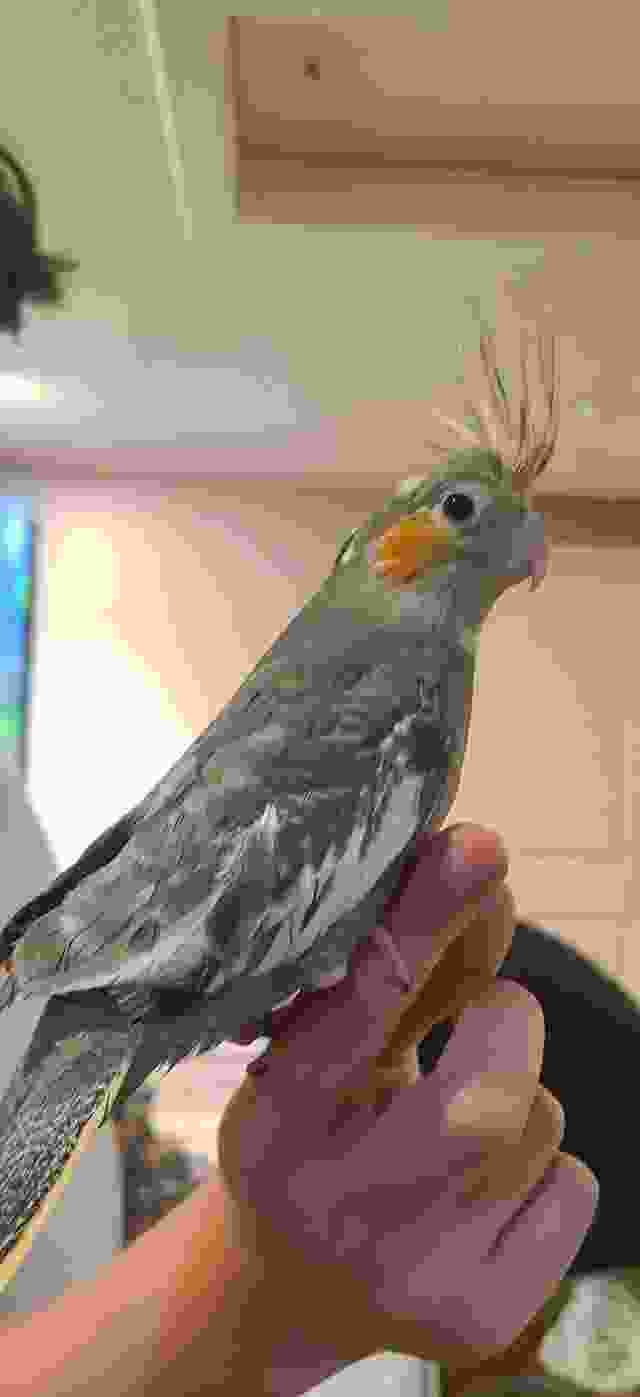
Adult males have bright yellow faces and prominent orange cheek patches. Females and juveniles have more muted grey faces, duller orange patches, and barred tail feathers. Selective breeding has produced many color mutations like lutino and pied.
Key field marks
Prominent crest (erect when excited), long pointed tail, and orange circular cheek patches.
Size & weight
Length: 30-33 cm (12-13 in); Wingspan: 30-35 cm; Weight: 80-100 grams.
Voice — call & song
A melodic, rising whistle and various chirps. Males are proficient at whistling tunes and mimicking sounds.
Diet & foraging
Mainly seeds (grasses), grains, berries, and occasionally insects found while foraging on the ground.
Habitat
Arid and semi-arid regions, open grasslands, scrublands, and bushlands, usually near water sources.
Migration & movement
Nomadic; they travel in flocks to find water and food sources based on seasonal rains.
Nesting & breeding
Hole-nesters, typically using hollows in Eucalyptus trees near water. Clutch size is generally 4-7 eggs.
Similar species
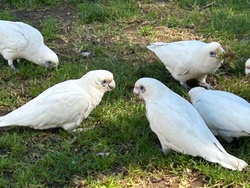
Often confused with small Cockatoos, but distinguished by their smaller size, long tail, and unique orange cheek patches.
Ecological significance
Acts as a seed disperser and is a prey species for various birds of prey in the Australian outback.
Conservation status
Least Concern (Population stable)
Observation tips
In the wild, look near watering holes at dawn and dusk. In captivity, they are recognized by their whistling and mimicry.
Interesting facts
The cockatiel is the only member of the genus Nymphicus and is the smallest of the cockatoo family. They are the second most popular caged bird globally after the budgerigar.
More like this