Order: Psittaciformes, Family: Cacatuidae
Cockatiel
Nymphicus hollandicus
A small, elegant cockatoo known for its expressive upright yellow crest, slender long tail, and gentle, sociable demeanor.
Explore Cockatiel in the encyclopedia →Identify your own birds.
Get a report just like this from any photo or call, free.
Plumage & appearance
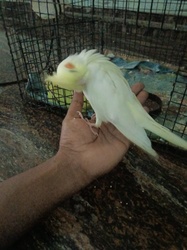
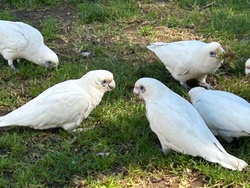
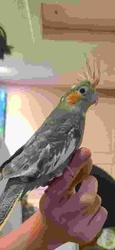
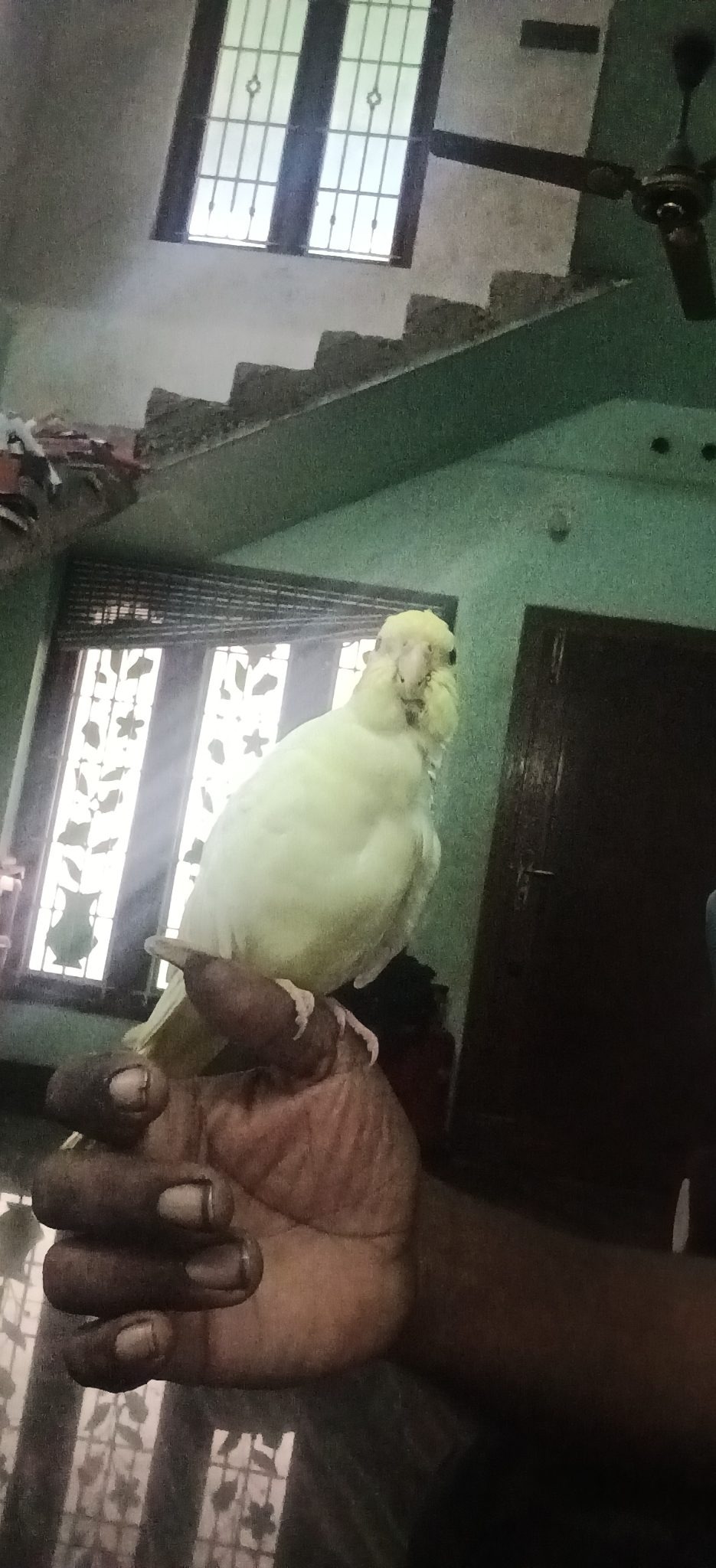
Wild-type cockatiels feature primarily grey plumage with prominent white wing patches and bright yellow crests and faces, accompanied by orange ear patches. Sexual dimorphism is often present in wild types (females and juveniles have barred undersides of the tail feathers and duller yellow faces). This specific individual exhibits a Lutino mutation, characterized by a complete loss of dark melanin pigment, resulting in a creamy yellow to white body, yellow head and crest, and characteristic orange cheek patches.
Key field marks
Prominent upright crest, long tapered tail feathers, and distinct cheek patches.
Size & weight
Length: 30 to 33 cm (12 to 13 inches), Wingspan: approx. 35 to 40 cm, Weight: 75 to 125 grams.
Voice — call & song
Comprises a variety of distinct contact whistles, chattering, melodic chirps, and mimicry of household sounds.
Diet & foraging
In captivity, a balanced diet of high-quality pellets, seeds, fresh leafy greens, and safe vegetables. In the wild, they primarily forage on the ground for grass seeds, grains, and occasionally fruit.
Habitat
Native to Australian scrublands, woodlands, and bushlands near water sources; commonly kept as an indoor companion bird in human homes.
Migration & movement
Nomadic in the wild, following seasonal availability of food and water sources across interior Australia.
Nesting & breeding
In the wild, they nest in hollows of mature trees, usually near water. Both parents share incubation duties of the 4 to 7 white eggs and rear the chicks.
Similar species
Other small parrots or cockatoos, but easily distinguished by the distinct slender crest, tail shape, and facial patches.
Ecological significance
In the wild, they act as seed dispersers and form an integral part of the Australian arid zone ecosystem, though domesticated individuals live strictly in human care.
Conservation status
Least Concern, with stable wild populations and abundant captive populations worldwide.
Observation tips
As a domestic pet in this context, observe gentle interaction, head bobbing, and body language such as crest positioning to gauge mood.
Interesting facts
Cockatiels are the smallest members of the cockatoo family (Cacatuidae). Their crests serve as a visual mood indicator, lying flat when frightened or angry, and held high when curious or excited.
User notes
home
More like this