Order: Psittaciformes, Family: Cacatuidae
Little Corella
Cacatua sanguinea
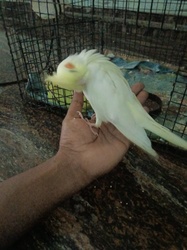
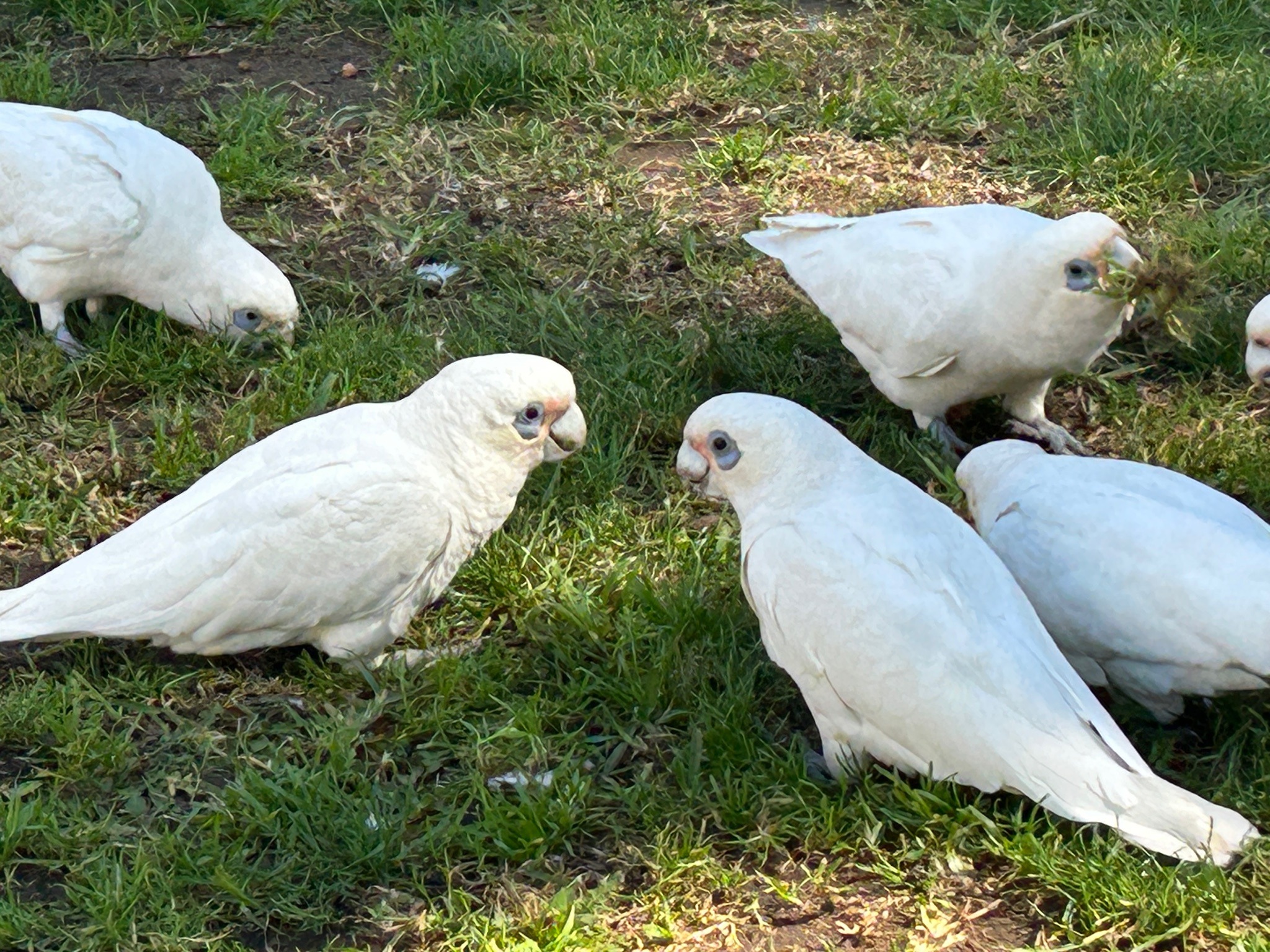
A medium-sized, all-white cockatoo with a short crest, pale blue orbital skin around the eyes, and a pale greyish-white bill. Known for being highly social, noisy, and often congregating in large flocks.
Explore Little Corella in the encyclopedia →Identify your own birds.
Get a report just like this from any photo or call, free.
Plumage & appearance
Predominantly white plumage with pale pinkish-salmon coloration on the lores (between the eye and bill). Underparts of the wings and tail may show a pale yellow wash. No significant dimorphism between sexes; juveniles have slightly duller plumage and smaller bills.
Key field marks
All-white body, short crest, pale blue bare skin around the eye, pale beak, and pinkish wash near the base of the bill.
Size & weight
Length: 35-41 cm; Wingspan: 75-90 cm; Weight: 300-550 g
Voice — call & song
A wide variety of loud, raucous screeches, high-pitched chatters, and nasal squawks given frequently while perching or flying.
Diet & foraging
Primarily granivorous, feeding on grass seeds, grains, roots, bulbs, fruits, and occasionally insects and larvae. Forages extensively on the ground.
Habitat
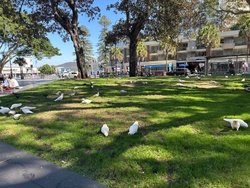
Open country, including grasslands, savannahs, agricultural lands, arid shrublands, and urban parks, usually close to water.
Migration & movement
Generally sedentary or nomadic, undertaking regional movements in response to food and water availability, particularly during droughts.
Nesting & breeding
Nests in tree hollows (usually eucalypts near water). Clutch size is typically 2-4 white eggs. Both parents share incubation and chick-rearing duties.
Similar species
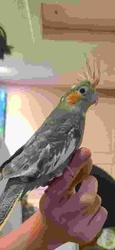
Sulphur-crested Cockatoo (larger with a prominent yellow crest and black bill) and Long-billed Corella (longer upper mandible and red band across the throat).
Ecological significance
Acts as a seed disperser and predator of agricultural insects, though large flocks can sometimes cause local overgrazing or crop damage.
Conservation status
Least Concern (LC) with a stable or increasing population trend.
Observation tips
Look and listen for large, noisy flocks gathered on open grasslands, sports fields, or in the canopy of eucalyptus trees, especially near water sources.
Interesting facts
Little Corellas are exceptionally playful and intelligent, known for spending hours soaring in strong winds just for fun, and they can form massive flocks numbering in the thousands.