Order: Accipitriformes, Family: Accipitridae
Red-tailed Hawk
Buteo jamaicensis
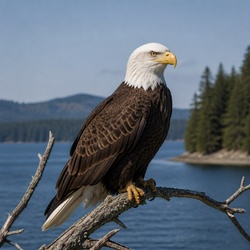
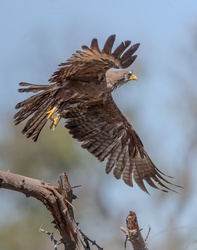
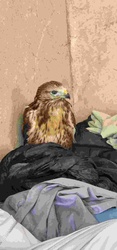
A large, bulky raptor with broad wings and a short, wide tail. Often seen perched on roadside poles or soaring in wide circles over open fields.
Explore Red-tailed Hawk in the encyclopedia →Identify your own birds.
Get a report just like this from any photo or call, free.
Plumage & appearance
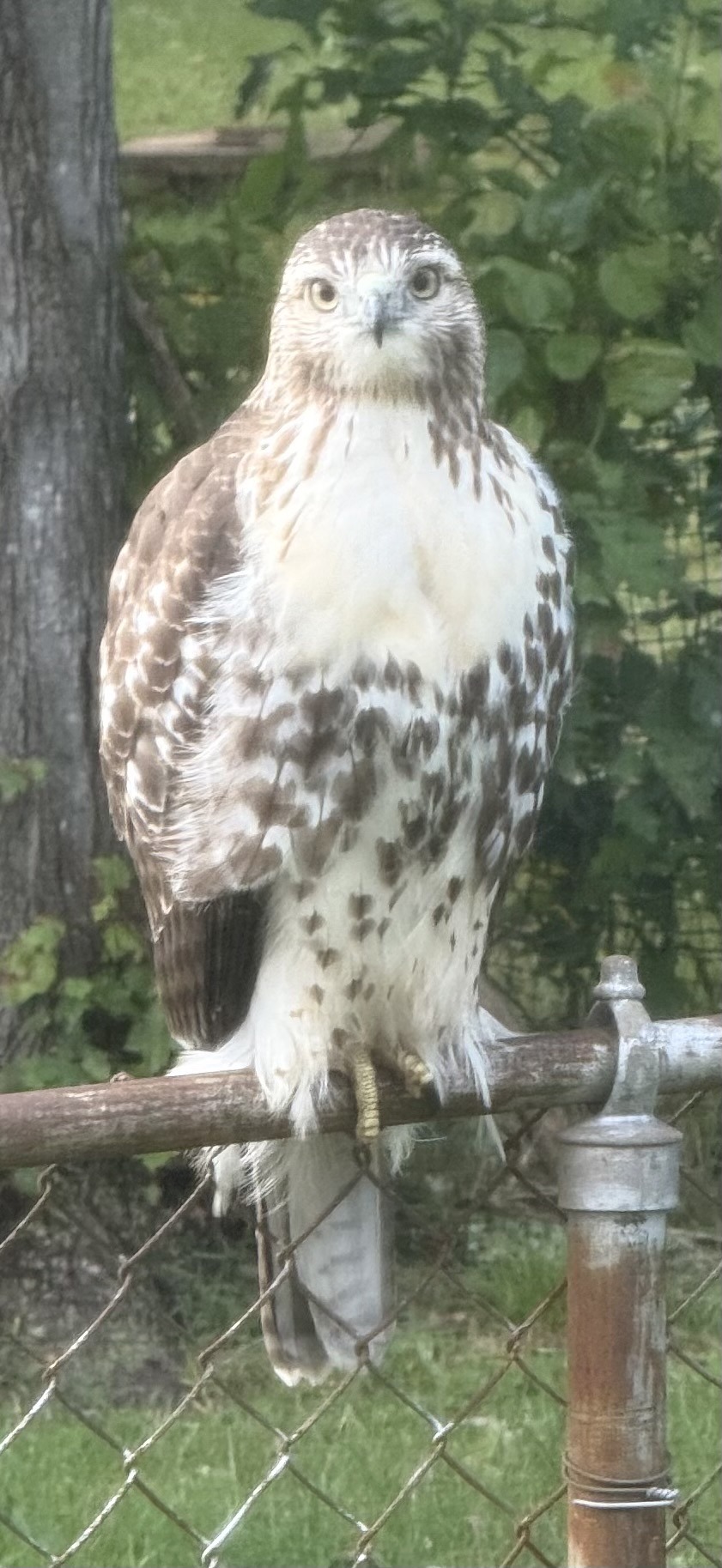
Adults typically have a rich brown back, pale underparts with a characteristic 'belly band' of streaking, and a brick-red tail. Juveniles lack the red tail, featuring a brown, finely banded tail instead, and often have heavier streaking on the breast. Sexes are similar in plumage, though females are significantly larger.
Key field marks
Broad rounded wings, short wide tail (red in adults), whitish underparts with a distinct dark band of spots across the belly, and pale scapular 'V' on the back when viewed from above.
Size & weight
Length: 45–65 cm (18–26 in), Wingspan: 105–141 cm (41–56 in), Weight: 690–1600 g (1.5–3.5 lbs).
Voice — call & song
A hoarse, raspy, descending scream that sounds like 'kee-ee-arr', which is frequently used in media to represent any soaring hawk or eagle.
Diet & foraging
Primarily small mammals like mice, voles, rabbits, and squirrels, but also consumes birds, reptiles, and amphibians. Forages by watching from an elevated perch and dropping down onto prey, or by hunting on the wing.
Habitat
Adapts to a wide variety of habitats including deserts, scrublands, grasslands, coniferous and deciduous forests, agricultural fields, and urban areas.
Migration & movement
Partial migrant. Northernmost breeders migrate south for the winter, while populations in the southern US and Central America are year-round residents.
Nesting & breeding
Builds large stick nests high up in tall trees or on cliff ledges. Usually lays 1 to 5 eggs per clutch. Both parents share incubation (lasting about 28 to 35 days) and feeding duties.
Similar species
Rough-legged Hawk (distinguished by feathered legs and dark belly patches) and Swainson's Hawk (slenderer with a darker bib). Immature Red-tailed Hawks can be confused with Ferruginous Hawks or other Buteos, but the shape and belly band are key.
Ecological significance
Acts as an apex predator in many ecosystems, helping to control populations of small mammals, rodents, and pests, thus maintaining ecological balance.
Conservation status
Least Concern, with stable or increasing populations.
Observation tips
Look for them perched on utility poles, fence posts, or tall trees near open fields, highways, and agricultural areas. Binoculars or a spotting scope are ideal for spotting their diagnostic belly band.
Interesting facts
Red-tailed Hawks have exceptional eyesight, capable of spotting a mouse from a height of 100 feet. They are also known to hunt cooperatively in pairs during the breeding season.
More like this