Order: Coraciiformes, Family: Alcedinidae
Identified from audio
Laughing Kookaburra
Dacelo novaeguineae
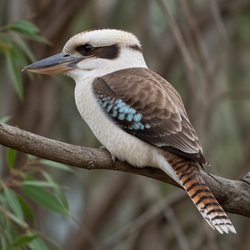
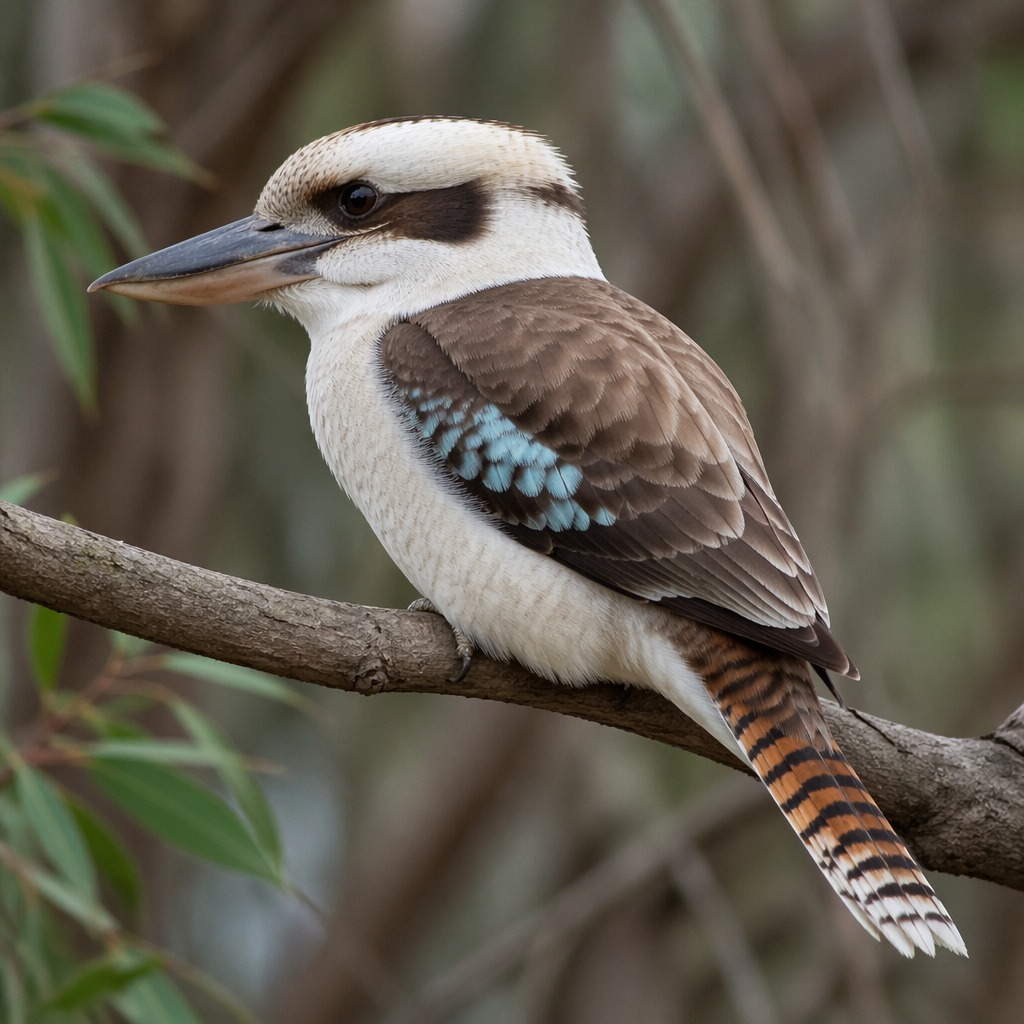
The Laughing Kookaburra is a large tree kingfisher known for its unmistakable human-like cackling call. It has a robust build, large head, and a heavy, dagger-like bill.
Explore Laughing Kookaburra in the encyclopedia →Identify your own birds.
Get a report just like this from any photo or call, free.
Plumage & appearance
Brownish-white underparts with dark brown barring, dark brown wings and back, a prominent dark brown mask across the eyes, and a pale off-white head.
Key field marks
Large heavy bill, dark brown eye-mask, whitish head, and barred brown and white underparts.
Size & weight
Length: 41 to 47 cm, Wingspan: around 65 cm, Weight: 190 to 500 g
Voice — call & song
Famous for its loud, echoing call that starts with a low chuckle and builds into a raucous, ringing laugh resembling human laughter.
Diet & foraging
Carnivorous; feeds primarily on insects, worms, crustacea, small snakes, frogs, mice, and sometimes small birds.
Habitat
Eucalypt forests, woodlands, suburban gardens, and agricultural areas with tall trees for nesting and perching.
Migration & movement
Non-migratory resident
Nesting & breeding
Nests in natural tree hollows or excavated tunnels in arboreal termite mounds; cooperative breeders where young from previous years help raise new chicks.
Similar species
Blue-winged Kookaburra (Dacelo leachii), which has bright blue in the wings and white eyes, found in northern Australia.
Ecological significance
Acts as an apex predator among small vertebrates in its ecosystem, helping to regulate populations of snakes, lizards, insects, and rodents.
Conservation status
Least Concern
Observation tips
Look and listen for them perched on prominent tree branches or power lines early in the morning or at dusk; their chorus is a classic sound of the Australian bush.
Interesting facts
Despite being in the kingfisher family, kookaburras do not typically eat fish and are not strictly tied to water bodies.
More like this