Order Coraciiformes, Family Alcedinidae
Belted Kingfisher
Megaceryle alcyon
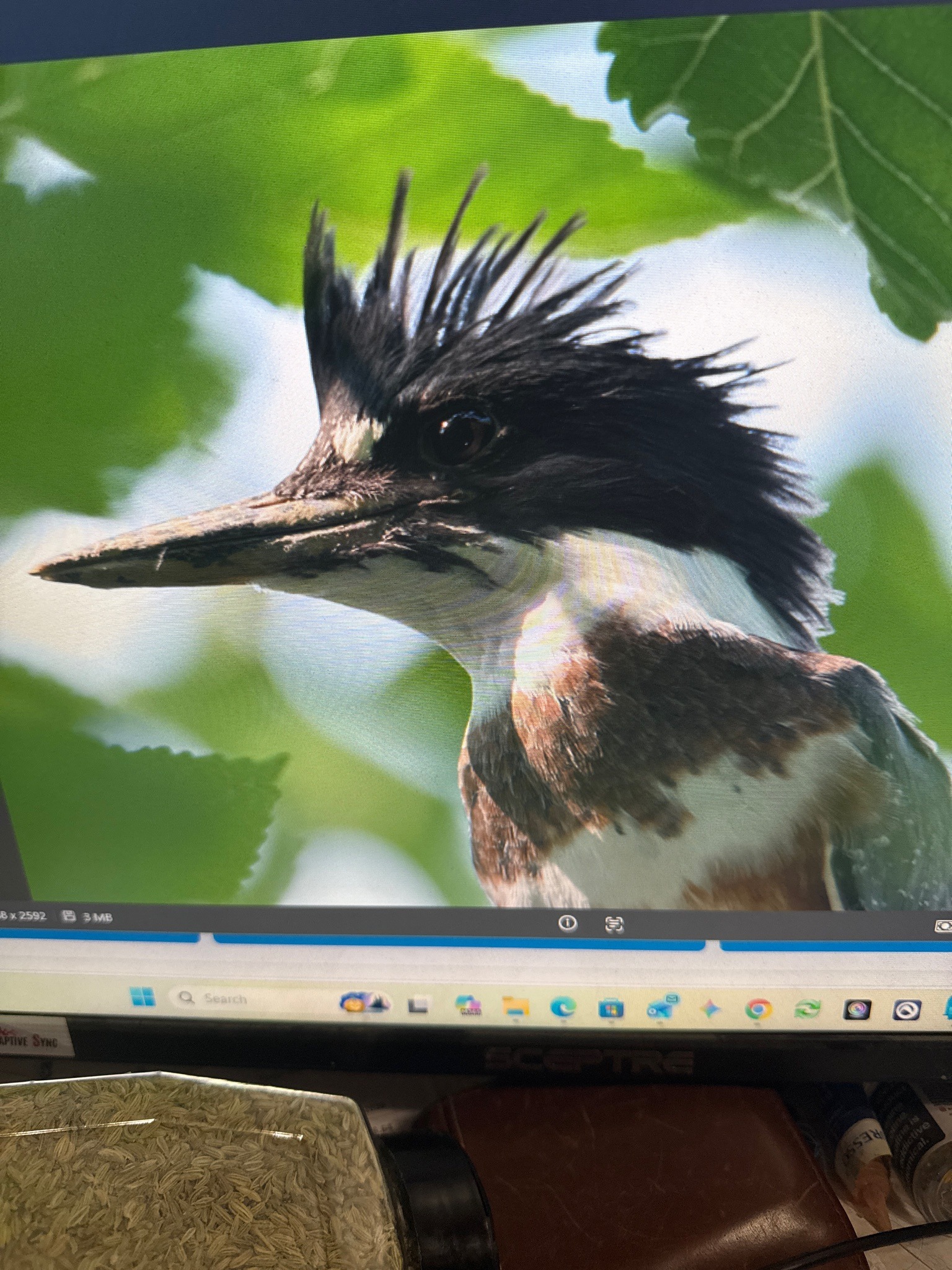
A stocky, medium-sized waterbird with a very large, heavy bill, a prominent ragged crest, and short legs. Often seen perched near water or flying rapidly while emitting a loud, rattling call.
Explore Belted Kingfisher in the encyclopedia →Identify your own birds.
Get a report just like this from any photo or call, free.
Plumage & appearance
Blue-gray upperparts, a shaggy crest, a broad white collar around the neck, and a white belly. Females uniquely have a rusty-brown band across the lower breast below a blue-gray band, whereas males have only the single blue-gray breast band. Juveniles resemble adults but may show rusty spotting on the breast band.
Key field marks
Large dark bill, shaggy crest, blue-gray head and back, white collar, and the female's distinctive rusty breast band.
Size & weight
Length: 28-35 cm (11-14 in), Wingspan: 48-58 cm (19-23 in), Weight: 140-170 g (4.9-6.0 oz)
Voice — call & song
A loud, harsh, metallic rattling call that sounds like a spinning fishing reel, typically given in flight.
Diet & foraging
Primarily fish, supplemented by aquatic insects, crustaceans, amphibians, reptiles, and occasionally small mammals or berries. Forages by plunge-diving headfirst into water from a perch.
Habitat
Near bodies of water including lakes, rivers, streams, ponds, estuaries, and marine coasts with earthen banks suitable for nesting.
Migration & movement
Partial migrant. Northern populations migrate south for the winter where waters remain unfrozen, while coastal and southern populations are year-round residents.
Nesting & breeding
Excavates a horizontal tunnel up to several feet long in a vertical dirt bank near water. Lays 5 to 8 white eggs in a chamber at the end of the tunnel. Both parents incubate and feed the young.
Similar species
In North America, it is unmistakable due to its large crest and blue-gray plumage. In other regions, other kingfishers like the Ringed Kingfisher are much larger and have extensive chestnut underparts.
Ecological significance
Acts as an indicator of healthy aquatic ecosystems and helps regulate small fish populations.
Conservation status
Least Concern, with stable to slightly declining populations.
Observation tips
Look for them perched on branches, utility wires, or docks overlooking rivers, lakes, and estuaries. They are easily spooked, so approach slowly and use binoculars.
Interesting facts
Unlike many songbirds where males are more brightly colored, female Belted Kingfishers are more colorful than the males due to their rusty chest band. They can tunnel up to 6 feet deep into earthen banks to build their nests.
More like this