Order: Coraciiformes; Family: Alcedinidae
Identified from audio
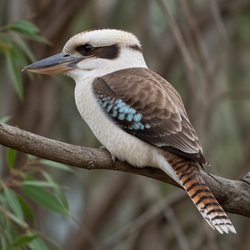
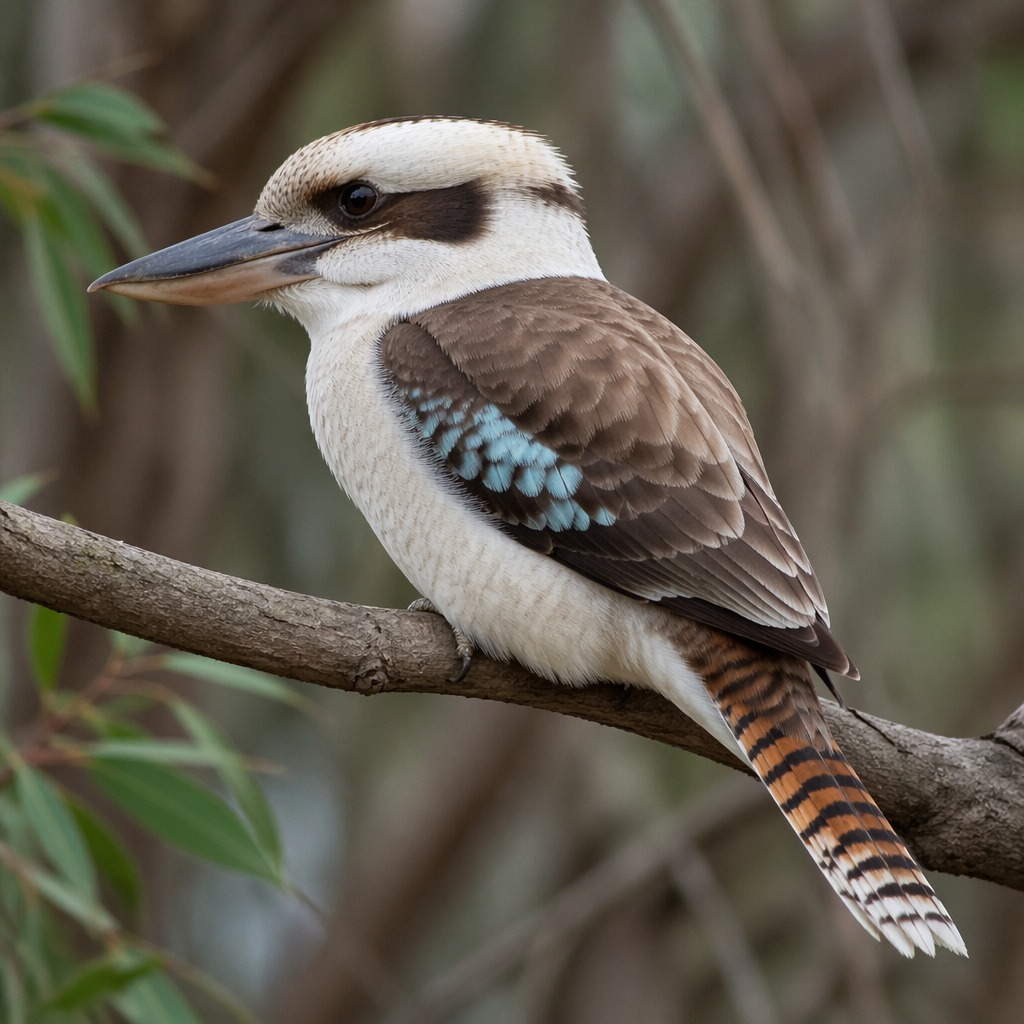
Laughing Kookaburra
Dacelo novaeguineae
A large, robust kingfisher known for its remarkably loud, human-like laughter. It is sedentary, territorial, and often perches conspicuously on branches or poles to survey the ground for prey.
Explore Laughing Kookaburra in the encyclopedia →Identify your own birds.
Get a report just like this from any photo or call, free.
Plumage & appearance
Mottled brown wings, creamy white chest and neck, and a prominent dark brown stripe through the eye. The tail is barred with brown and black, ending in white tips. Sexes are similar, though females are slightly larger with less blue on the wing coverts.
Key field marks
Large heavy beak, dark eye stripe, blunt tail, and stocky build.
Size & weight
Length: 41–47 cm (16–19 in); Wingspan: 56–66 cm; Weight: 300–490 g
Voice — call & song
The recording features the famous 'laugh': a series of low-pitched 'oo-oo-oo' chuckles that build in volume and pitch into a frantic, rhythmic 'ha-ha-ha-ha', often performed as a social chorus to mark territory.
Diet & foraging
Carnivorous: includes insects, worms, snails, small reptiles (snakes/lizards), frogs, and small birds or rodents.
Habitat
Dry eucalypt forests, woodlands, city parks, and suburban gardens with tall trees.
Migration & movement
Sedentary; they remain in their territories year-round.
Nesting & breeding
Monogamous and often uses 'helpers' (offspring from previous years). They nest in tree hollows or arboreal termite mounds.
Similar species
Blue-winged Kookaburra (Dacelo leachii) - distinguished by its blue wings and lack of the dark eye stripe.
Ecological significance
Acts as a population control for small mammals, reptiles, and large insects. They are key apex predators within their local woodland niches.
Conservation status
Least Concern (IUCN)
Observation tips
Listen for their chorus at dawn and dusk. Look for them perching quietly on lower to mid-level branches in eucalyptus forests or suburban parks.
Interesting facts
They are the largest members of the Kingfisher family, despite rarely eating fish. Their 'laugh' is actually a territorial warning to other kookaburras.
More like this