Order: Anseriformes, Family: Anatidae
Bar-headed Goose
Anser indicus
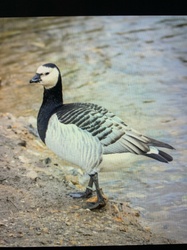
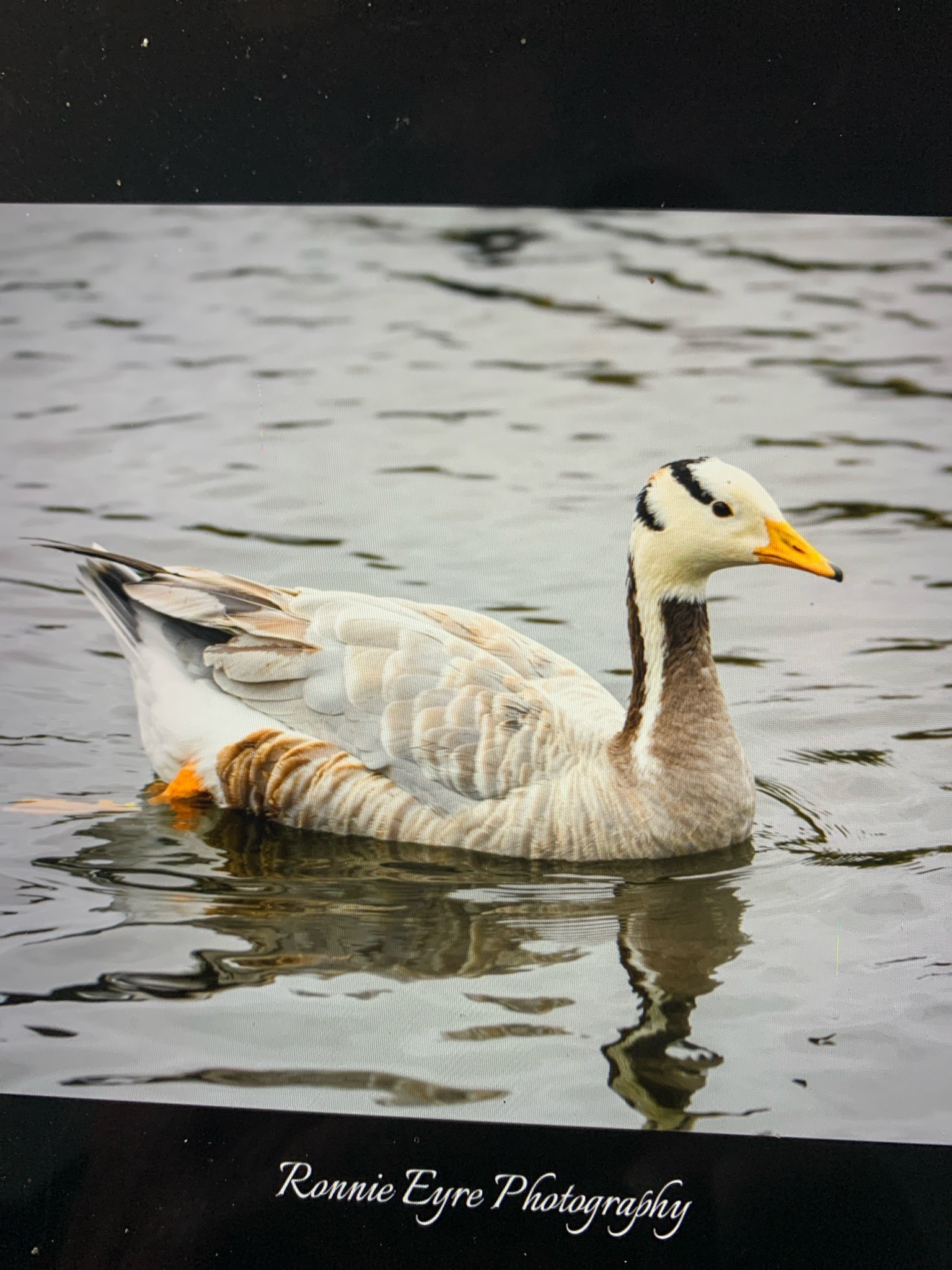
A striking pale goose easily recognized by the black bars on its white head. Highly gregarious and famous for extreme altitude migration.
Explore Bar-headed Goose in the encyclopedia →Identify your own birds.
Get a report just like this from any photo or call, free.
Plumage & appearance
Pale grey overall body with white head and neck. Distinctive black bars across the back of the head (one across the crown and another lower down enclosing the eyes and nape). The back of the neck features a dark brownish-grey stripe. Sexes are similar in plumage.
Key field marks
White head with two black horseshoe-shaped bars, pale grey body, bright orange-yellow bill and legs.
Size & weight
Length: 71–76 cm, Wingspan: 140–160 cm, Weight: 2–3 kg
Voice — call & song
A loud, musical, honking or clanging call reminiscent of a goose or hound bark, often given in flight.
Diet & foraging
Herbivorous; feeds on grasses, roots, stems, and agricultural grains by grazing on land or dabbling in shallow water.
Habitat
High-altitude lakes, marshes, and rivers during summer; lowland agricultural fields, wetlands, and lakes during winter.
Migration & movement
Migratory; undertakes one of the highest altitude migrations in the world, flying directly over the peaks of the Himalaya mountains.
Nesting & breeding
Nests on the ground near high-altitude lakes, usually on cliffs, rocky outcrops, or islands. Clutch size is typically 3 to 8 eggs.
Similar species
Swan Goose and other grey geese, but immediately distinguished by the unique black bars on the white head.
Ecological significance
Acts as a seed disperser and nutrient recycler in both alpine breeding grounds and lowland agricultural wintering sites.
Conservation status
Least Concern, with a stable global population trend.
Observation tips
Look for them in flocks grazing in agricultural fields or resting on open water bodies during winter months.
Interesting facts
Bar-headed geese are famous for flying over the summit of Mount Everest during their migration between Central Asia and India, enduring extremely low oxygen levels.
More like this