Order: Passeriformes, Family: Passeridae
House Sparrow
Passer domesticus
A small, chunky seed-eating bird with a short, stout bill, rounded body, and short tail. Highly social and closely associated with human habitation.
Explore House Sparrow in the encyclopedia →Identify your own birds.
Get a report just like this from any photo or call, free.
Plumage & appearance
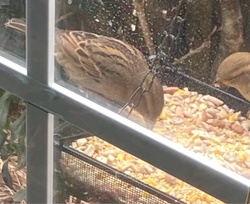
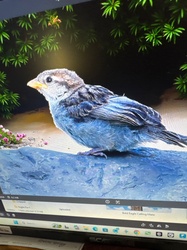
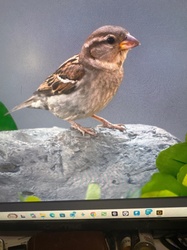
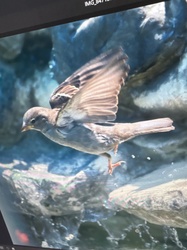
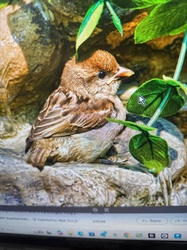
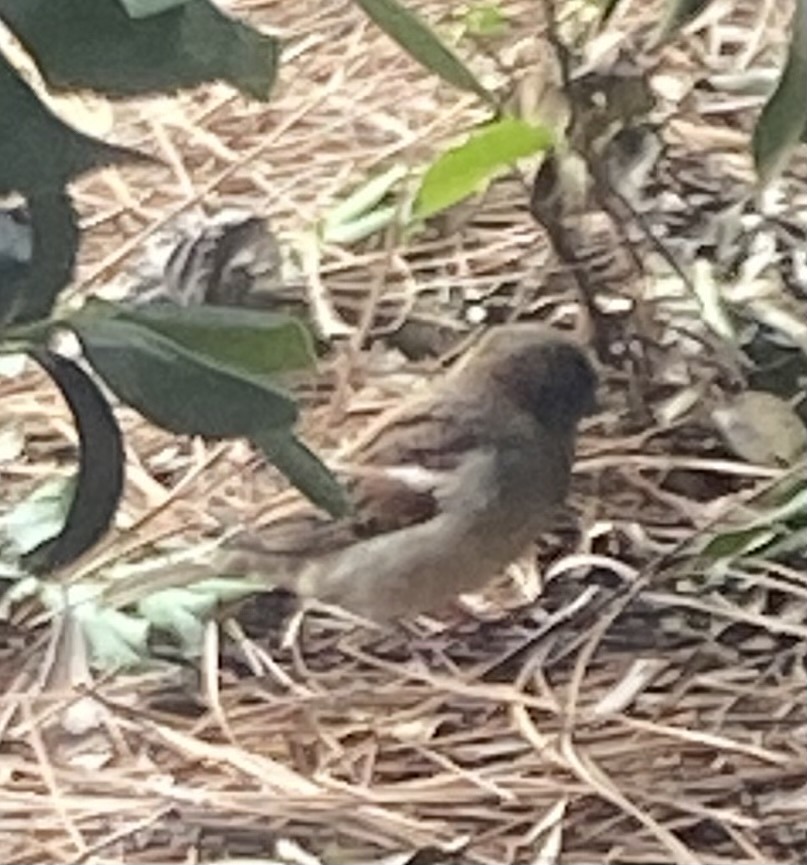
Males have a dark grey crown, black bib, chestnut nape, and grey cheeks with white patches. Females and juveniles are duller, with grayish-brown upperparts featuring dark streaks and a buffy eyebrow.
Key field marks
Stocky body, stout conical bill, grey crown (in males), black bib, and brownish streaked back.
Size & weight
Length: 14-18 cm (5.5-7.1 in), Wingspan: 19-25 cm (7.5-9.8 in), Weight: 24-39.5 g (0.85-1.39 oz)
Voice — call & song
A repetitive, monotonous series of chirps and cheeps that vary little in pitch, often given in social gatherings.
Diet & foraging
Primarily feeds on weed seeds, grains, and waste food from humans, though they also consume insects during the breeding season to feed their chicks.
Habitat
Urban and suburban areas, farms, agricultural fields, and towns; rarely found in deep forests, deserts, or extensive wetlands far from human settlements.
Migration & movement
Non-migratory resident bird, though individuals may occasionally disperse short distances to find new feeding grounds.
Nesting & breeding
Builds a messy, dome-shaped nest of grass, feathers, and trash in cavities, building ledges, tree hollows, or nest boxes. Clutch size is typically 4-6 eggs, with multiple broods per season.
Similar species
Tree Sparrow, which has a distinct chestnut crown and a black spot on each white cheek; and various native New World sparrows, which lack the stout bill and bib pattern.
Ecological significance
Acts as an important part of urban and agricultural food webs, serving as prey for predatory birds and mammals, though it can sometimes compete with native cavity-nesting birds.
Conservation status
IUCN Least Concern, with globally stable or slightly declining populations due to changes in agricultural practices.
Observation tips
Look around urban parks, farms, cafes, and suburban gardens where people drop food or feed pets. They are bold and often approach humans for scraps.
Interesting facts
House Sparrows dust-bathe rather than water-bathe to help clean their feathers and rid themselves of parasites. They were deliberately introduced to North America in New York City in the 1850s to control pest caterpillars.
More like this