Order: Passeriformes, Family: Passeridae
House Sparrow
Passer domesticus
A small, plump, bustling seed-eating bird with a stout bill, commonly associated with human habitations and urban or agricultural environments.
Explore House Sparrow in the encyclopedia →Identify your own birds.
Get a report just like this from any photo or call, free.
Plumage & appearance
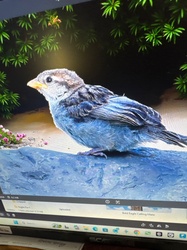
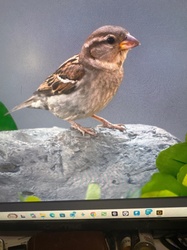
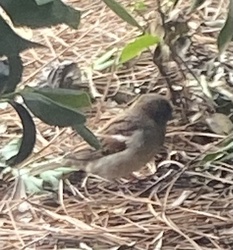
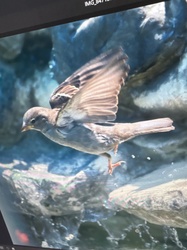
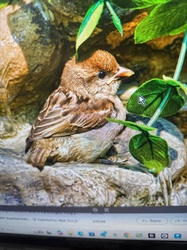
Adult males have a dark grey crown, chestnut nape, black bib (throat and upper breast), and white cheeks. Females and juveniles are duller brown and buff with a plain buffy eyebrow and streaked back without the distinct head pattern.
Key field marks
Stocky build, stout conical bill, brownish-streaked back, and (in males) distinctive black bib and grey crown.
Size & weight
Length: 14-18 cm, Wingspan: 21-25 cm, Weight: 24-39.5 g
Voice — call & song
A monotonous series of chirping and chattering notes, typically described as 'chirrup' or 'philip' sounds repeated rapidly.
Diet & foraging
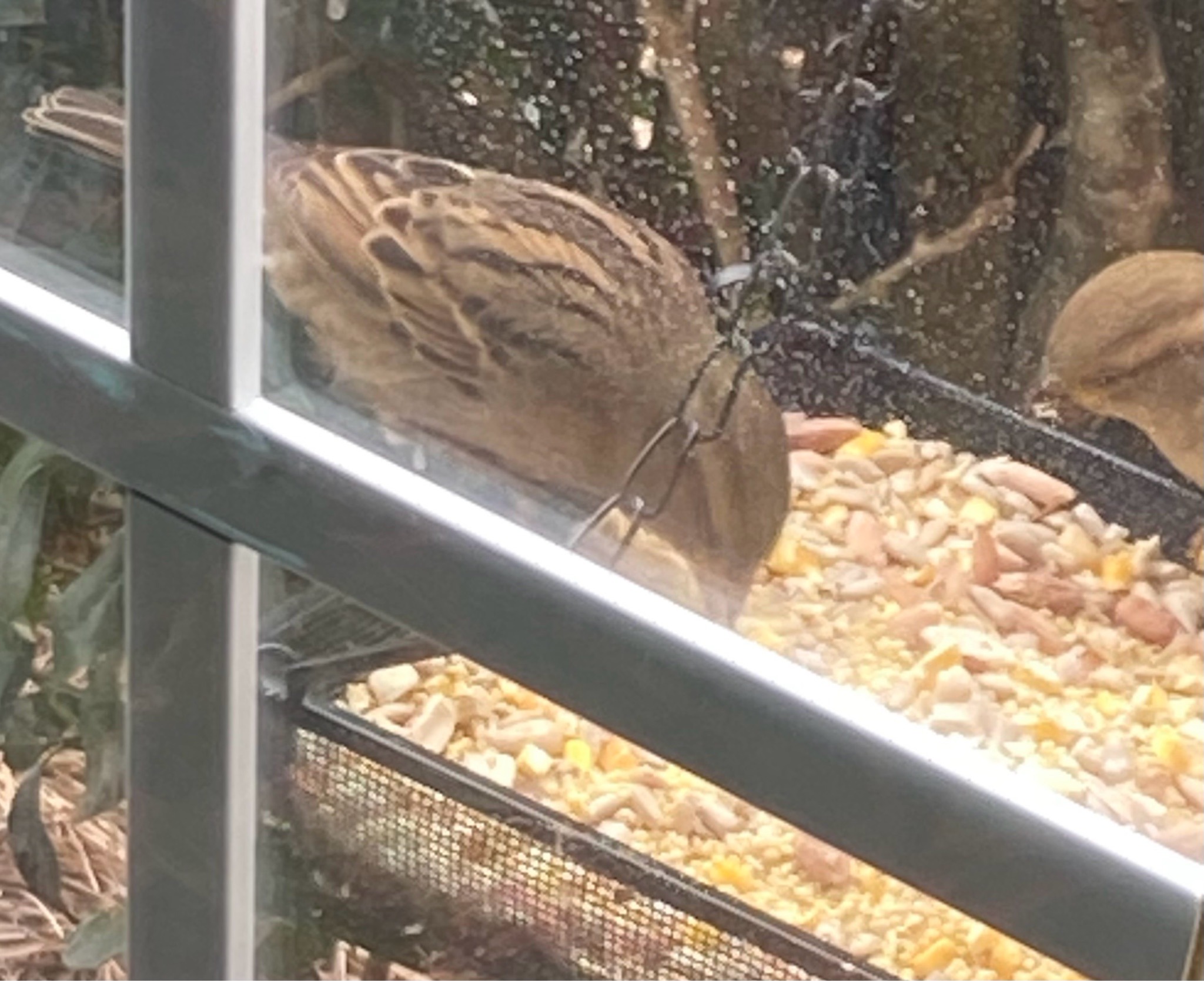
Primarily grains, seeds, and weed seeds; also consumes insects, scraps, and bread crumbs, especially when feeding young.
Habitat
Urban and suburban areas, farms, agricultural fields, towns, and cities; rarely found in deep forests or remote wilderness away from human settlement.
Migration & movement
Non-migratory resident; populations are largely sedentary, though young birds may disperse short distances.
Nesting & breeding
Builds a messy, dome-shaped nest of grass, feathers, and trash in cavities, holes in buildings, or dense bushes. Clutch size is usually 4-6 eggs, with multiple broods per year.
Similar species
Eurasian Tree Sparrow (which has a chestnut cap and a black cheek spot) and various female New World sparrows or finches.
Ecological significance
Acts as an opportunistic scavenger and seed disperser, though large populations can sometimes compete with native cavity-nesting birds.
Conservation status
Least Concern, though population trends are declining in some urban areas of Western Europe.
Observation tips
Easily observed around backyard bird feeders, parks, farms, and urban centers. They are accustomed to humans and can often be approached quite closely.
Interesting facts
House Sparrows were intentionally introduced to North America in Brooklyn, New York, in 1851 to combat insect pests like the linden looper, and they have since colonized the continent.
More like this