Order Charadriiformes, Family Laridae
Laughing Gull
Leucophaeus atricilla
A medium-sized gull with a distinctive black hood in summer, known for its loud, laughing call and coastal scavenging habits.
Explore Laughing Gull in the encyclopedia →Identify your own birds.
Get a report just like this from any photo or call, free.
Plumage & appearance
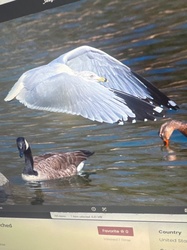
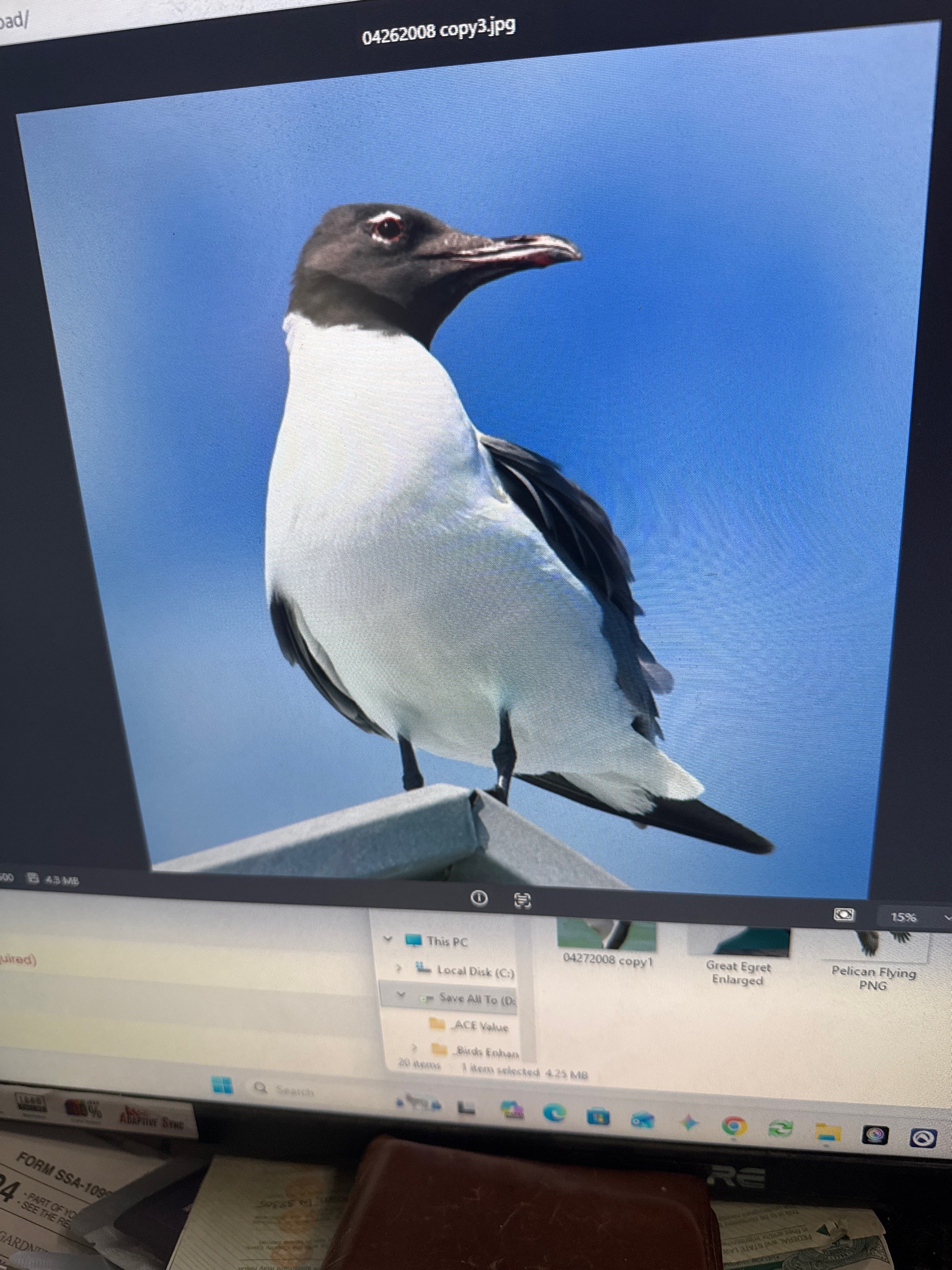
Adults in breeding plumage have a black head, dark gray back and wings, white underparts, white trailing edges on the wings, and red bill and legs. Non-breeding adults have a mottled gray-white head with a dark smudge around the eye and a black bill. Juveniles are brownish overall with a pale belly and dark tail band.
Key field marks
Dark slate-gray back, black head (in breeding season), white underparts, drooping red bill, and white crescents above and below the eye.
Size & weight
Length: 36-41 cm (14-16 in), Wingspan: 98-110 cm (39-43 in), Weight: 200-350 g (7.1-12.3 oz)
Voice — call & song
A loud, raucous series of notes sounding like a mocking, laughing ha-ha-ha-ha-ha.
Diet & foraging
Omnivorous; feeds on fish, crabs, marine invertebrates, insects, garbage, and occasionally robs other birds of their food.
Habitat
Coastal marine environments, salt marshes, estuaries, bays, and beaches; rarely found far inland unless near large lakes or rivers.
Migration & movement
Partial migrant; northern populations migrate south for the winter, while southern populations are year-round residents.
Nesting & breeding
Nests in colonies on coastal islands and salt marshes, building a ground scrape lined with grass. Clutch size is typically 2 to 4 eggs, incubated by both parents.
Similar species
Franklin's Gull, which is smaller, has a more rounded head, white wingtips, and lacks the extensive dark underwing pattern of the Laughing Gull.
Ecological significance
Acts as a marine and coastal scavenger, helping to control insect populations and clean up organic waste in coastal ecosystems.
Conservation status
Least Concern, with a stable population trend.
Observation tips
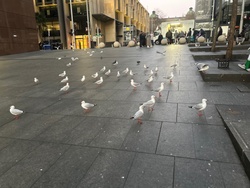
Look along beaches, saltwater marshes, piers, and parking lots near the coast. They are often quite bold around humans and readily approach for food.
Interesting facts
The Laughing Gull gets its common name from its distinct vocalization, which sounds remarkably like human laughter.
More like this