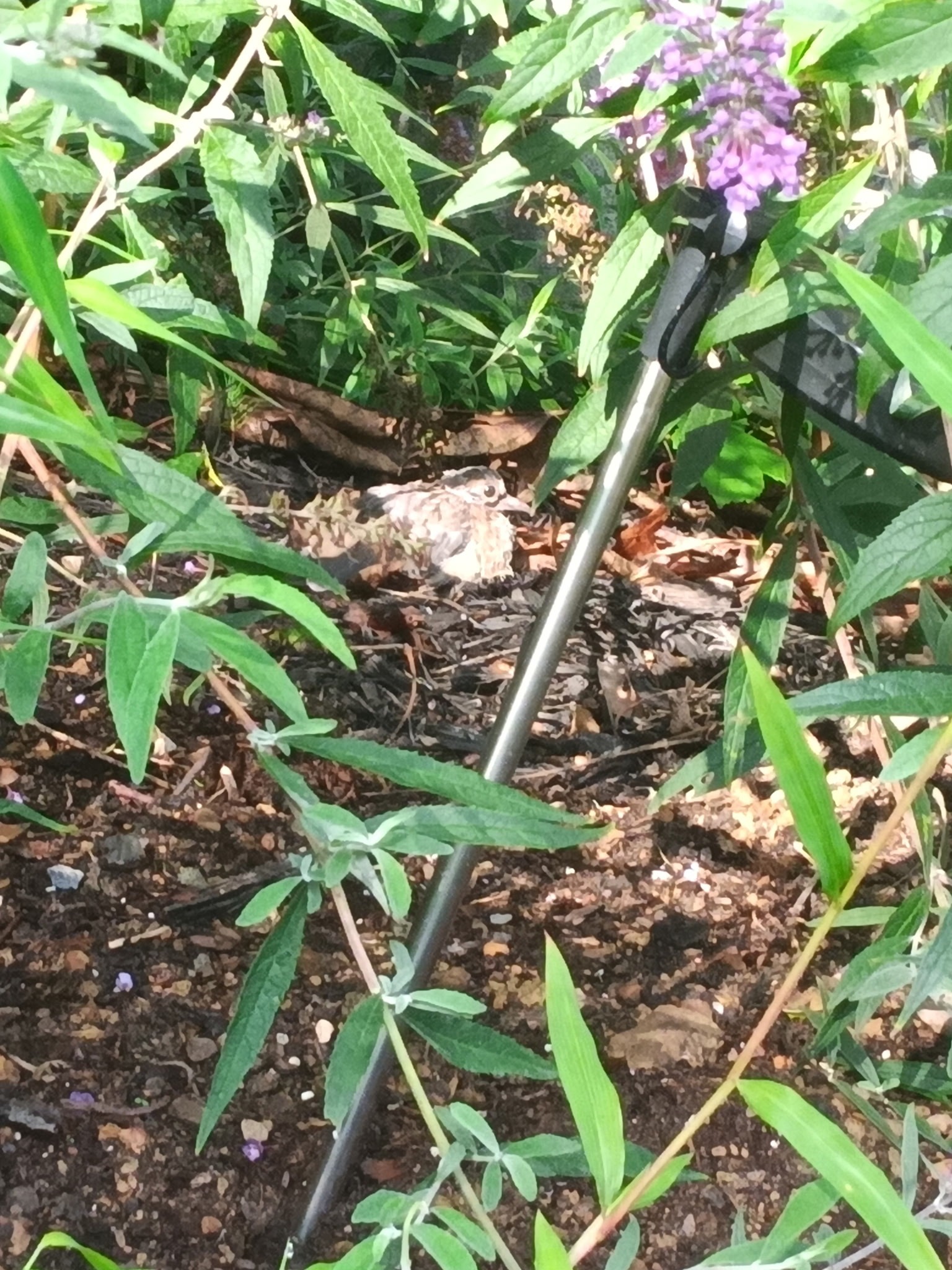
Order: Columbiformes, Family: Columbidae
Mourning Dove
Zenaida macroura
A slender, medium-sized dove with a small head, long pointed tail, and soft grey-brown plumage. Known for its gentle demeanor and soft, mournful cooing calls.
Explore Mourning Dove in the encyclopedia →Identify your own birds.
Get a report just like this from any photo or call, free.
Plumage & appearance
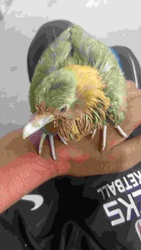
Adults have light grey-brown upperparts and pale pinkish-fawn underparts. The wings have black spots, and the long, tapered tail has white edges. There is a distinctive dark patch below and behind the eye. Juveniles (like the fledgling nestled near the ground in this image) are duller, scaly in appearance, and lack the iridescent neck patches of adults.
Key field marks
Long tapered tail with white tips, black spots on the wings, dark spot behind the eye, and slender silhouette in flight.
Size & weight
Length: 22-34 cm (8.7-13.4 in), Wingspan: 37-45 cm (14.6-17.7 in), Weight: 85-170 g (3.0-6.0 oz)
Voice — call & song
A haunting, sorrowful cooing call that sounds like 'oo-ah, oo, oo, oo', often mistaken by novices for an owl hoot.
Diet & foraging
Almost exclusively seeds (99%), including cultivated grains, weed seeds, and occasionally snails. They swallow seeds whole and store them in a muscular crop.
Habitat
Open and semi-open country, including agricultural lands, prairies, urban areas, open woodlands, and scrublands.
Migration & movement
Partial migrant. Northern populations migrate southward for the winter, while southern populations are year-round residents.
Nesting & breeding
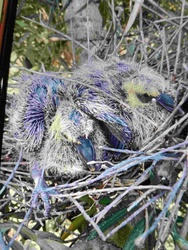
Builds a flimsy, flat platform nest made of twigs, usually in trees, shrubs, or sometimes directly on the ground (as seen with this ground fledgling stage). Clutch size is almost always 2 white eggs. Both parents incubate and feed the young 'pigeon's milk'.
Similar species
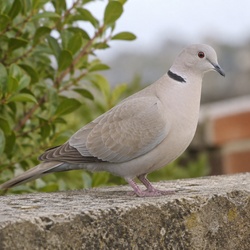
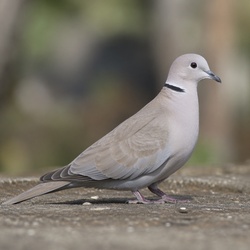
Eurasian Collared-Dove (larger, square tail with black neck collar) and Passenger Pigeon (extinct, longer tail, reddish underparts).
Ecological significance
Mourning doves play an important ecological role as seed dispersers and form a major prey base for various raptors and carnivorous mammals.
Conservation status
Least Concern, with a very large and stable global population trend.
Observation tips
Look for them walking on the ground in open fields, lawns, and gravelly areas searching for seeds. They are frequent visitors to backyard bird feeders.
Interesting facts
Mourning doves are one of the most widely distributed and abundant game birds in North America. They are capable of drinking water by sucking it up without tilting their heads back, unlike most other birds.
More like this