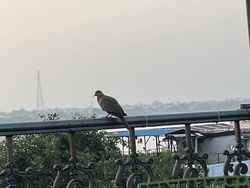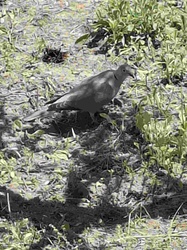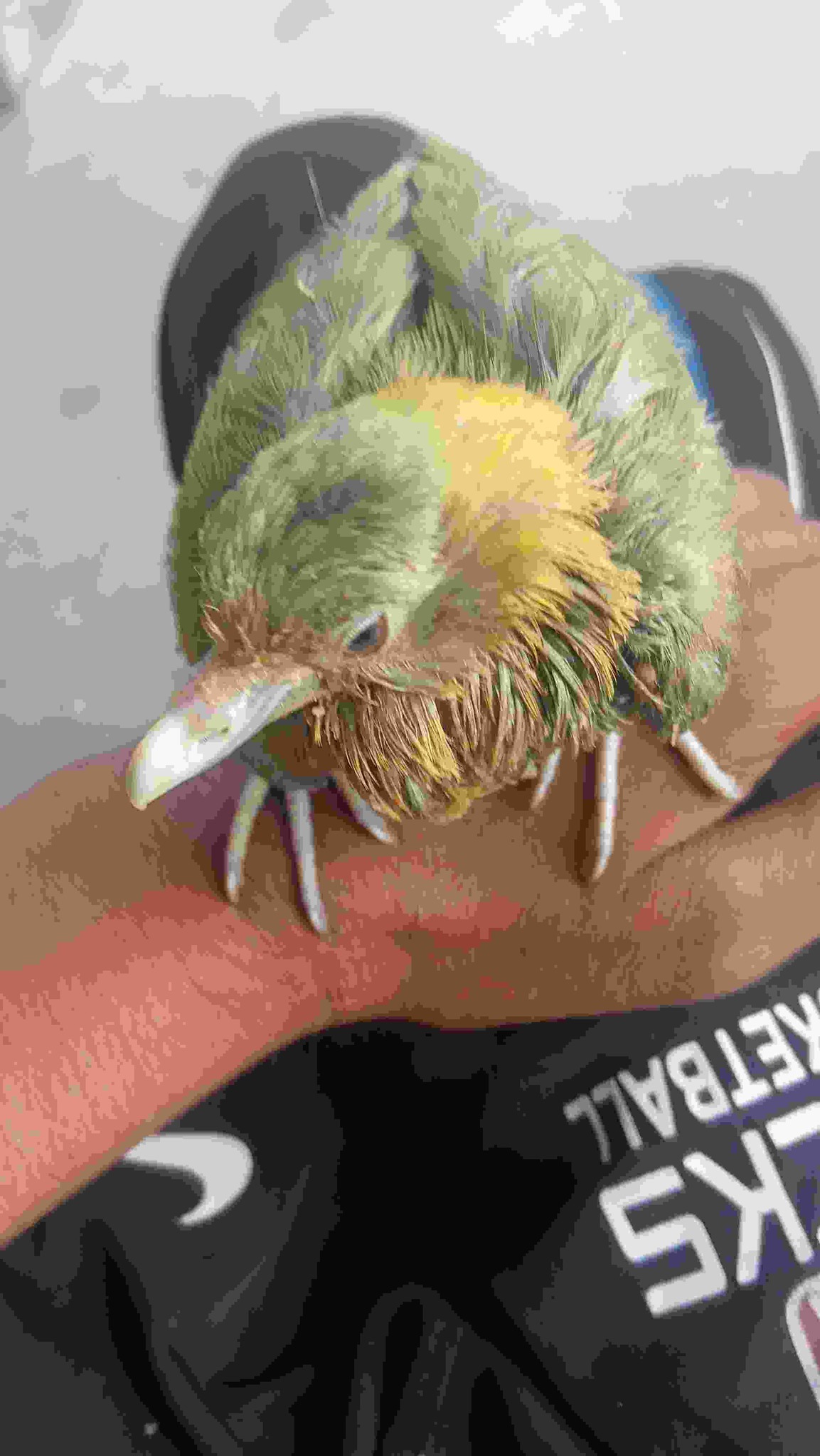
Order: Columbiformes; Family: Columbidae
Yellow-footed Green Pigeon
Treron phoenicopterus
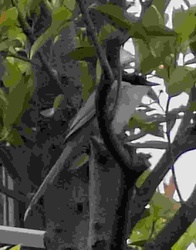
A social, arboreal pigeon known for its vibrant green plumage and bright yellow feet. It is often found in small groups, moving through the canopy of fruiting trees.
Explore Yellow-footed Green Pigeon in the encyclopedia →Identify your own birds.
Get a report just like this from any photo or call, free.
Plumage & appearance
Generally olive-green with a yellow belly. It typically features a lilac patch on the shoulder (more prominent in males), yellow legs, and a grayish crown. The neck often has a yellowish-green tinge.
Key field marks
Bright yellow legs/feet, lilac shoulder patch, yellow band on the wing, and green plumage with a yellowish-green neck collar.
Size & weight
Length: 29-33 cm; Weight: 225-260 g
Voice — call & song
A musical, mellow whistling call consisting of several rising and falling notes, very different from common pigeon coos.
Diet & foraging
Mainly frugivorous, feeding primarily on fruit, especially wild figs and berries.
Habitat
Open forest, gardens, cultivated areas with large fruiting trees, and secondary growth.
Migration & movement
Resident, though often nomadic in response to local fruit availability.
Nesting & breeding
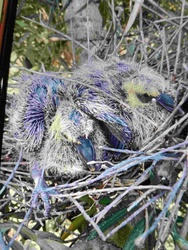
Pairs build a flimsy platform nest of twigs in a tree. They usually lay 2 white eggs, and both parents share incubation duties.
Similar species
Orange-breasted Green Pigeon (distinguished by the orange breast patch) and Thick-billed Green Pigeon (distinguished by the heavy greenish beak).
Ecological significance
Crucial seed dispersers for many forest trees, particularly wild figs, helping maintain forest health and biodiversity.
Conservation status
Least Concern (IUCN), population trend stable
Observation tips
Look for them in fruiting Ficus trees in gardens, parks, and secondary forests; they are masters of camouflage among green leaves.
Interesting facts
It is the state bird of Maharashtra, India. Unlike many birds, they frequently forage at the very top of trees and can hang upside down to reach fruit.
More like this