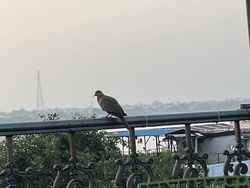
Order: Columbiformes; Family: Columbidae
Mourning Dove
Zenaida macroura
A medium-sized, slender dove with a long, tapered tail. Known for its mournful cooing sound and whistling wings during takeoff.
Explore Mourning Dove in the encyclopedia →Identify your own birds.
Get a report just like this from any photo or call, free.
Plumage & appearance
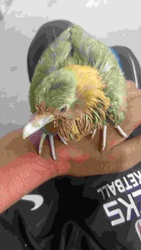
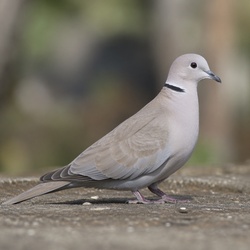
Overall light grey-brown with a pinkish hue on the chest. Black spots on the wings and a single black spot behind the eye. Long, pointed tail with white outer feathers. Juveniles have a scaly appearance.
Key field marks
Small head, long pointed tail, black spots on wings, and a thin black spot under the ear.
Size & weight
Length: 23-34 cm; Wingspan: 37-45 cm; Weight: 96-170 g.
Voice — call & song
A soft, mournful 'coo-OO-oo-oo-oo'. Often mistaken for the hooting of an owl.
Diet & foraging
Almost exclusively seeds (99%), including grains, grasses, and weeds. Forages primarily on the ground.
Habitat
Open and semi-open habitats including grasslands, farms, suburbs, and lightly wooded areas.
Migration & movement
Partial migrant. Southern populations are resident; northern populations migrate to the southern US or Mexico.
Nesting & breeding
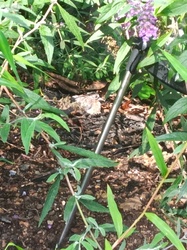
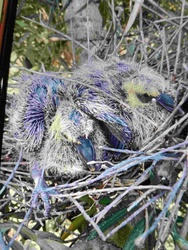
Builds a flimsy platform of twigs in trees or shrubs. Usually lays two white eggs. May produce multiple broods per year.
Similar species
White-winged Dove (has white wing patches), Eurasian Collared-Dove (larger with a black neck ring).
Ecological significance
Important seed disperser and a primary prey species for many birds of prey.
Conservation status
Least Concern (IUCN); population is stable and abundant.
Observation tips
Commonly seen on ground foraging for seeds or perched on telephone wires. Listen for the distinct whirring sound of their wings when they fly.
Interesting facts
Mourning Doves can drink brackish water without becoming dehydrated. They are one of the most widespread and abundant birds in North America.
More like this