Order: Psittaciformes, Family: Cacatuidae
Sulphur-crested Cockatoo
Cacatua galerita
A large, intelligent, and noisy white parrot featuring a forward-curving yellow crest. They are highly social, often forming large, raucous flocks, and are known for their inquisitive nature and acrobatic antics.
Explore Sulphur-crested Cockatoo in the encyclopedia →Identify your own birds.
Get a report just like this from any photo or call, free.
Plumage & appearance
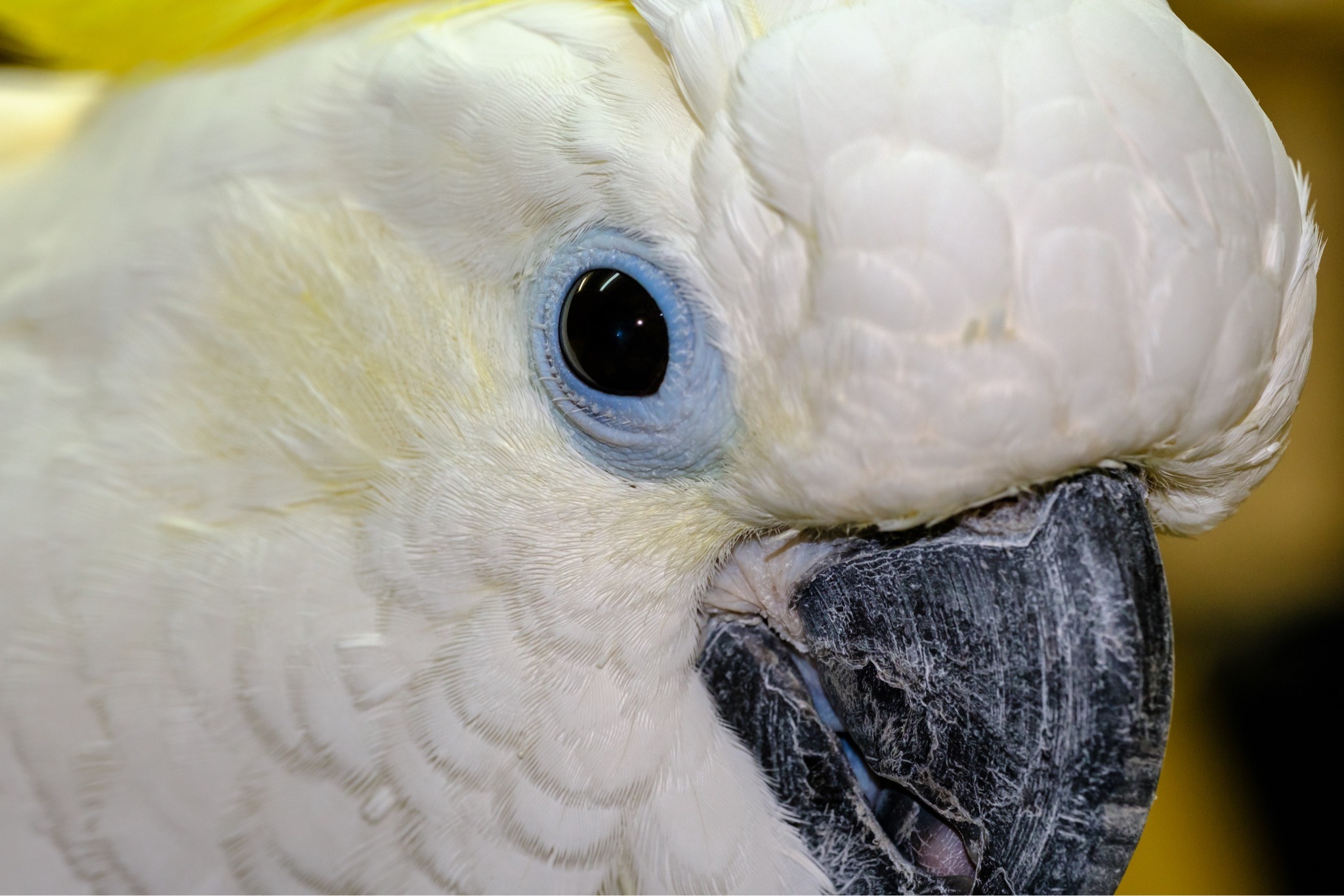
Predominantly white plumage with a distinct yellow crest on the head and pale yellow wash on the underside of the wings and tail. The bill is dark grey-black, and the legs are grey. Sexes are outwardly very similar, but adult males typically have a black-brown iris, while adult females have a reddish-brown or burgundy iris.
Key field marks
Large all-white body, prominent forward-curving yellow crest, dark grey bill, and blue-grey or naked eye-ring.
Size & weight
Length: 45 to 50 cm (18 to 20 inches); Wingspan: approximately 100 cm; Weight: 770 to 975 grams.
Voice — call & song
Produces very loud, harsh, and raspy screeches, shrieks, and alarm calls that can carry over long distances.
Diet & foraging
Consists mainly of seeds, nuts, berries, fruits, roots, and flower buds, supplemented by insects and larvae. They forage both in trees and on the ground, often using their strong bills to crack hard nuts.
Habitat
Found in a wide range of wooded habitats, including rainforests, mangrove swamps, eucalyptus forests, agricultural lands, and heavily urbanized parks and gardens.
Migration & movement
Generally sedentary and resident throughout their range, though some populations may make local movements in response to seasonal food availability.
Nesting & breeding
Nests in hollows of mature trees, usually near water. Clutch size typically ranges from 2 to 3 white eggs, incubated by both parents for around 30 days. Chicks fledge after about 9 to 10 weeks.
Similar species
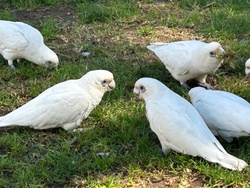
Little Corella (Cacatua sanguinea) and Major Mitchell's Cockatoo (Cacatua leadbeateri). The Sulphur-crested Cockatoo is distinguished by its larger size and prominent yellow crest compared to the smaller Little Corella and the pink-crested Major Mitchell's.
Ecological significance
Acts as an important seed predator and disperser within its ecosystem. By feeding on seeds and fruits, they influence plant populations, though large flocks can sometimes heavily impact agricultural crops.
Conservation status
Least Concern, with a stable or increasing population trend.
Observation tips
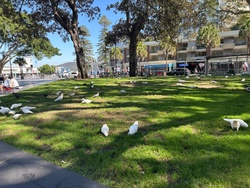
Listen for their extremely loud, harsh screeches, which usually give away their presence before they are seen. They are easily spotted perched high in dead eucalyptus trees or feeding on open lawns.
Interesting facts
Sulphur-crested Cockatoos are remarkably long-lived birds, often surviving for over 70 years in captivity and up to 40 years in the wild. They are also known for using tools and exhibiting complex problem-solving abilities.
More like this