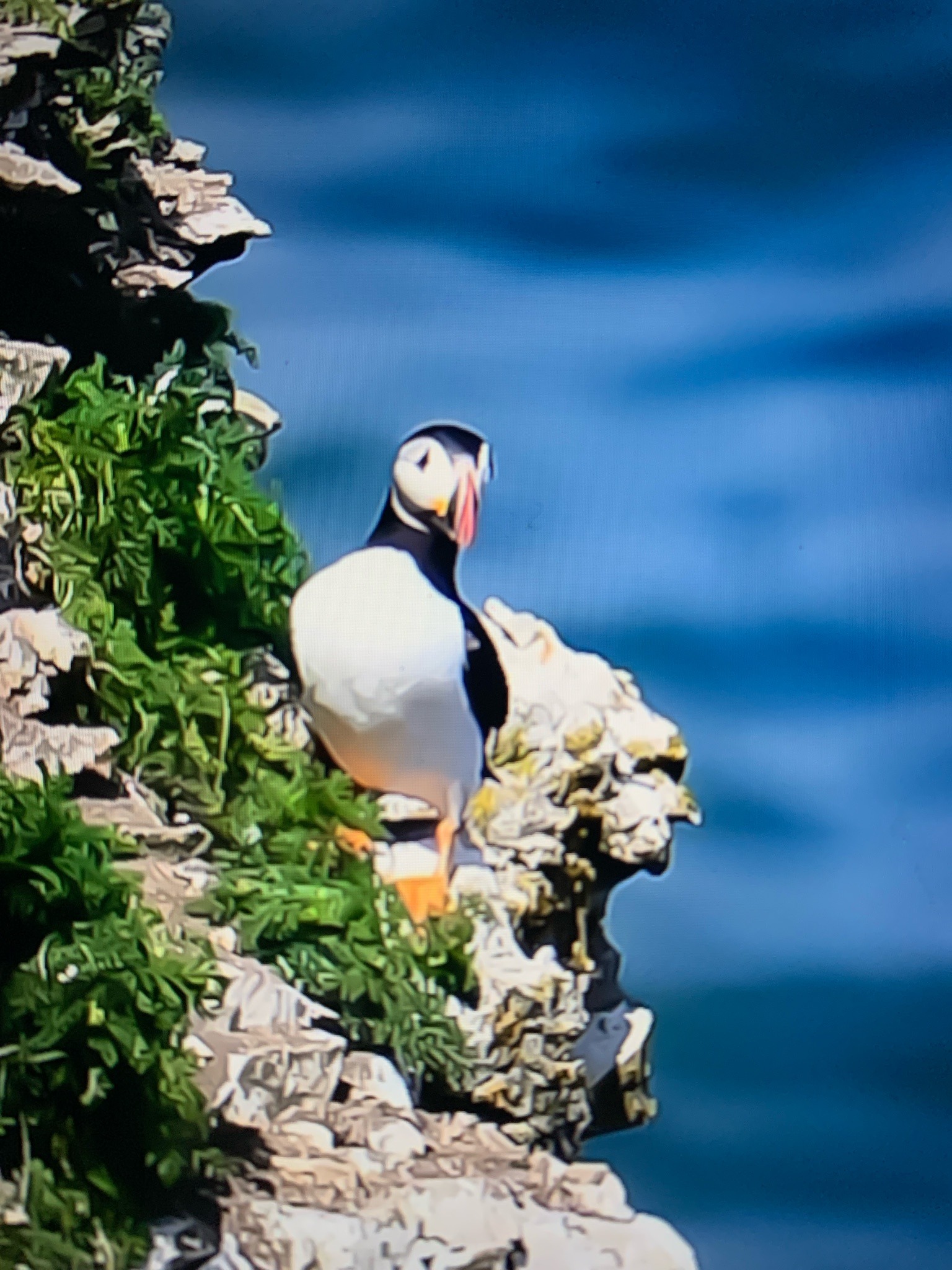
Order: Charadriiformes, Family: Alcidae
Atlantic Puffin
Fratercula arctica
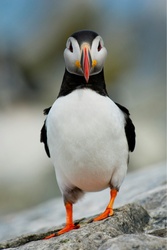
A compact, duck-sized seabird with a stout body, short wings and tail, and a distinctive large, brightly colored triangular bill that earns it the nickname 'sea parrot'. It waddles awkwardly on land but is an exceptional swimmer and diver.
Explore Atlantic Puffin in the encyclopedia →Identify your own birds.
Get a report just like this from any photo or call, free.
Plumage & appearance
Black upperparts, white underparts, and pale grey facial mask. During the breeding season, the bill becomes brightly colored in orange and yellow with blue-grey bases, and distinct fleshy orbital rings form around the eyes. Non-breeding plumage shows a duller, smaller bill and darker cheeks. Males and females look virtually identical, though males tend to be slightly larger.
Key field marks
Distinctive brightly colored triangular banded bill, white face patch bordered by black, black cap and back, white underparts, and bright orange legs.
Size & weight
Length: 28-30 cm (11-12 inches), Wingspan: 47-63 cm (19-25 inches), Weight: 300-500 g (11-18 oz)
Voice — call & song
Usually silent at sea, but emits a low, growling or purring sound, often compared to a small chainsaw, when inside or near its nesting burrow.
Diet & foraging
Small schooling fish such as sand lances, herring, capelin, as well as squid and crustaceans. They forage by diving underwater, propelling themselves with their wings, and can hold dozens of fish in their bill at once.
Habitat
Pelagic open ocean during the winter and coastal cliffs, grassy slopes, and islands with soil suitable for burrowing during the breeding season.
Migration & movement
Migratory; leaves breeding colonies in late summer to spend the winter months spread across the open North Atlantic Ocean.
Nesting & breeding
Nests in colonies by excavating a burrow in the soil on a cliffside or using natural rock crevices. Lays a single white egg. Both parents share incubation duties and feed the chick.
Similar species
Horned Puffin and Tufted Puffin of the Pacific Ocean, but Atlantic Puffins are distinguished by their specific Atlantic range and the distinct facial and bill markings.
Ecological significance
Acts as a marine apex predator indicator species, helping scientists monitor the health of ocean fish stocks and marine ecosystems.
Conservation status
Vulnerable, with populations experiencing rapid declines due to climate change, decreasing food availability, and invasive predators.
Observation tips
Visit coastal seabird colonies on islands or high northern cliffs during late spring or summer. Use binoculars or a spotting scope to observe them from a safe distance without disturbing nesting burrows.
Interesting facts
Atlantic Puffins can fly at speeds up to 55 mph (88 km/h) by flapping their wings rapidly at up to 400 times per minute.
More like this