Order: Charadriiformes, Family: Recurvirostridae
Black-winged Stilt
Himantopus himantopus
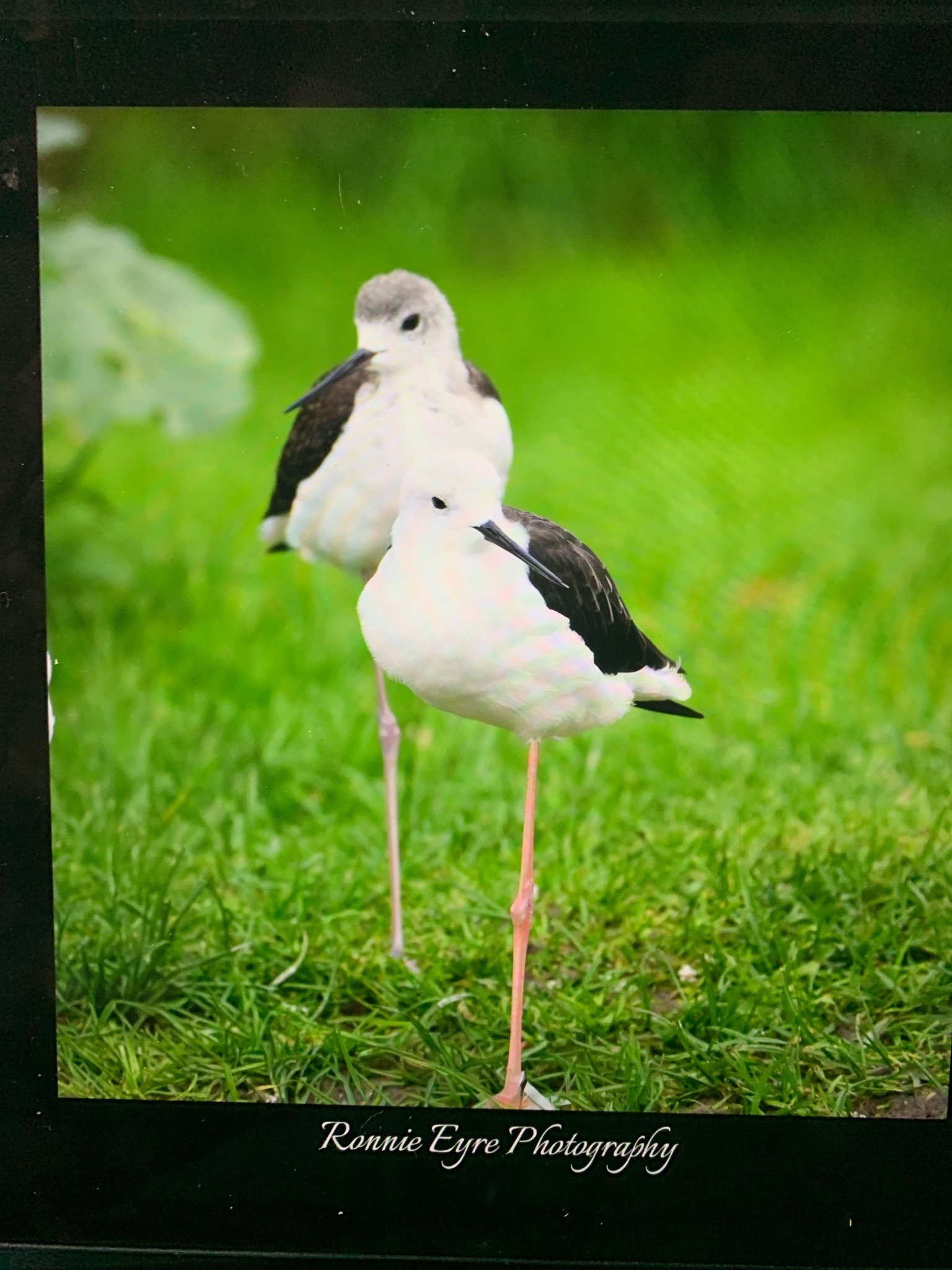
An unmistakable wader characterized by extremely long, bright pink legs, a fine, straight black bill, and a striking black-and-white plumage pattern.
Explore Black-winged Stilt in the encyclopedia →Identify your own birds.
Get a report just like this from any photo or call, free.
Plumage & appearance
Adults have brilliant white heads, necks, and underparts, contrasting sharply with glossy black upperwings and back. Males often have a glossy greenish-black mantle, sometimes with more black on the head/neck in breeding season, while females tend to be browner-tinged on the wings. Juveniles are duller, with brownish-grey tones on the back and head.
Key field marks
Extremely long pink legs extending well beyond the tail in flight, straight black bill, white head and body, and black wings.
Size & weight
Length: 33-36 cm, Wingspan: 67-83 cm, Weight: 140-200 g
Voice — call & song
A repeated, sharp, piping yelping call, often described as 'kik-kik-kik' or 'yip-yip-yip', especially when alarmed.
Diet & foraging
Insects, crustaceans, mollusks, and small tadpoles, foraged by probing shallow water or mud with its delicate bill.
Habitat
Shallow, open wetlands, freshwater lakes, saltmarshes, lagoons, and flooded agricultural fields.
Migration & movement
Partial migrant; northern populations are migratory and winter in Africa or southern Asia, while tropical populations are largely resident.
Nesting & breeding
Nests in loose colonies on the ground near water, often on a small mound of vegetation or mud. Usually lays 3 to 4 eggs, incubated by both parents.
Similar species
Banded Stilt (found in Australia, features a chestnut breast band) and Black Stilt (critically endangered, entirely black adult plumage).
Ecological significance
Acts as an important predator of aquatic insects and small invertebrates, helping to control populations in wetland ecosystems.
Conservation status
Least Concern, with a stable or increasing population trend globally.
Observation tips
Look for them in shallow wetlands, salt pans, and flooded fields. They are quite vocal and will noisily mob potential predators or intruders near their nests.
Interesting facts
The Black-winged Stilt possesses the longest legs relative to its body size of almost any bird species, second only to the flamingo.
More like this