Order: Passeriformes, Family: Fringillidae
Purple Finch
Haemorhous purpureus
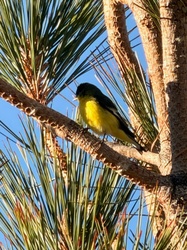
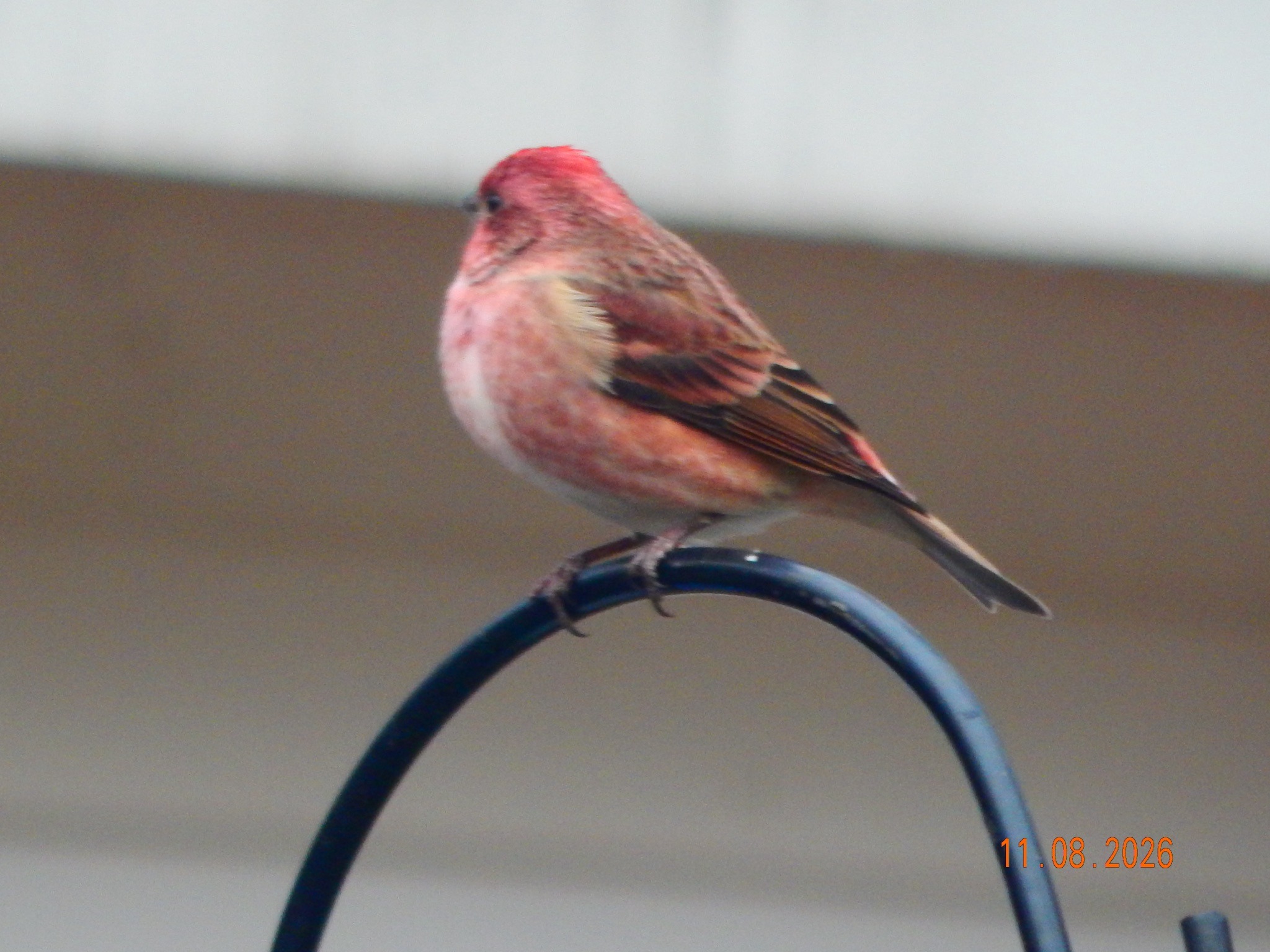
A stout, medium-sized finch with a characteristic conical bill used for cracking seeds. Males have vivid raspberry-red coloration, while females are heavily streaked and sparrow-like.
Explore Purple Finch in the encyclopedia →Identify your own birds.
Get a report just like this from any photo or call, free.
Plumage & appearance
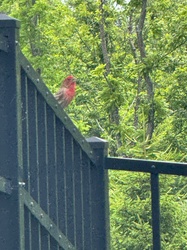
Adult males feature a deep rosy-red head, breast, and back, often described as looking like they were 'dipped in raspberry juice,' with brownish wings and back streaking. Females and immatures lack the red and instead display strong brown-and-white facial patterns with a heavy, dark brown streakiness underneath.
Key field marks
Conical bill, rosy-red plumage (in males), prominent whitish eyebrow stripe contrasting with a dark cheek patch, and notched tail.
Size & weight
Length: 4.7–6.3 in (12–16 cm), Wingspan: 8.7–9.8 in (22–25 cm), Weight: 0.6–1.1 oz (18–32 g)
Voice — call & song
Call is a distinct, metallic 'pik' note. The song is a rich, energetic, musical warbled series of notes lasting several seconds.
Diet & foraging
Primarily feeds on seeds, buds, berries, and occasionally insects during the breeding season. Forages in trees, shrubs, and on the ground.
Habitat
Prefers moist coniferous and mixed forests, open woodlands, as well as suburban areas, parks, and orchards during migration.
Migration & movement
Partial migrant. Northern populations migrate south for the winter, while western populations often make altitudinal migrations.
Nesting & breeding
Builds a cup nest of twigs, rootlets, and grasses lined with fine hair or moss, typically placed high in a conifer tree. Clutch size is usually 2 to 7 pale blue-green eggs speckled with brown.
Similar species
House Finch and Cassin's Finch. Purple Finches are distinguished from House Finches by their brighter raspberry-red color extending onto the back, less sharply defined streaking on the flanks, and broader pale eyebrow.
Ecological significance
Acts as an important seed disperser and predator of weed seeds and tree buds within its woodland and forest ecosystems.
Conservation status
IUCN Least Concern, though populations have experienced some long-term declines due to habitat loss and competition with the invasive House Finch.
Observation tips
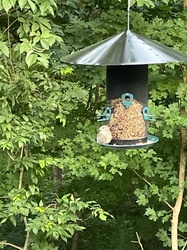
Visit mixed deciduous-coniferous forests during breeding season, or set up nyjer seed and black-oil sunflower seed feeders in winter. Listen for their warbling song.
Interesting facts
Roger Tory Peterson famously described the male Purple Finch as a 'sparrow dipped in raspberry juice.' Despite their name, they have very little actual purple feathers.
More like this