Order: Passeriformes, Family: Icteridae
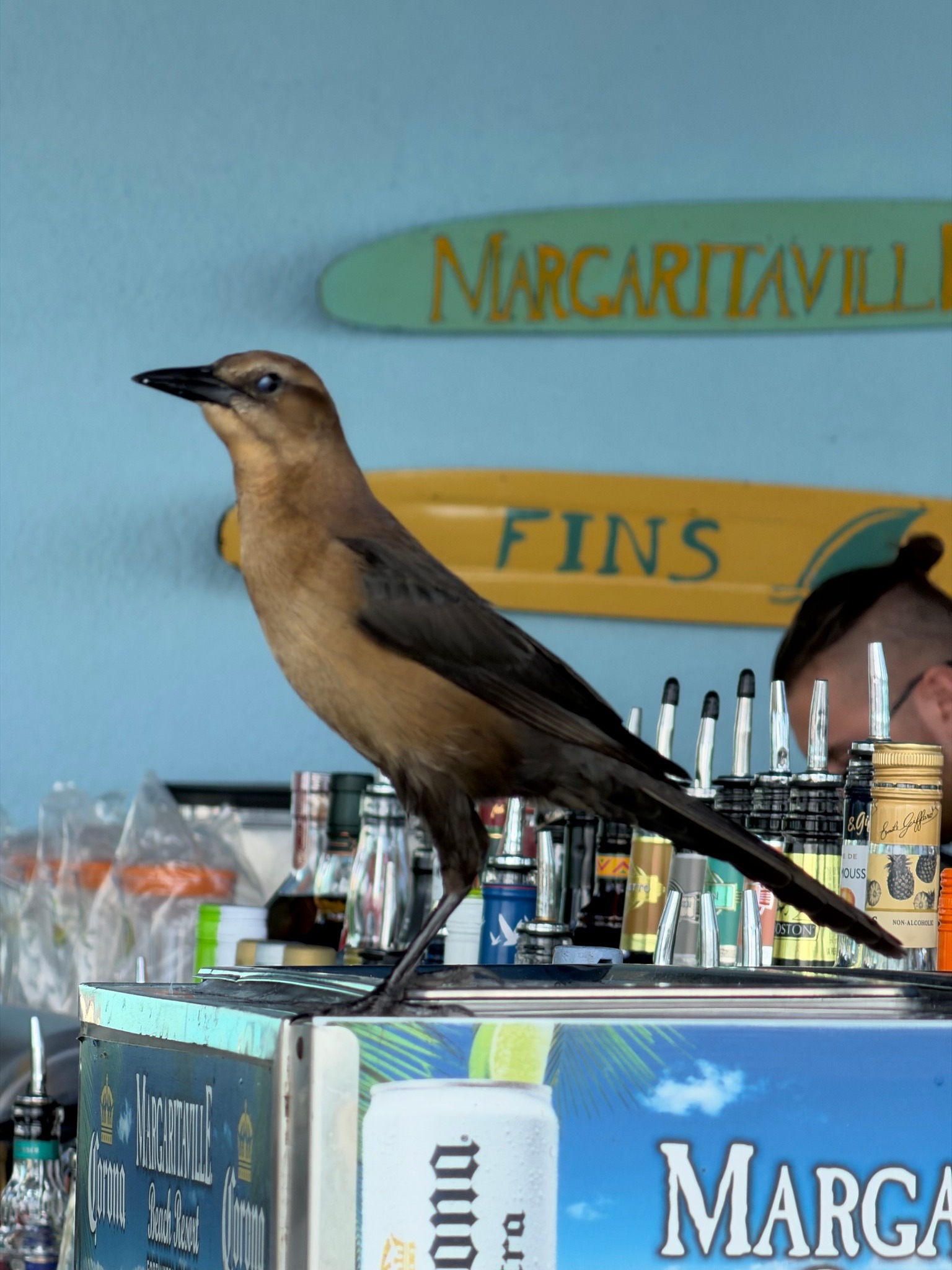
Great-tailed Grackle (female)
Quiscalus mexicanus
A slender, medium-sized blackbird with long legs, a relatively long, pointed bill, and an elongated tail. Known for their bold, confident demeanor and frequenting human-altered environments like parking lots and outdoor dining areas.
Explore Great-tailed Grackle (female) in the encyclopedia →Identify your own birds.
Get a report just like this from any photo or call, free.
Plumage & appearance
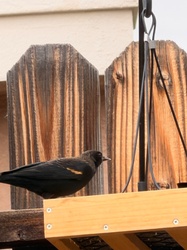
Females are significantly different from males. Females have rich brown plumage on the head, breast, and underparts, with darker brown or blackish wings and tail, and a pale eyebrow stripe. Males are entirely iridescent glossy black with purple and blue sheens and a very long, V-shaped keel tail.
Key field marks
Brownish coloration, pale eyebrow, long slender bill, dark wings and tail, and the notably long, graduated tail characteristic of grackles.
Size & weight
Length: 38-43 cm (males), 26-33 cm (females); Wingspan: 50-60 cm; Weight: 190-250 g (males), 115-145 g (females).
Voice — call & song
A diverse and noisy repertoire of rattles, whistles, harsh squawks, and mechanical-sounding chatters, especially during communal roosting or breeding displays.
Diet & foraging
Omnivorous; feeds on insects, small vertebrates, seeds, grains, human scraps, and occasionally fruit. Forages primarily on the ground by walking and probing with its bill.
Habitat
Open country, agricultural fields, scrub, marshes, and heavily human-modified environments such as urban parks, city streets, and commercial areas.
Migration & movement
Non-migratory resident, though populations have naturally expanded their geographic range northward significantly over the past century.
Nesting & breeding
Nests in loose colonies, often in dense trees, shrubs, or reeds near water. The female builds a bulky, cup-shaped nest of woven plant materials, mud, and debris. Clutch size is typically 3-5 eggs, and breeding occurs from spring to summer.
Similar species
Boat-tailed Grackle is very similar and overlaps in coastal regions of the southeastern US; females can be extremely difficult to tell apart visually, often distinguished by eye color and subtle vocal or range differences.
Ecological significance
Acts as an omnivorous scavenger helping to clean up organic debris, and plays a role in seed dispersal and controlling insect populations in agricultural and urban ecosystems.
Conservation status
IUCN Least Concern with a stable or increasing population trend.
Observation tips
Look for them in open urban and suburban areas, especially around fast-food restaurants, parks, and agricultural fields. They are bold and often approach humans for food.
Interesting facts
Great-tailed Grackles are one of the fastest-expanding bird species in North America, thriving alongside human development and often seen displaying intelligence and adaptability in parking lots.
More like this