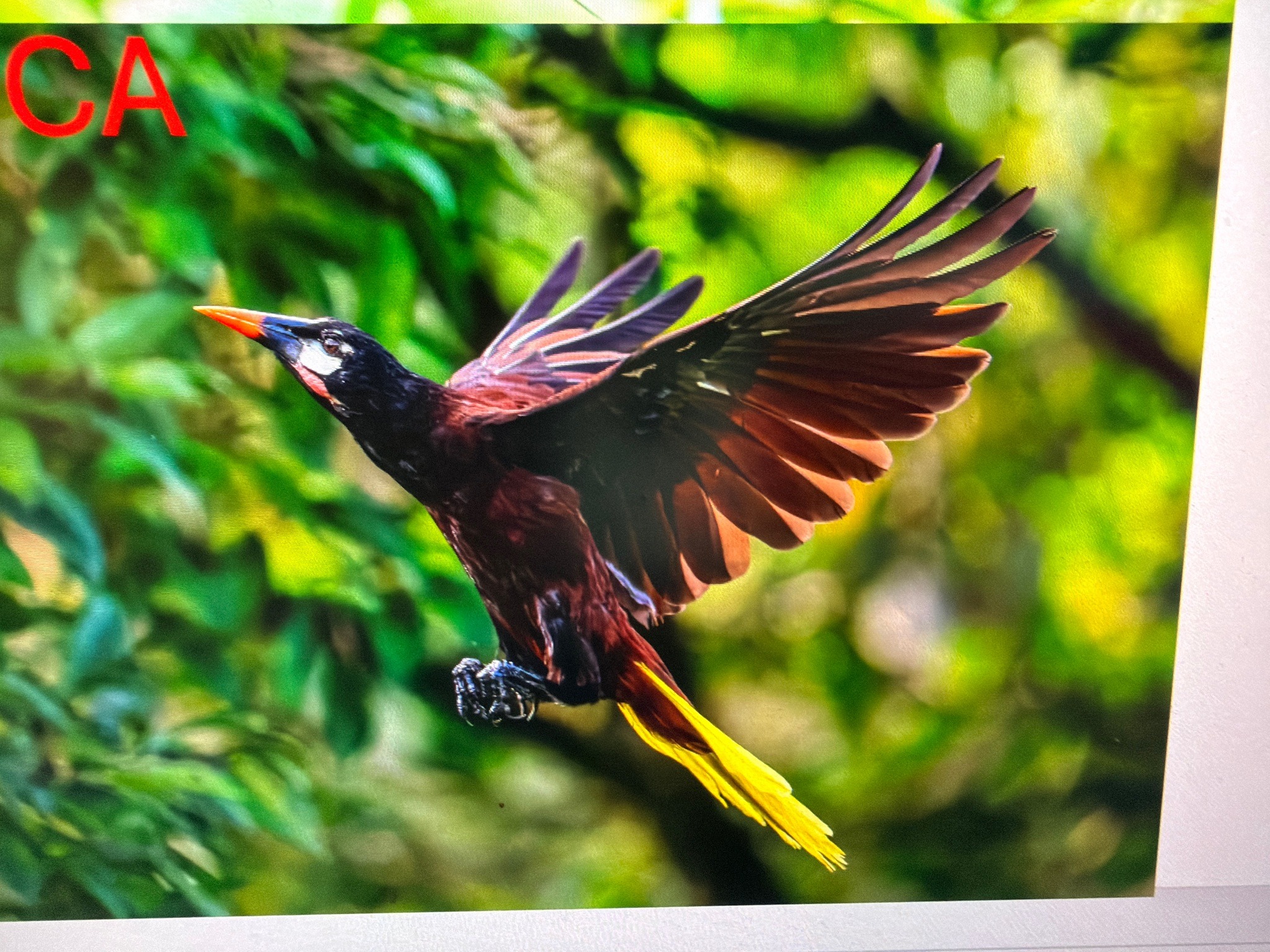
Order Passeriformes, Family Icteridae
Crested Oropendola
Psarocolius decumanus
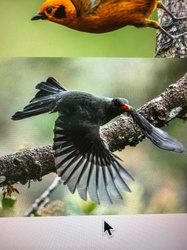
A large, striking icterid with a dramatic contrast of black, rich chestnut, and bright yellow tail feathers. It is often seen in noisy social groups, flying with strong, direct wingbeats and displaying its pendulous woven nests.
Explore Crested Oropendola in the encyclopedia →Identify your own birds.
Get a report just like this from any photo or call, free.
Plumage & appearance
Adults have mostly glossy black plumage with a rich chestnut-brown lower back, rump, and flanks. The tail is bright yellow with central black feathers. It features a pale bluish-white or yellowish bill with an orange-red tip and striking blue eyes. Females are similar in plumage but noticeably smaller than males.
Key field marks
Large size, glossy black head and breast, chestnut back and belly, bright yellow tail with black central feathers, and pale bill with an orange tip.
Size & weight
Length: 40 to 48 cm (males are larger); Weight: Males around 350-550 g, females significantly lighter.
Voice — call & song
A rich variety of bubbly, gurgling, and liquid notes mixed with metallic clicks and whistles, often delivered while bowing during display.
Diet & foraging
Omnivorous, feeding heavily on large insects, spiders, small vertebrates, nectar, and various fruits.
Habitat
Humid lowland forests, forest edges, clearings with tall trees, and secondary growth up to moderate elevations.
Migration & movement
Resident, though local nomadic movements occur in response to food availability.
Nesting & breeding
Colonial nesters building long, sock-like woven hanging nests out of plant fibers, suspended high up from branches of isolated tall trees.
Similar species
Other oropendola species such as the Green Oropendola or Chestnut-headed Oropendola, but distinguished by the combination of chestnut body, black head, bright yellow outer tail feathers, and unique bill coloration.
Ecological significance
Acts as an important seed disperser and pollinator. Their large hanging nests are often used by other bird species for roosting or breeding after the oropendolas abandon them.
Conservation status
Least Concern, with a stable population trend.
Observation tips
Look and listen for their noisy colonies in tall forest trees or at the forest edge. Because they are active and social, scanning the canopy near fruiting trees usually reveals them.
Interesting facts
During displays, males dramatically bow forward until they are nearly upside down on their perch while delivering their gurgling song.
More like this