Order: Passeriformes, Family: Icteridae
Red-winged Blackbird
Agelaius phoeniceus
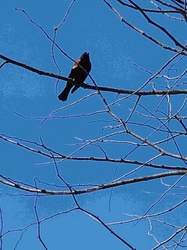
A medium-sized blackbird known for the male's vibrant red-and-yellow shoulder epaulets and distinctive, perching song. Highly territorial and vocal, especially during the breeding season.
Explore Red-winged Blackbird in the encyclopedia →Identify your own birds.
Get a report just like this from any photo or call, free.
Plumage & appearance
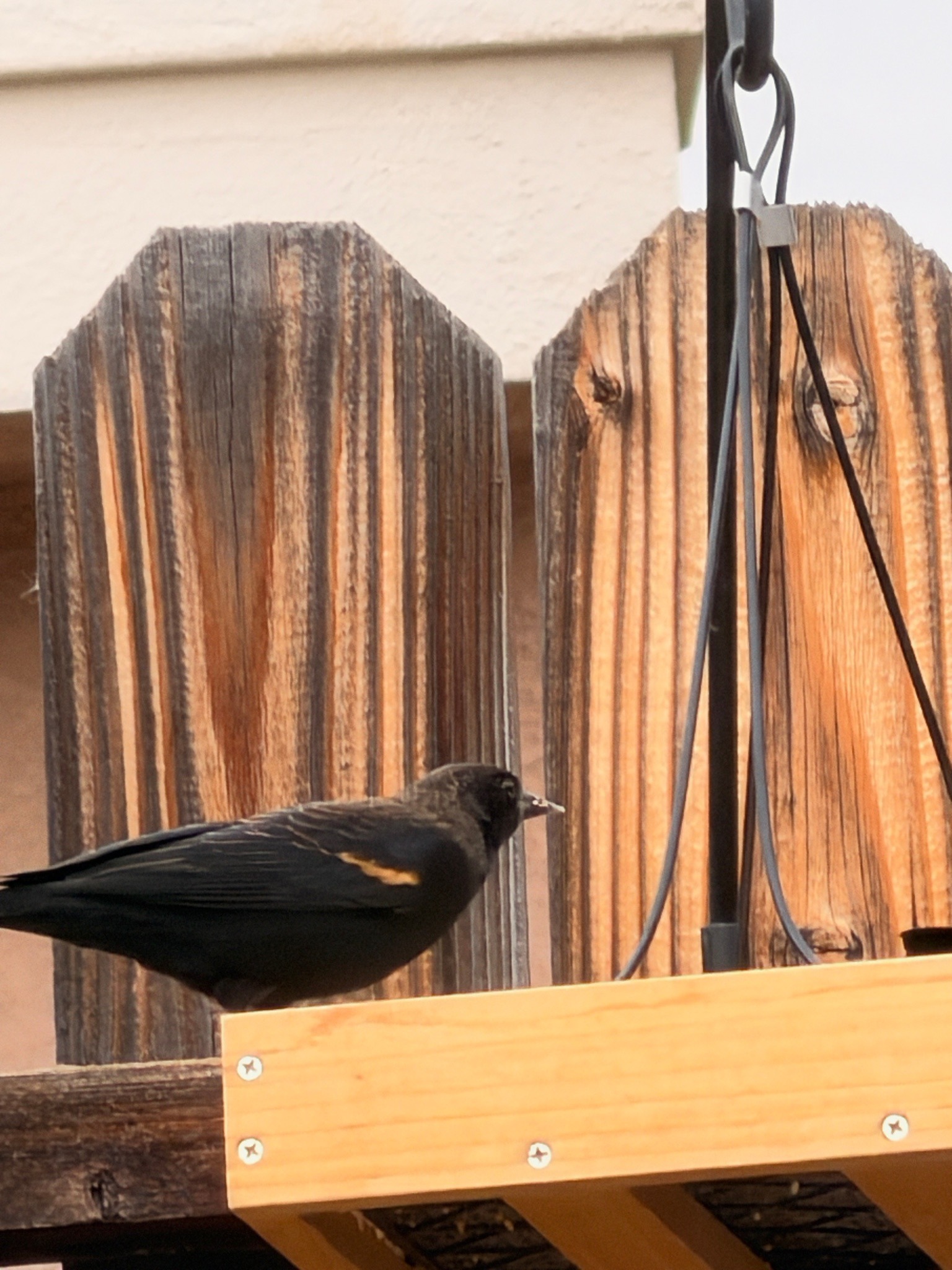
Adult males are glossy black with striking red and yellow shoulder patches (epaulets). Females are very different, featuring cryptic, heavily streaked dark brown and whitish plumage resembling a large sparrow, providing camouflage while nesting.
Key field marks
Male: Solid black body with bright red and yellow shoulder patches. Female: Dark brown, heavily streaked overall with a whitish eyebrow stripe.
Size & weight
Length: 7.1-9.1 inches (18-23 cm), Wingspan: 12.2-14.6 inches (31-37 cm), Weight: 1.4-2.7 oz (41-77 g)
Voice — call & song
The male's song is a famous, liquid, explosive 'con-la-ree!' or 'oak-a-lee!', accompanied by puffed-up feathers and flashed red epaulets. Calls include sharp 'check' notes.
Diet & foraging
Primarily insects and spiders during the summer; seeds, waste grain, and weed seeds during the fall and winter. Forages on the ground, in vegetation, or occasionally by catching insects in flight.
Habitat
Found primarily in freshwater and saltwater marshes, sedge meadows, wet agricultural fields, and occasionally drier upland habitats like pastures and old fields.
Migration & movement
Partial migrant. Northern populations migrate southward for the winter, while southern populations are year-round permanent residents.
Nesting & breeding
Females build a tightly woven, basket-like nest of wetland vegetation attached to reeds, cattails, or shrubs low over water. Clutch size is typically 3-4 eggs. Highly polygynous, with males defending territories containing multiple females.
Similar species
Tricolored Blackbird (males have white-bordered red epaulets and are more colonial) and Brewer's Blackbird (lacks red shoulders and has a paler, purplish-glossed head in males).
Ecological significance
Controls insect populations in wetland and agricultural ecosystems and serves as a significant food source for larger predators, though large flocks can sometimes cause agricultural damage to crops.
Conservation status
Least Concern, with a widespread and abundant population, although some local declines have been noted.
Observation tips
Look and listen near wetlands, marshes, agricultural fields, and roadside ditches. Males are easily spotted singing prominently from tall reeds, cattails, or fences.
Interesting facts
Red-winged Blackbirds are among the most abundant birds in North America and are famously aggressive defenders of their nesting territories, frequently mobbing much larger birds like hawks and crows.
More like this