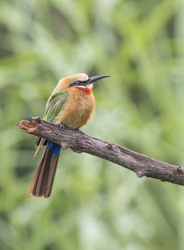
Order: Coraciiformes, Family: Momotidae
Blue-throated Motmot
Aspatha gularis
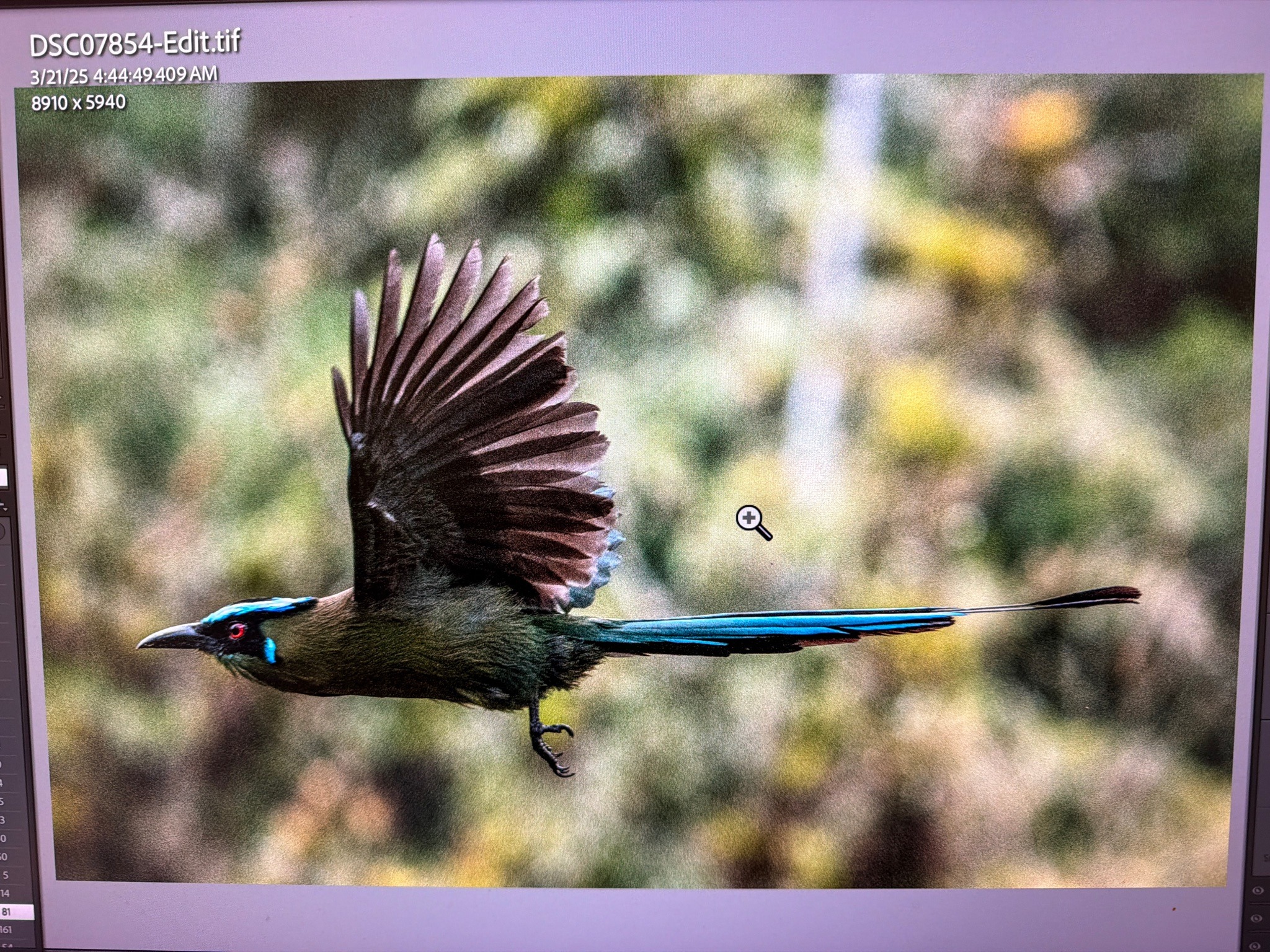
A medium-sized colorful bird with a stout bill, striking red eyes, bright blue facial markings, and a relatively long tail. They are often seen perched quietly in forest understory before darting out to catch insects.
Explore Blue-throated Motmot in the encyclopedia →Identify your own birds.
Get a report just like this from any photo or call, free.
Plumage & appearance
Features green upperparts, a rufous-brown underbelly and head, and bright turquoise-blue markings around the eye and on the throat. Unlike many other motmots, it lacks the racket-tipped tail, having instead a graduated tail with blue central feathers.
Key field marks
Red eyes, bright turquoise eyebrow and throat patch, rufous-brown head, and a long graduated tail without the characteristic bare-shafted rackets of most other motmots.
Size & weight
Length is approximately 28 to 30 cm (11 to 12 inches); weight is around 55 to 70 grams.
Voice — call & song
A low, resonant, hooting or throaty call, often described as a soft, rhythmic 'who-op' or series of muffled hoots.
Diet & foraging
Primarily insectivorous, feeding on large insects, beetles, and occasionally small vertebrates or fruits.
Habitat
Humid montane cloud forests and adjacent bushy clearings, typically at elevations between 1,500 and 3,000 meters.
Migration & movement
Non-migratory resident, though some altitudinal movement may occur in response to seasonal weather changes.
Nesting & breeding
Nests in burrows excavated in earthen banks, typically laying 3 to 4 white eggs. Both parents participate in excavation and chick rearing.
Similar species
Other motmot species such as the Highland Motmot, but the Blue-throated Motmot can be distinguished by its lack of tail rackets and the distinct blue patch on the throat.
Ecological significance
Acts as an important seed disperser and insect population regulator within its cloud forest ecosystem.
Conservation status
Least Concern, though populations are suspected to be slowly decreasing due to habitat loss.
Observation tips
Look for them in misty, high-altitude cloud forests. They often sit motionless for long periods, making them easier to spot by listening for their characteristic vocalizations.
Interesting facts
Unlike most other motmots, the Blue-throated Motmot does not have the elongated central tail feathers ending in racquets, retaining a more traditional tail shape.
More like this