Order: Anseriformes, Family: Anatidae
Hooded Merganser
Lophodytes cucullatus
A small, compact diving duck known for its ornate, adjustable crest and sharp stiletto-like bill adapted for catching fish.
Explore Hooded Merganser in the encyclopedia →Identify your own birds.
Get a report just like this from any photo or call, free.
Plumage & appearance
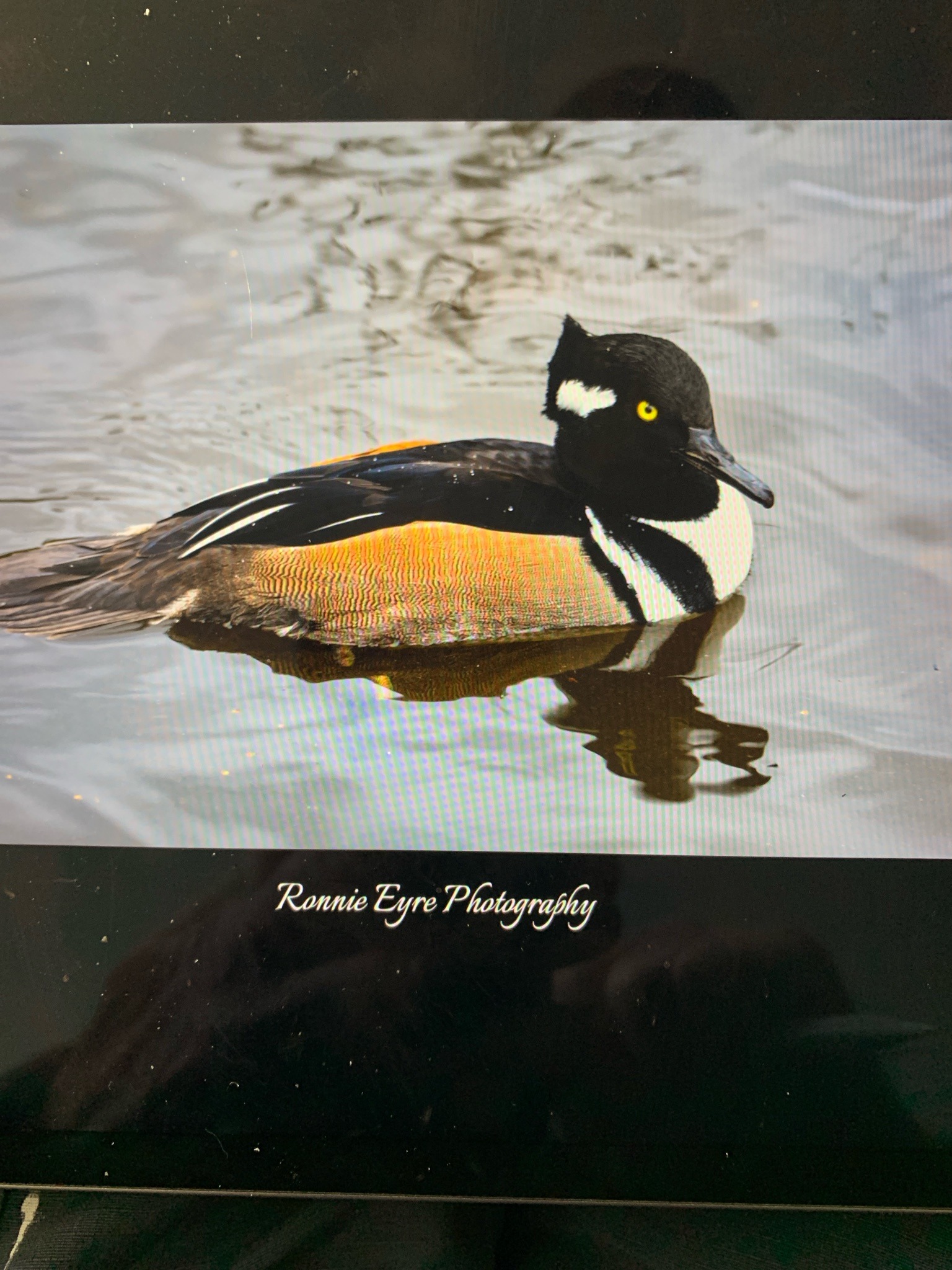
Adult males feature a striking, fan-shaped black-and-white crest, a dark head, rich chestnut flanks, and a white breast with two distinct black vertical bars. Adult females and juveniles have a duller reddish-brown crest, gray-brown body plumage, and less distinct markings.
Key field marks
Small size, slender dark bill, distinctive large rounded black-and-white crest (in males), and rich brownish-orange flanks.
Size & weight
Length: 40-49 cm (16-19 in), Wingspan: 60-66 cm (24-26 in), Weight: 450-680 g (1-1.5 lbs)
Voice — call & song
Generally silent, but males make a low, hoarse, frog-like croak or ticking sound during courtship, while females emit a harsh, hoarse cackle.
Diet & foraging
Primarily small fish, aquatic insects, crayfish, and other small aquatic crustaceans. They forage by diving and swimming underwater.
Habitat
Wooded wetlands, forested rivers, swamps, beaver ponds, and occasionally sheltered coastal bays during winter.
Migration & movement
Short to medium-distance migrant. Northern populations move south for the winter when lakes and rivers freeze, while southern populations are resident.
Nesting & breeding
Cavity nester using natural tree hollows or nest boxes near water. Lays a clutch of 7 to 13 white eggs, and occasionally practices egg-dumping in other ducks' nests.
Similar species
Common Merganser and Red-breasted Merganser, but the Hooded is much smaller and distinguished by its unique fan-shaped crest.
Ecological significance
Acts as an apex predator of small aquatic life in its freshwater habitats, helping regulate fish and macroinvertebrate populations.
Conservation status
Least Concern, with a stable to increasing population trend.
Observation tips
Look for them in quiet wooded ponds, small rivers, and flooded timber. They can be skittish, so approach slowly and use binoculars from a concealed spot.
Interesting facts
Hooded Mergansers can change the shape and size of their crest dynamically during courtship displays. Their eyes are specially adapted for seeing underwater, equipped with a clear membrane that acts like swimming goggles.
More like this