Order: Passeriformes, Family: Corvidae
Rufous Treepie
Dendrocitta vagabunda
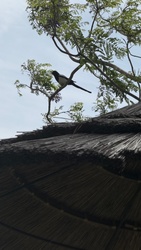
A long-tailed, noisy, and active member of the crow family with striking rufous and grey coloration, often seen foraging in small groups or mixed-species flocks in trees.
Explore Rufous Treepie in the encyclopedia →Identify your own birds.
Get a report just like this from any photo or call, free.
Plumage & appearance
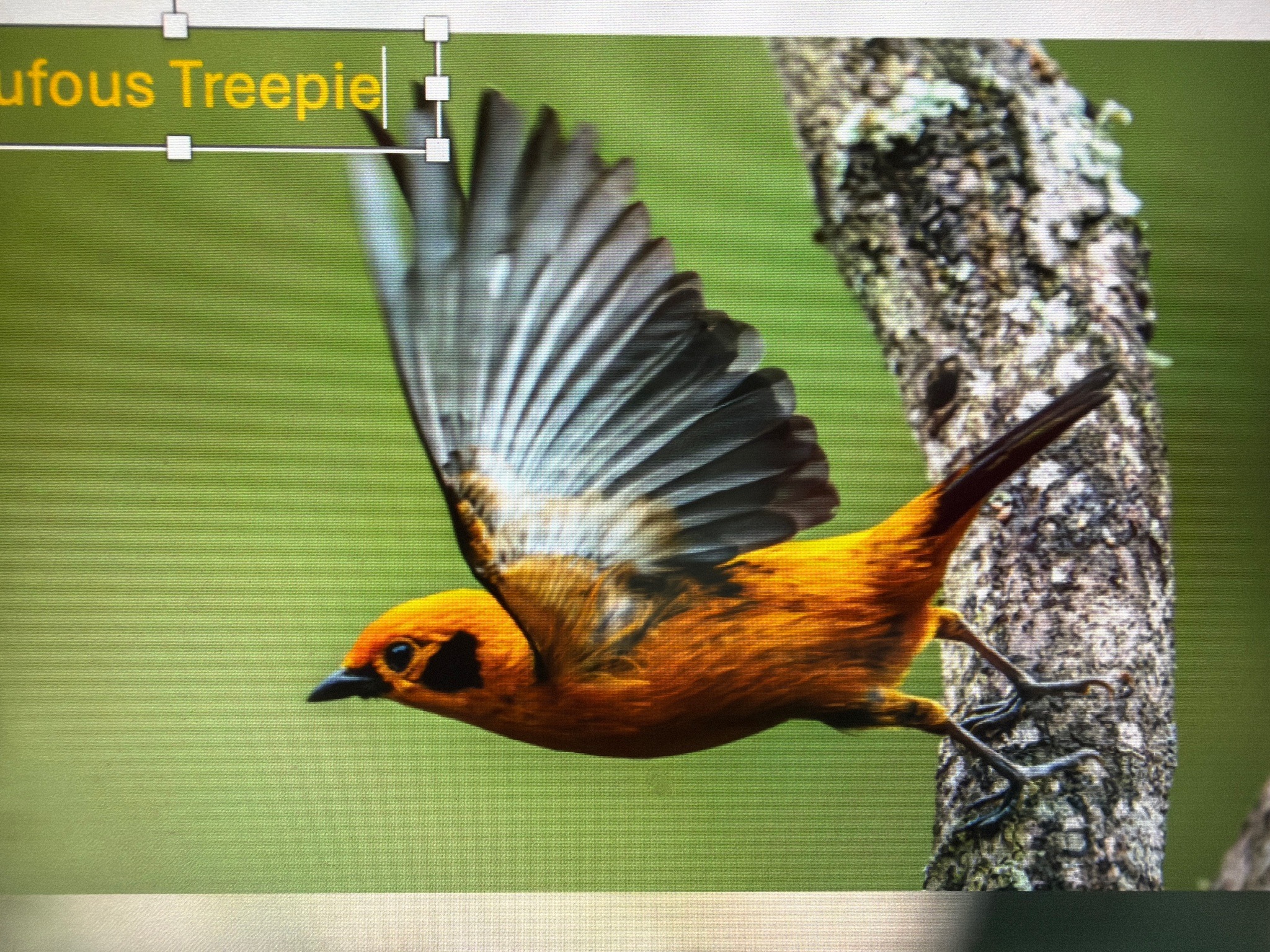
Head, neck, and breast are dark greyish-brown to blackish; mantle, back, and underparts are rich warm rufous-orange; wings are black with a prominent white patch on the primaries; tail is long and graduated, greyish with a broad black tip. Sexes are alike in plumage.
Key field marks
Distinctive rich rufous body, black mask around the eyes, grey head, black and white wings, and a very long, graduated tail with a black tip.
Size & weight
Length: 46-50 cm including the long tail; Weight: 90-130 g.
Voice — call & song
A wide variety of loud, metallic, musical, and harsh calls, including a resonant 'ko-ki-la' or churring sounds.
Diet & foraging
Omnivorous; feeds on insects, small reptiles, fruits, seeds, nectar, eggs, and nestlings of other birds.
Habitat
Open forests, scrub jungle, plantations, agricultural areas, and urban gardens with scattered large trees.
Migration & movement
Non-migratory resident species.
Nesting & breeding
Builds a loose cup nest of twigs usually placed in the fork of a dense tree or bamboo clump. Lays 3 to 5 eggs, and both parents share incubation and feeding responsibilities.
Similar species
Grey Treepie (Dendrocitta formosae), which has a greyer mantle and back, and Collared Treepie (Dendrocitta frontalis), which has a distinct black collar against a yellowish-white underpart.
Ecological significance
Acts as an important seed disperser and generalist predator in its ecosystem, helping control insect populations and managing forest regeneration.
Conservation status
Least Concern, with a stable and widespread population trend.
Observation tips
Look and listen for their loud, metallic calls in open forests, wooded gardens, and rural outskirts. They are quite bold and readily visit urban parks and forest edges.
Interesting facts
Rufous Treepies are known to occasionally follow tigers and other large predators to catch flushed insects, and they are notoriously clever at mobbing larger birds of prey.
More like this