Order Anseriformes, Family Anatidae
Northern Pintail
Anas acuta
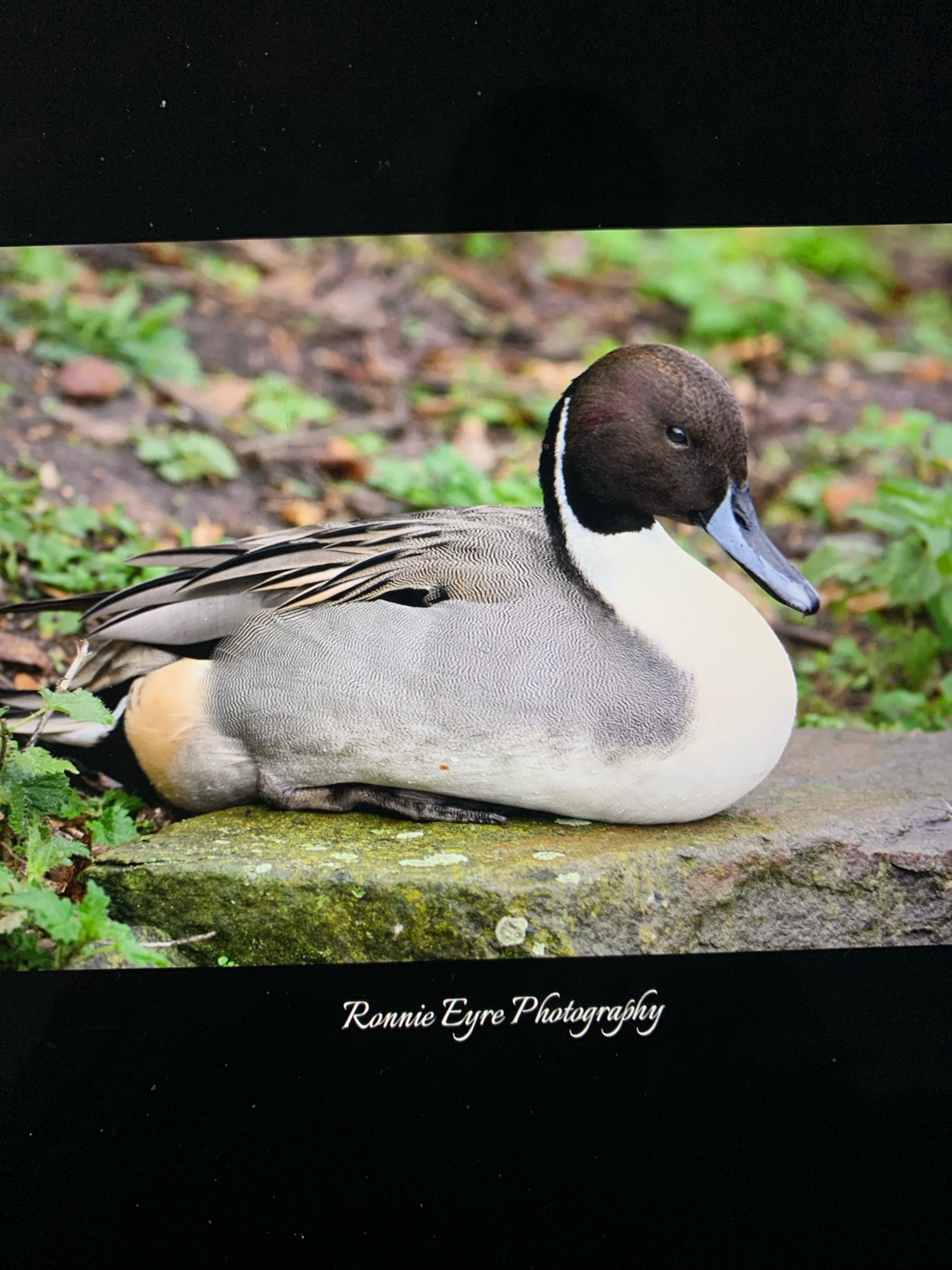
A slim, elegant dabbling duck with a long neck and a pointed tail. Males are particularly striking with bold white and grey patterns.
Explore Northern Pintail in the encyclopedia →Identify your own birds.
Get a report just like this from any photo or call, free.
Plumage & appearance
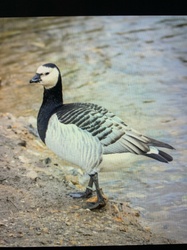
Adult male in breeding plumage has a chocolate-brown head, white neck with a striking white stripe extending up the side of the neck, grey flanks, long black-and-white scapulars, and a long pointed tail. Females are mottled brown with a more subtle greyish-blue bill and a shorter tail.
Key field marks
Sleek shape, long neck, white neck stripe on the male, and the prominent elongated central tail feathers.
Size & weight
Length: 51-76 cm, Wingspan: 80-95 cm, Weight: 450-1360 g
Voice — call & song
Males give a soft, low-pitched whistle or double-note whistle. Females emit a low, coarse quack.
Diet & foraging
Primarily feeds on seeds of aquatic plants, grasses, grains, and aquatic invertebrates by dabbling and tipping up.
Habitat
Open wetlands, shallow lakes, flooded fields, marshes, and estuaries.
Migration & movement
Strongly migratory, traveling in flocks to wintering grounds in the southern parts of their range.
Nesting & breeding
Nests on the ground in a shallow scrape lined with plant material and down, hidden in vegetation. Clutch size is typically 7-9 eggs, laid in spring.
Similar species
Mallard and Eurasian Wigeon, but easily distinguished by the Northern Pintail's slender silhouette, long neck, and pointed tail.
Ecological significance
Acts as a seed disperser and helps control aquatic invertebrates; serves as an important prey species for various predators.
Conservation status
IUCN Least Concern, with stable to fluctuating population trends.
Observation tips
Look for them in shallow wetlands, agricultural fields, and coastal marshes during early morning or late afternoon when they are active.
Interesting facts
Northern Pintails are among the fastest and most graceful flyers of all ducks, often performing twisting aerial maneuvers when migrating.
More like this