Order: Gruiformes, Family: Rallidae
Tasmanian Nativehen
Tribonyx mortierii
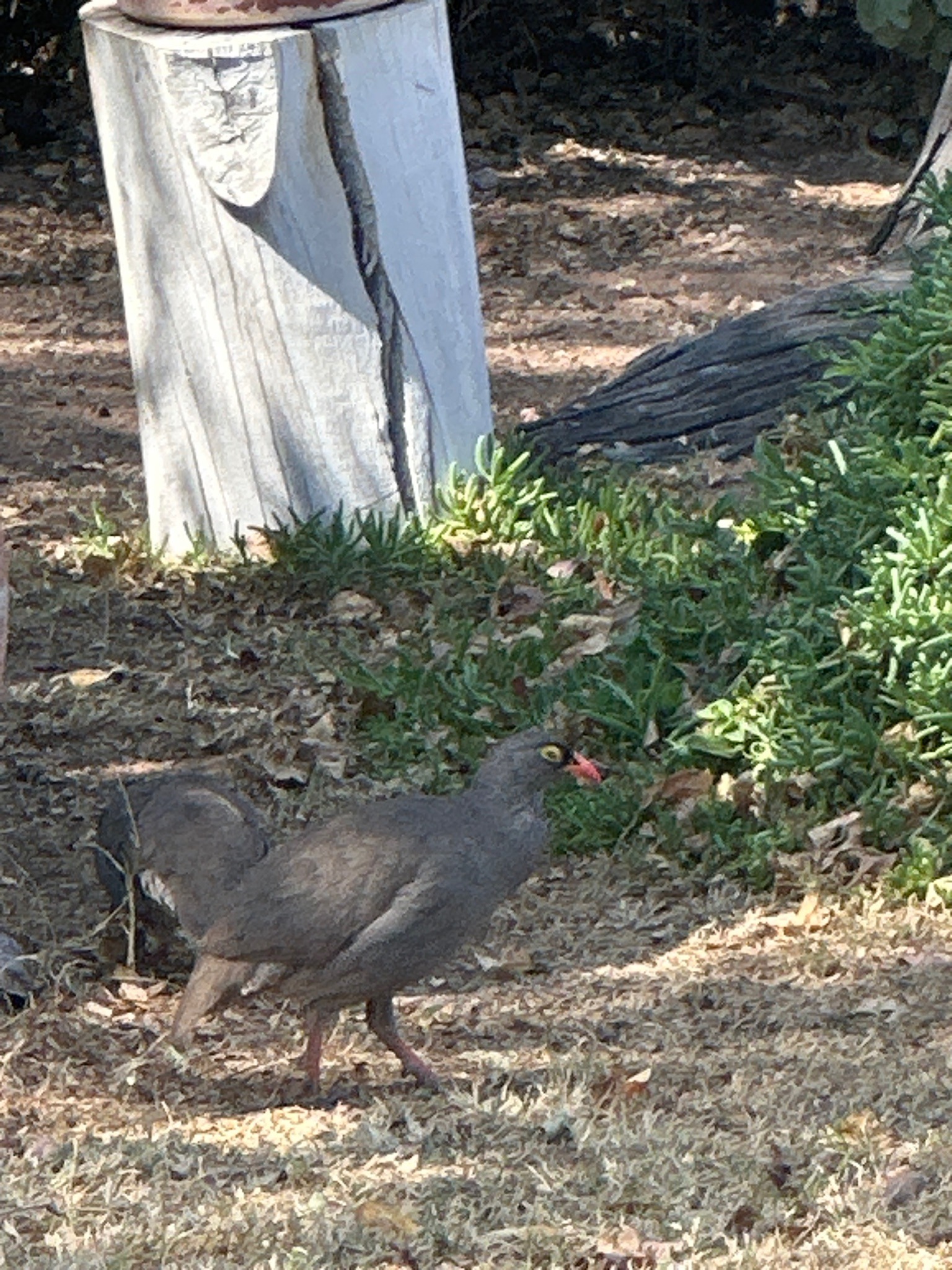
A robust, flightless, ground-dwelling bird with a rounded body, a short cocked tail with white markings under the base, and strong legs suited for running.
Explore Tasmanian Nativehen in the encyclopedia →Identify your own birds.
Get a report just like this from any photo or call, free.
Plumage & appearance
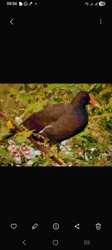
Adults have olive-brown upperparts, greyish-slate underparts with white flecks on the flanks. They feature a striking bright red bill and frontal shield, prominent yellow eyes, and dark legs. Sexes are visually similar, though males tend to be slightly larger.
Key field marks
Bright red bill and frontal shield, bold yellow eyes, olive-brown body, grey underparts with white flank streaks, and a short cocked tail showing white underneath.
Size & weight
Length: 43-51 cm, Wingspan: flightless/short wings, Weight: 900-1500 g
Voice — call & song
Famous for loud, booming, trumpeting duets performed by pairs or groups, often described as a raucous braying or cackling sound.
Diet & foraging
Primarily herbivorous, eating grasses, shoots, seeds, roots, and occasionally insects and invertebrates.
Habitat
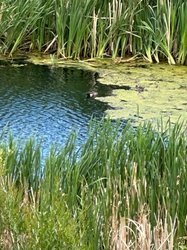
Found in open country, grassy paddocks, wetlands, marsh edges, and farmland near water sources.
Migration & movement
Non-migratory resident; highly territorial throughout the year.
Nesting & breeding
Builds a bulky cup nest of grasses and reeds on or near the ground in dense vegetation. They lay clutches of 5 to 8 eggs, and cooperative breeding groups are common where older offspring help raise subsequent broods.
Similar species
Dusky Moorhen and Eurasian Coot, but distinguished by being flightless, lacking a white facial shield (in coots), and having distinctly different vocalizations and brownish-grey plumage.
Ecological significance
Acts as an important grazer in grassy ecosystems, helping control certain plant growth and serving as prey for native predators like raptors and quolls.
Conservation status
Least Concern, with a stable population trend.
Observation tips
Look for them grazing in pastures, near water bodies, or along woodland edges. They are quite approachable and often run rather than fly when disturbed.
Interesting facts
Despite having wings, Tasmanian Nativehens are entirely flightless. They are remarkably fast runners, capable of reaching speeds up to 50 km/h.
More like this