Order: Gruiformes, Family: Rallidae
Takahe
Porphyrio hochstetteri
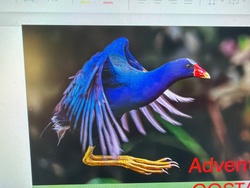
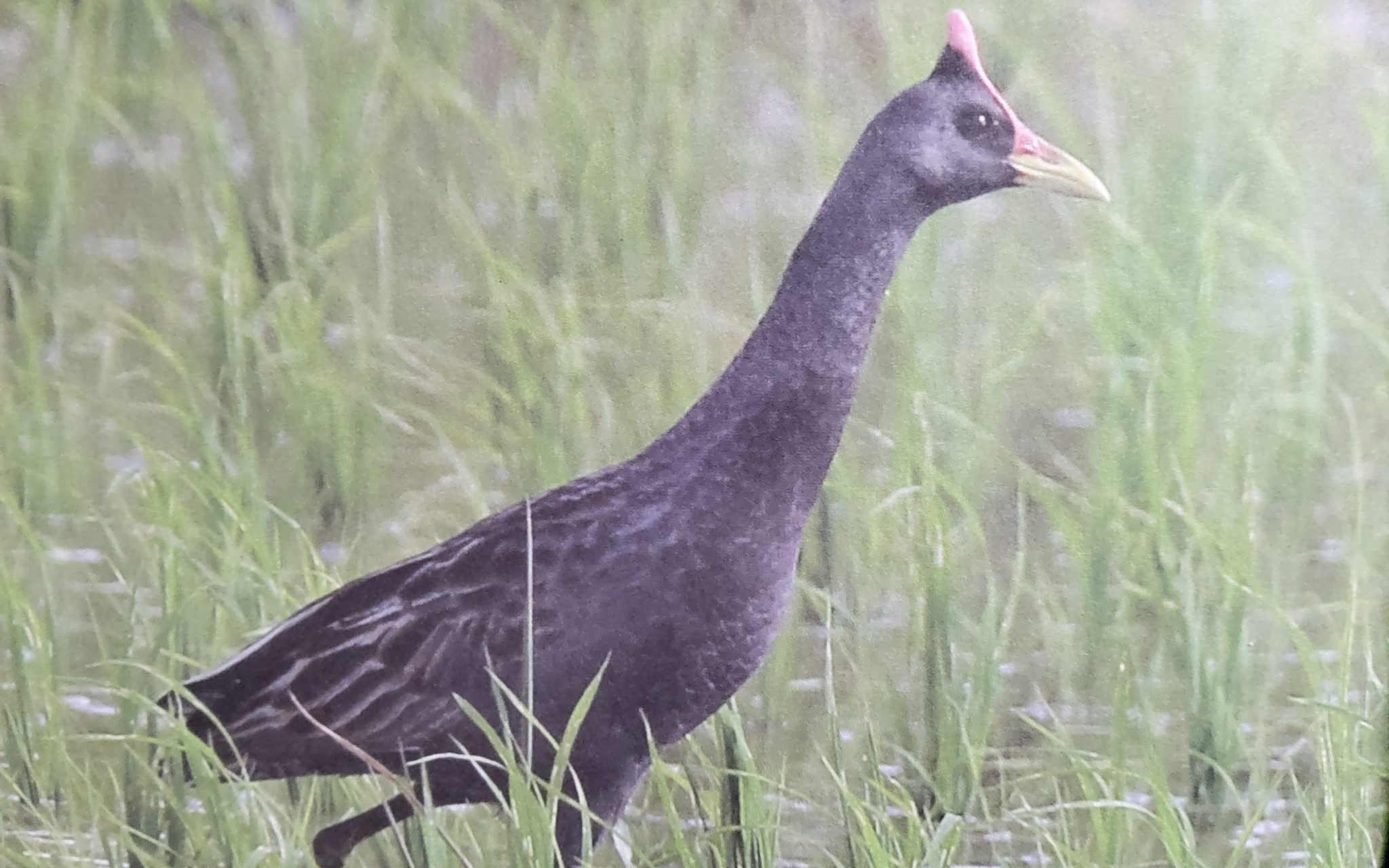
A large, flightless, heavily-built rail with robust legs, a stout red bill, and striking blue and green plumage. Despite its heavy body and wings that are used only for balance and display, it is surprisingly agile on steep slopes.
Explore Takahe in the encyclopedia →Identify your own birds.
Get a report just like this from any photo or call, free.
Plumage & appearance
Adults feature striking deep indigo-blue plumage on the head, neck, and underparts, transitioning to rich olive-green and turquoise on the back and wings. The legs and massive conical bill are a vibrant bright red, complemented by a prominent pinkish-red frontal shield. Juveniles are much duller and browner, with brownish-grey bills and legs.
Key field marks
Massive red bill with a pink frontal shield, stout red legs, voluminous deep blue and green plumage, and inability to fly.
Size & weight
Length: 63 to 73 cm; Wingspan: approximately 40 to 50 cm (flightless); Weight: 2.3 to 3.8 kg.
Voice — call & song
Loud, carrying, booming calls and resonant trumpeting sounds, often described as a deep, echoing shriek or honk used to maintain contact in misty mountain weather.
Diet & foraging
Strictly herbivorous, feeding predominantly on the starchy basal portions of snow tussock grass, as well as ferns, seeds, and insects opportunistically.
Habitat
Prefers high-rainfall alpine and sub-alpine grasslands, tussocklands, and scrublands, though reintroduced populations also inhabit lowland forest margins and wetlands.
Migration & movement
Non-migratory resident, though some individuals may make short-vertical movements to lower altitudes during severe winter snows.
Nesting & breeding
Builds a bulky, well-hidden bowl nest made of tussock grass and leaves, usually concealed in dense vegetation. Lays 1 to 3 buff-colored, spotted eggs. Both parents share incubation and fiercely defend their large territories.
Similar species
Purple Swamphen (Porphyrio melanotus) - The Takahe is significantly larger, heavier, completely flightless, has much stouter legs and bill, and lacks the slender build of the swamphen.
Ecological significance
Acts as a primary consumer and grazer in its alpine tussock grassland ecosystem, helping to shape vegetation structure and seed dispersal.
Conservation status
Endangered, with a slow population recovery due to intensive conservation management, predator control, and translocation programs.
Observation tips
Best observed by visiting protected sanctuaries or guided eco-tours in Fiordland, New Zealand, or on offshore island sanctuaries like Tiritiri Matangi or Kapiti Island where they are habituated and easier to see.
Interesting facts
The Takahe was famously considered extinct until its sensational rediscovery in 1948 by Geoffrey Orbell in the remote Murchison Mountains of Fiordland, New Zealand.
More like this