Order: Gruiformes, Family: Rallidae
Common Gallinule
Gallinula galeata
A medium-sized rail that swims like a duck and walks on floating vegetation with long toes. It exhibits frequent tail-flicking and head-bobbing while swimming.
Explore Common Gallinule in the encyclopedia →Identify your own birds.
Get a report just like this from any photo or call, free.
Plumage & appearance
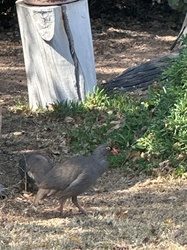
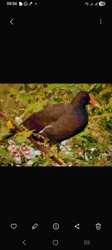
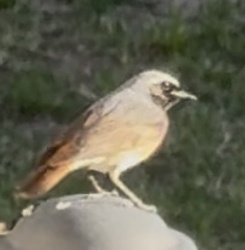
Adults are slate-gray with a brownish back, a white stripe along the flank, and white outer tail feathers. They are most notable for their bright red frontal shield and bill with a yellow tip. Juveniles are much paler and more brown than adults, lacking the red shield.
Key field marks
Red frontal shield and bill with yellow tip, white stripe on the flank, large yellowish-green feet, and frequent tail flicking exhibiting white feathers under the tail.
Size & weight
Length: 12-14 in (30-35 cm); Wingspan: 20-23 in (50-58 cm); Weight: 11-16 oz (310-450 g)
Voice — call & song
A variety of loud, hen-like clucks, barks, and croaks, often described as 'kek-kek-kek'.
Diet & foraging
Omnivorous; feeds on aquatic plants, seeds, berries, insects, snails, and small fish.
Habitat
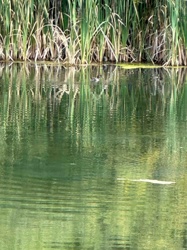
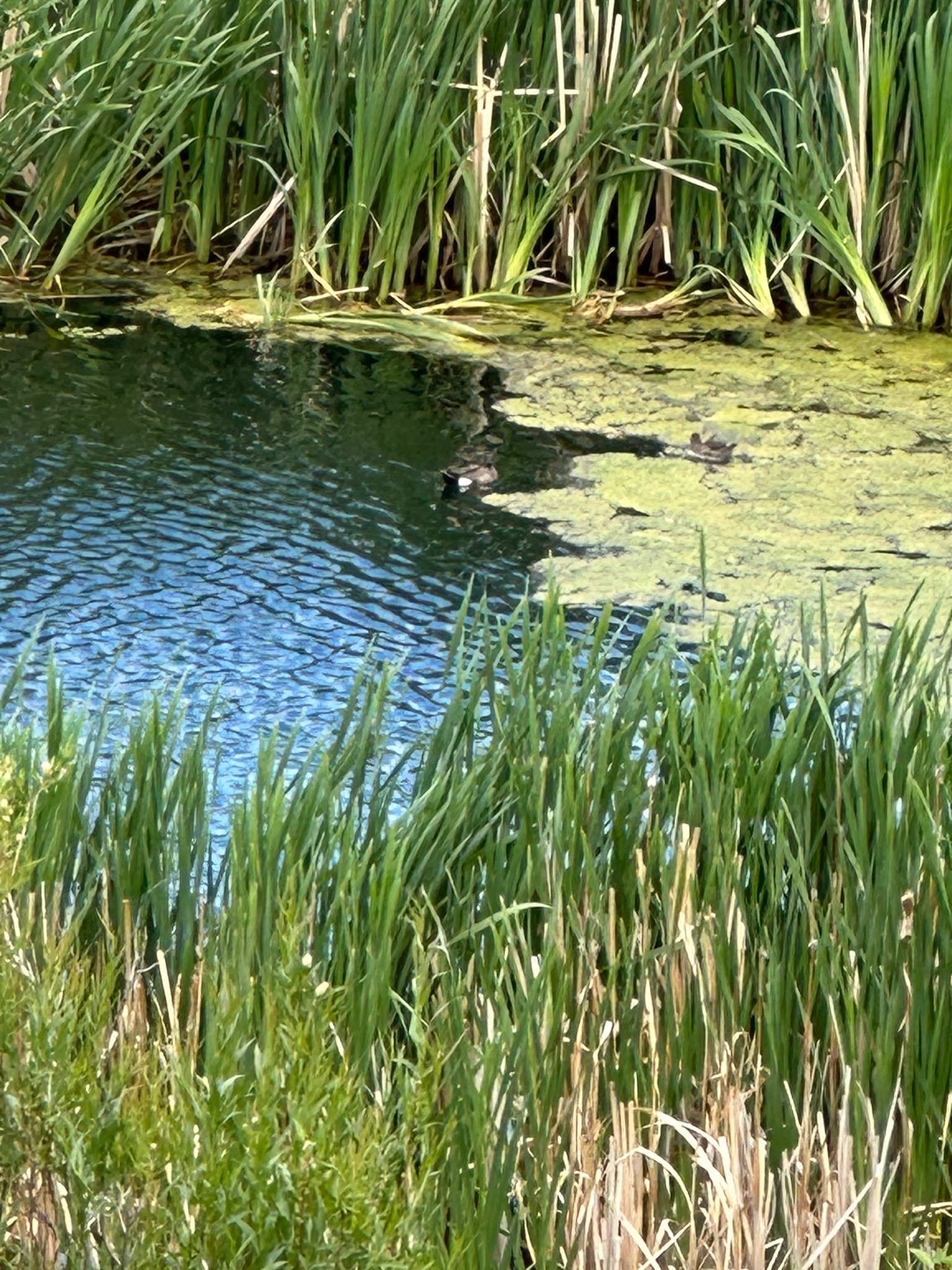
Freshwater marshes, ponds, canals, and lakes with abundant emergent vegetation like cattails or reeds.
Migration & movement
Resident in the southern US, Mexico, and South America; migratory in the northern US and southern Canada.
Nesting & breeding
Builds a platform nest of dead vegetation among reeds or on floating mats. Lays 5-12 eggs. Both parents incubate and tend to the precocial chicks, which can swim soon after hatching.
Similar species
American Coot (lacks the red shield, has a white bill and lacks the white flank stripe) and Common Moorhen (found in Eurasia/Africa).
Ecological significance
Influences aquatic plant communities through grazing and serves as prey for larger wading birds and alligators.
Conservation status
Least Concern (IUCN); population is generally stable across its wide range.
Observation tips
Look for them along the edges of marshes or ponds with emergent vegetation. They are often spotted walking on lily pads or swimming near reeds.
Interesting facts
Despite their lack of webbed feet, they are excellent swimmers thanks to their long, slender toes that distribute weight across floating plants.
More like this