Order: Gruiformes, Family: Rallidae
Eurasian Moorhen
Gallinula chloropus
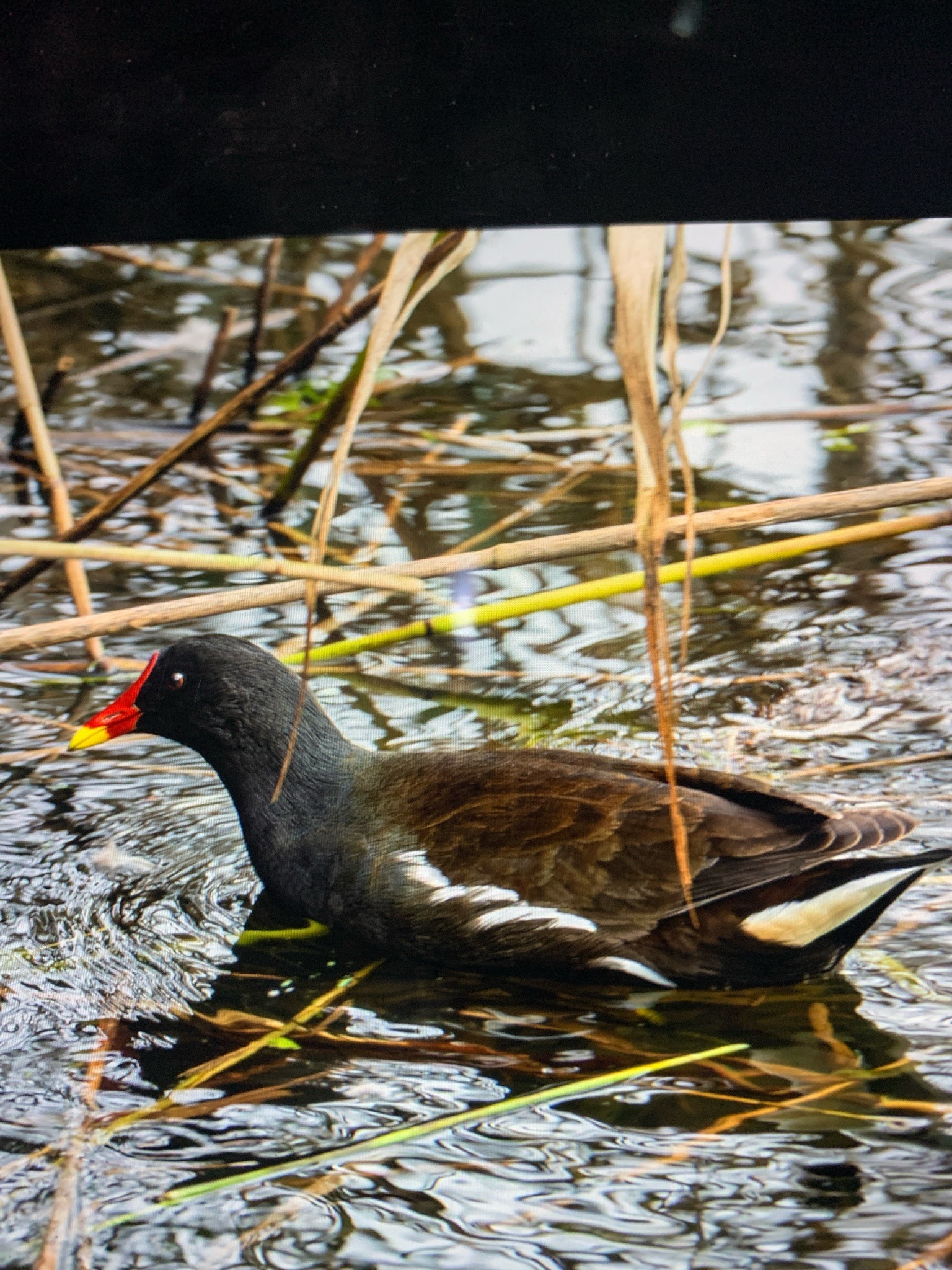
A medium-sized waterbird with chicken-like proportions, dark body, white flank stripes, and a bright red and yellow bill. It is often seen swimming with a characteristic head-bobbing motion or walking delicately on floating vegetation.
Explore Eurasian Moorhen in the encyclopedia →Identify your own birds.
Get a report just like this from any photo or call, free.
Plumage & appearance
Adults have dark slate-grey to blackish plumage with a brownish tinge on the back, a prominent white line along the flanks, and striking white undertail coverts visible when the tail is cocked. They feature a bright red frontal shield on the forehead and a red bill tipped with yellow. Juveniles are duller and browner, lacking the red shield and bill.
Key field marks
Bright red frontal shield and bill with a yellow tip, dark body, conspicuous white flank stripe, and stark white undertail coverts.
Size & weight
Length: 30-38 cm, Wingspan: 50-62 cm, Weight: 192-500 g
Voice — call & song
A wide variety of loud, sharp, and often raucous calls, including sharp 'kruk' notes, explosive squeaks, and cackling sounds.
Diet & foraging
Omnivorous; feeds on aquatic plants, seeds, fruits, grasses, small insects, mollusks, and occasionally small fish or vertebrate carrion. Forages by swimming, dabbling, and occasionally grazing on land.
Habitat
Freshwater wetlands, marshes, flooded woodlands, well-vegetated ponds, lakes, slow-moving rivers, and agricultural drainage ditches.
Migration & movement
Resident in temperate and tropical regions, but northernmost populations are migratory, moving to ice-free waters in winter.
Nesting & breeding
Builds a bulky cup nest of reeds and sedges hidden in dense wetland vegetation or low trees over water. Lays 5-11 eggs per clutch, with both parents sharing incubation and chick-rearing duties, sometimes aided by offspring from previous broods as helpers.
Similar species
American Coot (lacks the red bill and white flank stripe, has a white frontal shield and lobed toes); Common Gallinule (very similar to Eurasian Moorhen and formerly considered the same species, found in the Americas).
Ecological significance
Acts as an important seed disperser for aquatic plants, helps control aquatic invertebrate populations, and serves as prey for various wetland predators such as raptors and mammals.
Conservation status
Least Concern, with a stable global population trend.
Observation tips
Look for them in calm freshwater habitats with dense emergent vegetation like reeds and rushes. Approach quietly, as they tend to swim into cover when disturbed, and watch for their habit of flicking their white tail feathers.
Interesting facts
Moorhens are surprisingly good swimmers despite lacking webbed feet, using their long toes to walk across floating lily pads and vegetation.
More like this