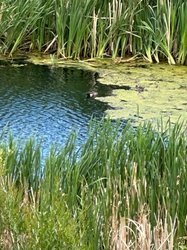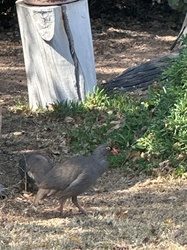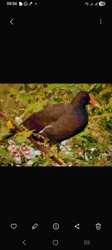
Order: Gruiformes, Family: Rallidae
American Purple Gallinule
Porphyrio martinica
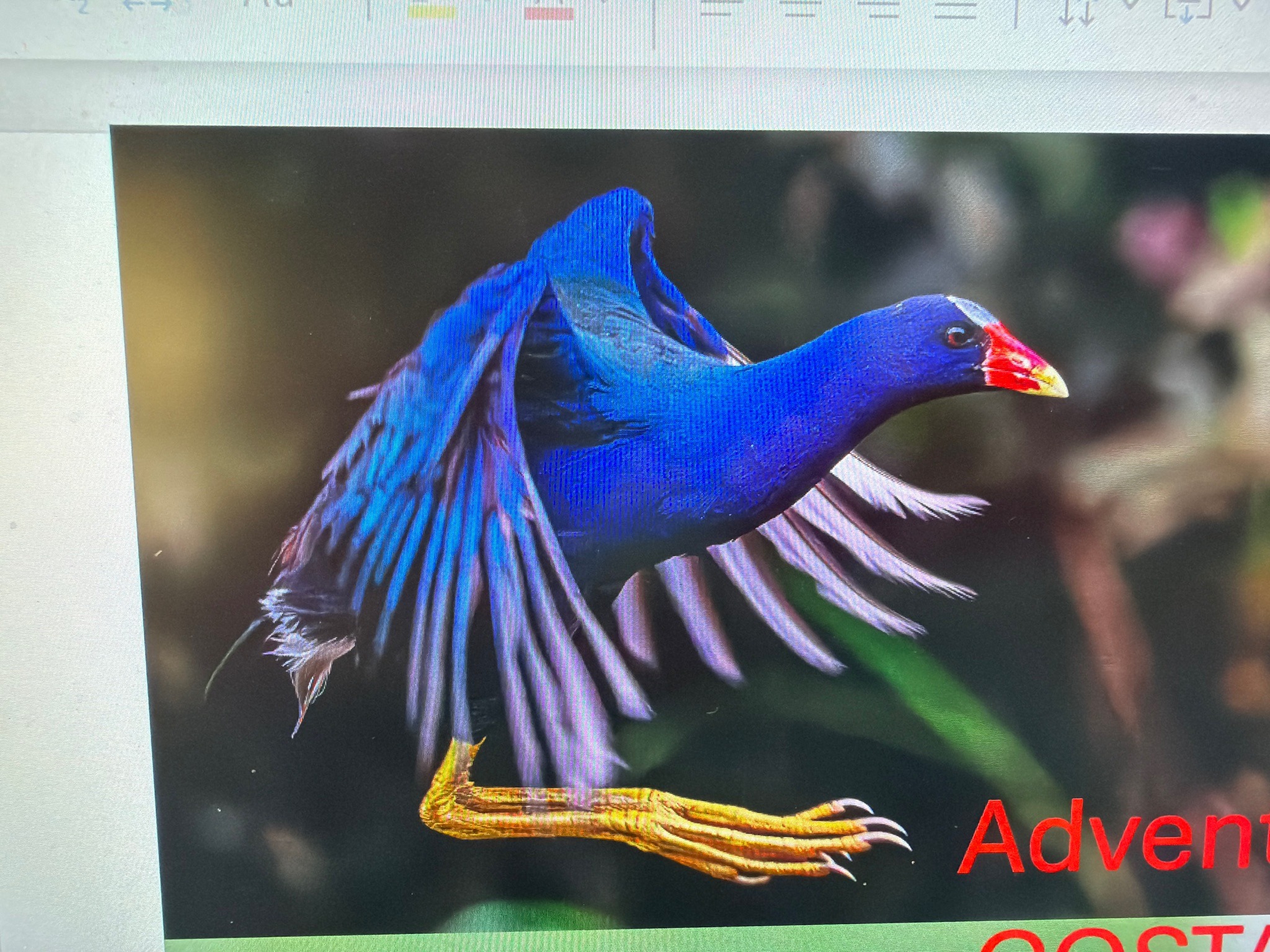
A brilliantly colored rail with vibrant purple and blue plumage, a sharply contrasting red and yellow bill, and exceptionally long yellow legs and toes designed for walking on floating vegetation.
Explore American Purple Gallinule in the encyclopedia →Identify your own birds.
Get a report just like this from any photo or call, free.
Plumage & appearance
Adults feature striking purple-blue head and underparts, glossy greenish-bronze back and wings, a bright red bill with a yellow tip, and a pale blue frontal shield. Legs and very long toes are bright yellow. Juveniles are duller, brownish-buff above with whitish underparts and a greenish-yellow bill.
Key field marks
Vibrant purple-blue head and underparts, greenish back, red and yellow bill, pale blue frontal shield, and very long yellow legs and toes.
Size & weight
Length: 30-37 cm (12-15 inches), Wingspan: 50-60 cm (20-24 inches), Weight: 140-305 g
Voice — call & song
Makes a variety of loud, harsh cackling, squawking, and clucking sounds, often given when disturbed or during territorial displays.
Diet & foraging
Omnivorous; feeds on seeds, leaves, flowers, and fruits of aquatic plants, as well as insects, frogs, snails, small fish, and occasionally the eggs and nestlings of other birds.
Habitat
Freshwater marshes, swamps, wetlands, ponds with dense emergent vegetation, and flooded agricultural fields like rice paddies.
Migration & movement
Partial migrant. Northernmost populations in the United States migrate south for the winter, and the species is well-known for vagrancy, appearing far outside its normal range.
Nesting & breeding
Builds a bulky, cup-shaped nest of reeds and grasses hidden well in dense marsh vegetation. Lays 5 to 10 creamy-white or buff eggs speckled with brown. Both parents share incubation and chick-rearing duties.
Similar species
Common Gallinule (Gallinula galeata), which has a darker brownish-black body with white flanks and a red shield with a red (not yellow-tipped) bill, and the Azure Gallinule (Porphyrio flavirostris) of South America which is smaller and paler.
Ecological significance
Acts as an important seed disperser for aquatic plants and helps regulate invertebrate and small vertebrate populations in freshwater wetlands.
Conservation status
Least Concern, with stable populations though locally impacted by wetland degradation.
Observation tips
Look for them walking gracefully over lily pads and floating vegetation in freshwater marshes, swamps, and rice fields. They can be elusive but often reveal themselves by flicking their white-edged tails.
Interesting facts
Their extremely long toes spread out their weight efficiently, allowing them to walk easily on floating lily pads and aquatic vegetation without sinking.
More like this