Order: Pelecaniformes, Family: Threskiornithidae
Northern Bald Ibis
Geronticus eremita
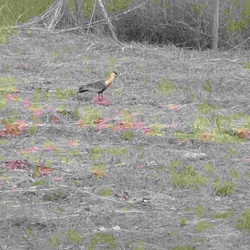
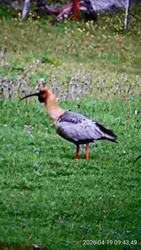
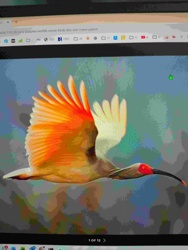
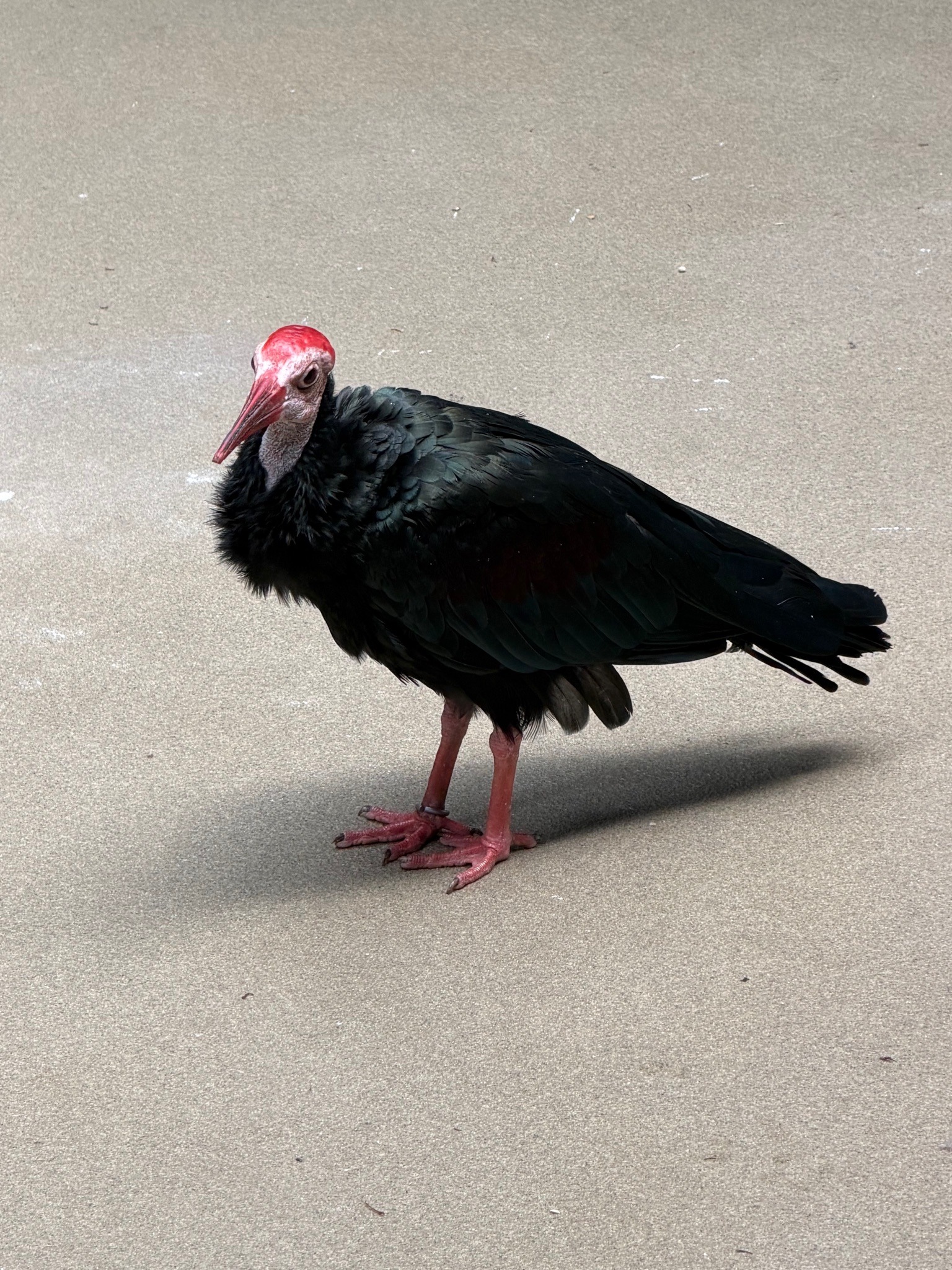
A striking, medium-large wading bird with glossy dark plumage, a long downcurved red bill, red legs, and a completely bare red head. It is social, often foraging in groups on open ground.
Explore Northern Bald Ibis in the encyclopedia →Identify your own birds.
Get a report just like this from any photo or call, free.
Plumage & appearance
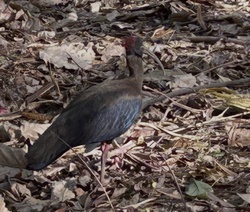
Glossy black body plumage with iridescent metallic green, bronze, and purple highlights on the wings and back. The head and face are unfeathered, featuring bright red skin with a rough, wrinkled texture, and a distinctive ruff of long, hair-like black feathers on the lower neck. Juveniles have duller greyish skin on the head and brownish body plumage.
Key field marks
Unmistakable in its range: glossy black body, long downcurved red bill, bare red head, and ruff of long black feathers on the neck.
Size & weight
Length: 70-80 cm, Wingspan: 125-135 cm, Weight: 1.0-1.3 kg
Voice — call & song
Usually silent away from breeding colonies, but produces hoarse croaks, grunts, and low wheezing notes at nesting sites.
Diet & foraging
Mainly carnivorous, feeding on large insects (beetles, grasshoppers, locusts), spiders, scorpions, small lizards, snails, and occasionally small mammals or nestlings. Forages by probing the soil with its long bill.
Habitat
Arid or semi-arid uncultivated areas, steppes, rocky cliffs, and agricultural fields near cliffs where they nest and roost.
Migration & movement
Mostly sedentary (resident) in Morocco, though historical Middle Eastern populations were migratory. European reintroduced populations exhibit seasonal partial migration.
Nesting & breeding
Nests in colonies on remote, inaccessible ledges and crevices of vertical rock cliffs. Lays 2 to 4 eggs in a bulky stick nest lined with grass and herbs. Both parents share incubation and chick-rearing duties.
Similar species
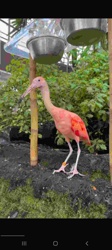
Southern Bald Ibis (Geronticus calvus) of southern Africa, which has a paler, whitish crown on an otherwise red head and pinkish legs.
Ecological significance
Acts as an important predator of large insects and invertebrates, helping to control pest populations in arid and semi-arid agricultural or grassland ecosystems.
Conservation status
Endangered, with a small wild population concentrated mainly in Morocco, alongside ongoing European reintroduction programs.
Observation tips
Look for them in protected reserves or semi-desert rocky outcrops within their Moroccan range, or at specific reintroduction monitoring sites in Spain and Central Europe. They are often approachable when habituated in managed conservation areas.
Interesting facts
The Northern Bald Ibis was once common across Central Europe until the 17th century, when it was wiped out primarily by overhunting and climate change. It is the subject of intensive international conservation and reintroduction efforts, including using microlight aircraft to guide captive-bred juveniles along ancestral migration routes.
More like this