Order: Suliformes, Family: Sulidae
Northern Gannet
Morus bassanus
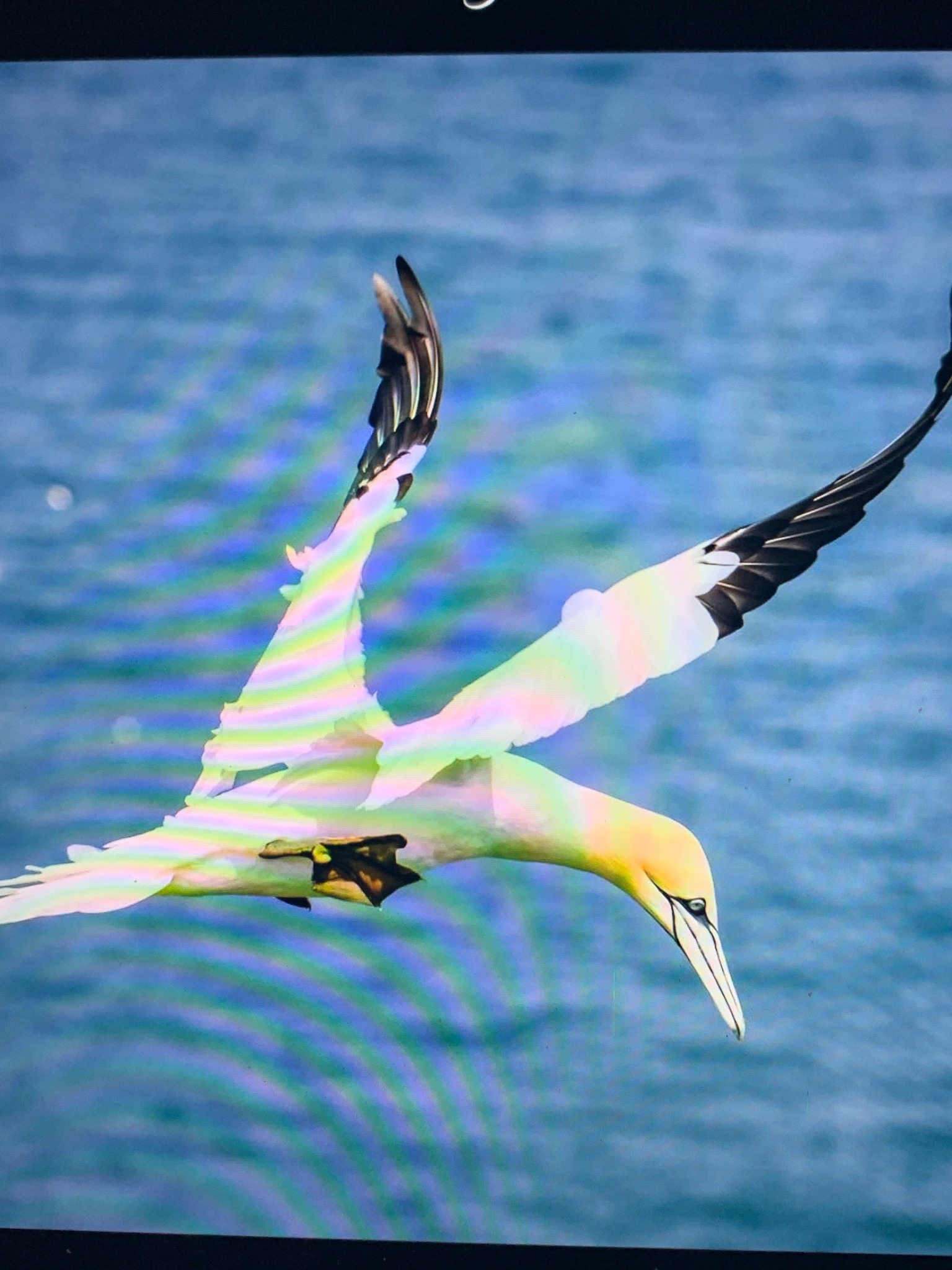
A large, sleek seabird with a long, pointed yellowish bill, torpedo-shaped body, long pointed wings, and a wedge-shaped tail. Known for spectacular high-speed plunge-diving into the ocean for fish.
Explore Northern Gannet in the encyclopedia →Identify your own birds.
Get a report just like this from any photo or call, free.
Plumage & appearance
Adults are strikingly white with distinct black wingtips and a pale yellowish-buff head and neck. Juveniles are dark brown overall, gradually acquiring white feathers over several years until reaching adult plumage at about 4-5 years of age. Sexes look alike.
Key field marks
All-white body, golden-buff head, black-tipped wings, pointed bill, and bright blue ring around the eye.
Size & weight
Length: 85-97 cm (33-38 in); Wingspan: 170-180 cm (67-71 in); Weight: 2.2-3.6 kg (4.9-7.9 lbs).
Voice — call & song
Noisy at breeding colonies, giving harsh, grating calls sounding like 'urrah-urrah' or 'kerr-kerr'.
Diet & foraging
Mainly small schooling fish such as herring, sandlances, capelin, and mackerel, caught by dramatic plunge-diving from heights of up to 40 meters.
Habitat
Pelagic marine environments and coastal waters, breeding exclusively on steep sea cliffs, rocky islands, and stacks.
Migration & movement
Migratory; northern populations move south for the winter, wintering in the Atlantic from the Gulf of Mexico and the Mediterranean down to West Africa.
Nesting & breeding
Breeds in dense colonies on cliff ledges or flat ground. Constructs a bulky nest of seaweed, earth, and debris. Usually lays a single chalky-blue egg, incubated by both parents using their webbed feet.
Similar species
Masked Booby or Nazca Booby (rarely overlap in range; Northern Gannet is larger with black wingtips extending further) and gulls (which lack the torpedo shape and plunge-diving habits).
Ecological significance
Acts as a top marine predator and bioindicator of fish stock health in North Atlantic marine ecosystems.
Conservation status
Least Concern, with stable to increasing global population trends.
Observation tips
Visit major coastal seabird colonies during the breeding season (such as cliffs or offshore islands) or watch from headlands and ocean-facing cliffs with binoculars during migration.
Interesting facts
Northern Gannets enter the water at speeds up to 100 km/h (60 mph). They have specialized air sacs in their face and chest that cushion the impact of hitting the water.
More like this