Order: Suliformes, Family: Phalacrocoracidae
Double-crested Cormorant
Nannopterum auritum
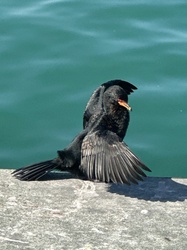
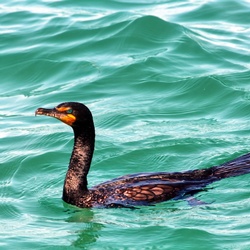
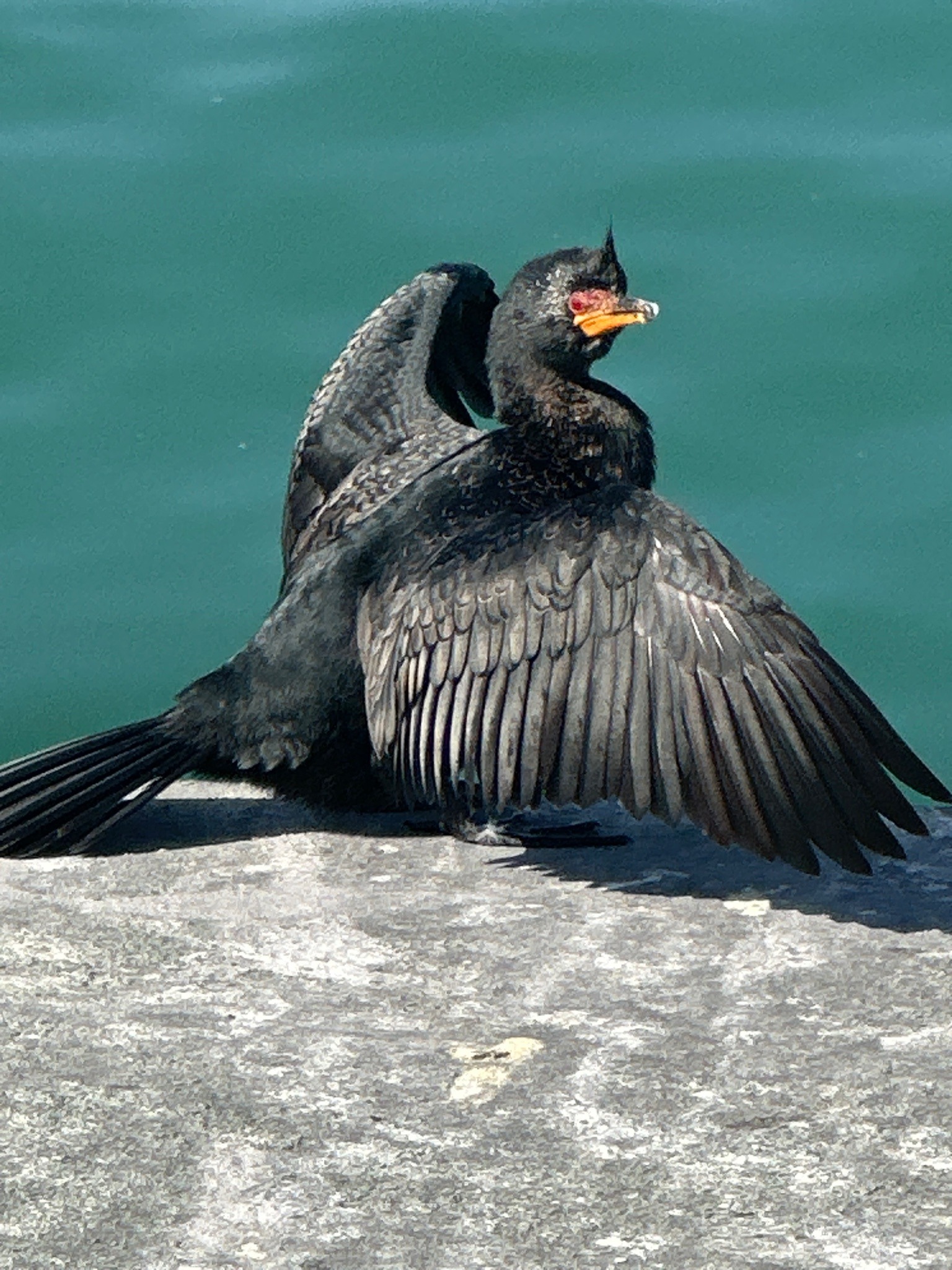
A large, water-loving bird with a heavy body, long neck, hooked bill, and stiff tail feathers. Often seen perched with wings spread wide to dry after diving for fish.
Explore Double-crested Cormorant in the encyclopedia →Identify your own birds.
Get a report just like this from any photo or call, free.
Plumage & appearance
Adults are mostly black with a coppery sheen on the wings and back. They feature a bare orange-yellow throat pouch and a small, double crest of black feathers behind the eyes during the breeding season. Juveniles are brownish-gray with paler underparts and a duller yellowish throat.
Key field marks
Large black body, hooked bill, bright orange-yellow throat pouch, and lack of white patches (unlike some other cormorant species).
Size & weight
Length: 70–90 cm (28–35 in), Wingspan: 114–123 cm (45–48 in), Weight: 1.2–2.5 kg (2.6–5.5 lbs).
Voice — call & song
Generally silent away from the breeding colony, but produces low-pitched, guttural grunts, groans, and croaks at nesting sites.
Diet & foraging
Primarily fish, supplemented occasionally by amphibians, crustaceans, and aquatic insects. Forages by diving from the surface and pursuing prey underwater.
Habitat
Inland lakes, rivers, marshes, reservoirs, and coastal marine environments such as bays, estuaries, and sheltered offshore islands.
Migration & movement
Migratory in northern parts of its range, moving to ice-free coastal and southern waters; resident in coastal areas and the southern US.
Nesting & breeding
Breeds in colonies, often alongside other waterbirds. Nests are bulky platforms made of sticks, seaweed, and debris, placed on cliffs, in trees, or on the ground. Clutch size is typically 3 to 4 eggs, incubated by both parents.
Similar species
Other cormorant species such as the Neotropic Cormorant, which is smaller with a more slender neck and a differently shaped throat pouch. Brandt's and Pelagic Cormorants are found on the Pacific coast and have different facial coloration and crest structures.
Ecological significance
Acts as an apex predator in many aquatic ecosystems, helping regulate fish populations and serving as an indicator of aquatic ecosystem health.
Conservation status
Least Concern, with a stable or increasing population trend.
Observation tips
Look for them near coastlines, lakes, and rivers, frequently perched on docks, pilings, or rocks with their wings held open to dry.
Interesting facts
Unlike most waterbirds, cormorants do not have fully waterproof feathers. This adaptation helps them reduce buoyancy when diving, but requires them to spend considerable time drying their wings in the sun after fishing.
More like this