Order: Anseriformes, Family: Anatidae
Mallard (Juvenile / Eclipse Plumage)
Anas platyrhynchos
A medium-sized dabbling duck with a stout body, rounded head, and broad bill. Known for tipping up to feed rather than diving completely.
Explore Mallard (Juvenile / Eclipse Plumage) in the encyclopedia →Identify your own birds.
Get a report just like this from any photo or call, free.
Plumage & appearance
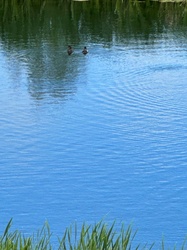
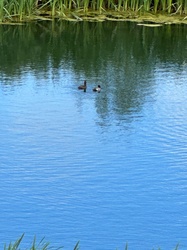
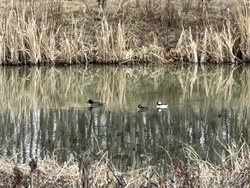
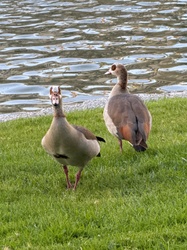
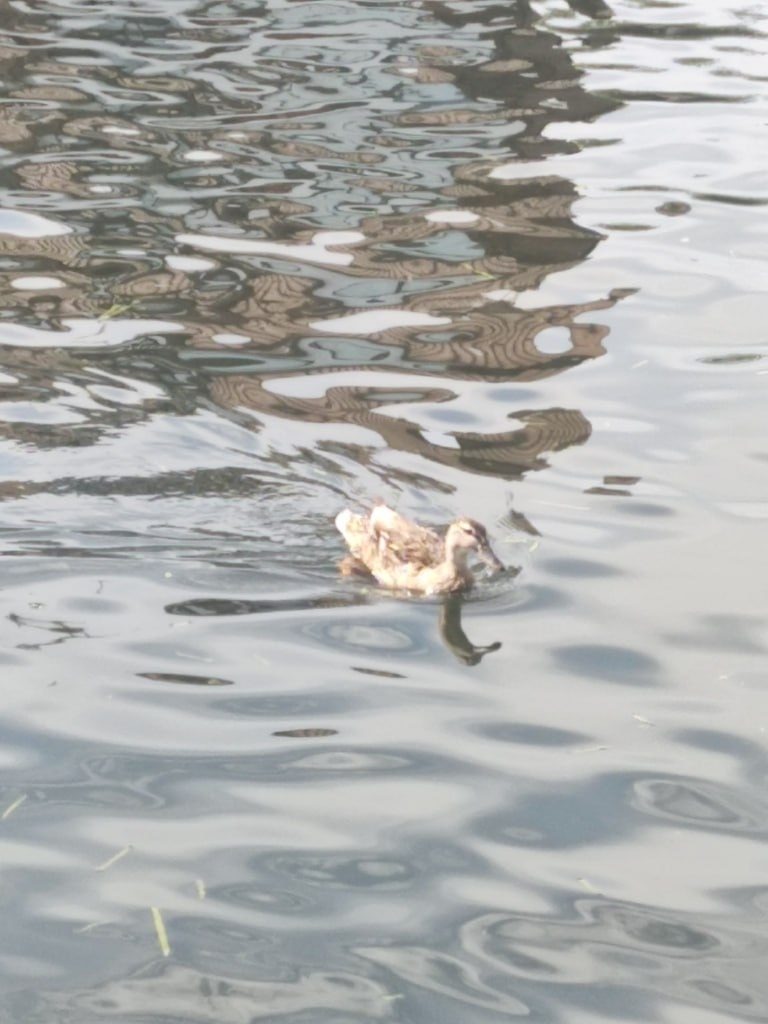
This individual appears to be a juvenile or an adult male in eclipse (non-breeding) plumage, showing mottled brown, buff, and tan body feathers with hints of the adult female's patterned camouflage, yet lacking the bright green head of a breeding male.
Key field marks
Look for the distinctive purple-blue wing speculum bordered by white, orange-and-brown mottled body, and a broad yellowish-green or brownish bill.
Size & weight
Length: 50-65 cm (20-26 in), Wingspan: 81-98 cm (32-39 in), Weight: 720-1,580 g (1.6-3.5 lbs).
Voice — call & song
Females produce the classic loud, descending quack ('quack-quack-quack-quack'), while males make a quieter, muffled two-note rasp or whistle.
Diet & foraging
Omnivorous; feeds on plant matter, seeds, roots, insects, small fish, and amphibians by dabbling at the water surface or grazing on land.
Habitat
Found in a wide variety of wetlands, including lakes, rivers, marshes, ponds, estuaries, and urban park waters.
Migration & movement
Partial migrant. Northern populations migrate south for winter, while urban and southern populations are generally non-migratory residents.
Nesting & breeding
Builds a shallow bowl nest on the ground hidden in dense vegetation near water, lined with plant material and down feathers. Lays 8-13 greenish-buff eggs.
Similar species
American Black Duck and various domestic duck hybrids. Distinguished by specific wing speculum patterns and head markings.
Ecological significance
Acts as an important seed disperser for aquatic plants and helps control invertebrate and algae populations in wetlands.
Conservation status
Least Concern, with a stable and very large global population.
Observation tips
Easily observed in almost any urban park, lake, or wetland. They are often habituated to humans and will approach for food.
Interesting facts
Mallards are the ancestors of almost all domestic duck breeds (except the Muscovy duck) and frequently hybridize with other duck species.
More like this