Order: Anseriformes, Family: Anatidae
Ringed Teal
Callonetta leucophrys
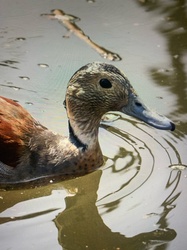
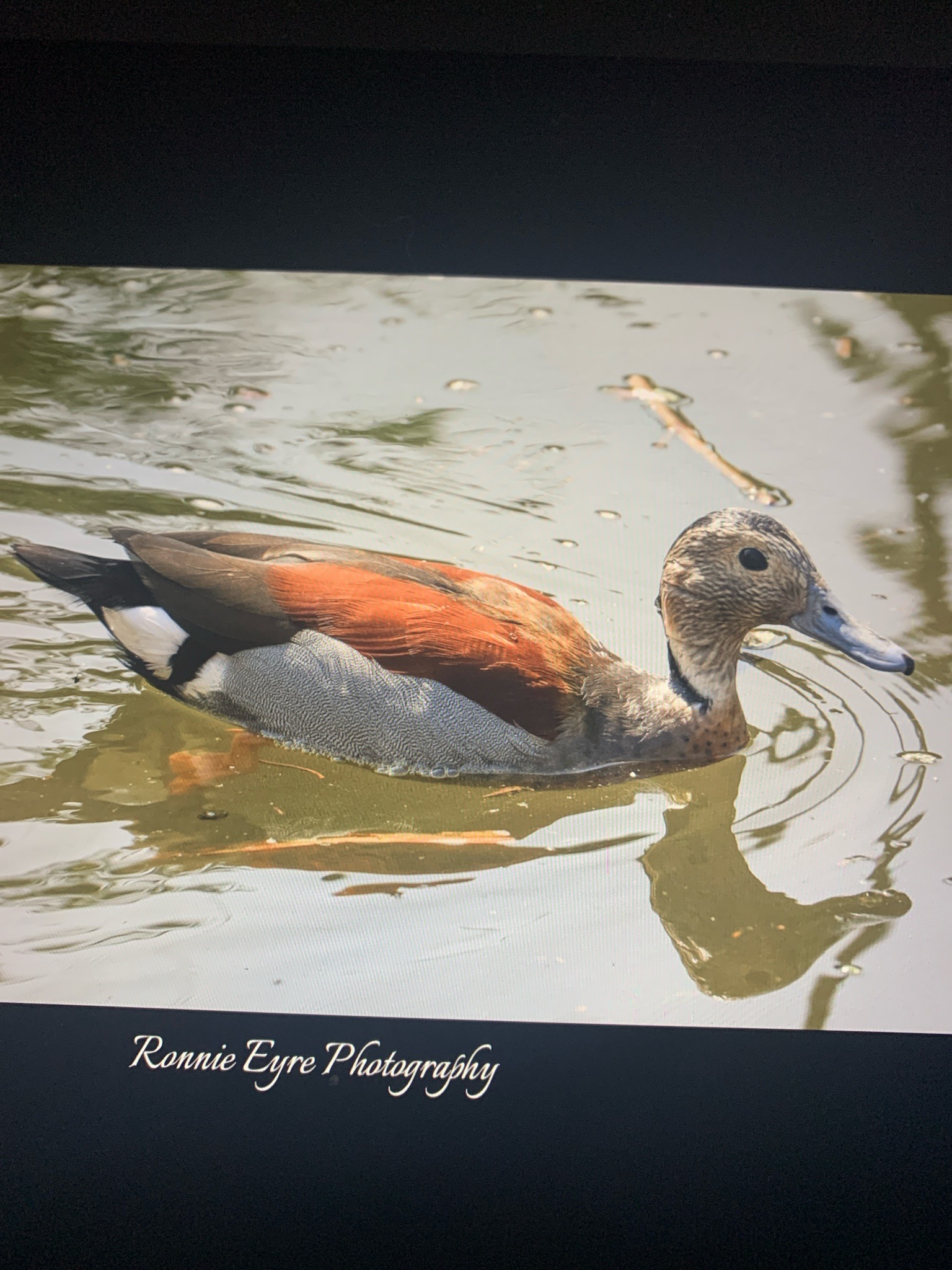
A small, distinctively patterned perching duck with bright chestnut back feathers, grey flanks, and a prominent dark neck ring.
Explore Ringed Teal in the encyclopedia →Identify your own birds.
Get a report just like this from any photo or call, free.
Plumage & appearance
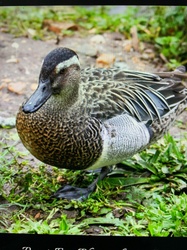
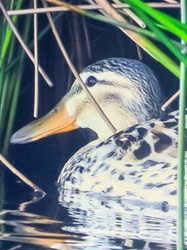
Adult males have a pale grey face, a black nape and neck stripe, rich chestnut-red upperparts, finely vermiculated grey flanks, a pinkish-grey breast with dark spots, and a white patch near the black tail. Females are duller with a mottled greyish-brown head, whitish throat and cheeks, and less distinct chestnut backs.
Key field marks
Key field marks include the pale face with a dark neck stripe, rich chestnut mantle, finely vermiculated grey flanks, and blue-grey bill.
Size & weight
Length: 35-38 cm (14-15 inches); Weight: 300-350 grams.
Voice — call & song
Soft, high-pitched whistles and quiet piping calls, particularly during courtship or when alarmed.
Diet & foraging
Omnivorous, feeding on seeds, aquatic plants, grasses, insects, and small aquatic invertebrates by dabbling and grazing.
Habitat
Forested wetlands, riverine forests, lagoons, marshes, and flooded pastures with abundant trees suitable for perching and nesting.
Migration & movement
Generally resident or locally nomadic, undertaking minor movements in response to seasonal water availability.
Nesting & breeding
Nests in tree cavities or hollows, laying clutches of 6 to 12 eggs. The female incubates the eggs, and parents lead the precocial ducklings to water shortly after hatching.
Similar species
Brazilian Teal (Amazonetta brasiliensis), which lacks the distinct black neck stripe and vibrant chestnut mantle of the Ringed Teal.
Ecological significance
Acts as a seed disperser and plays a role in aquatic food webs by consuming insects, aquatic vegetation, and small invertebrates.
Conservation status
Least Concern, with a stable population trend.
Observation tips
Look for them in forested wetlands, flooded forests, and swampy areas. They often perch in trees, so scanning overhead branches near water can be fruitful.
Interesting facts
Unlike many typical ducks, Ringed Teals are arboreal, frequently perching and nesting high up in trees. They are also quite popular in captivity due to their striking plumage and gentle temperament.
More like this