Order: Anseriformes, Family: Anatidae
Australian Wood Duck
Chenonetta jubata
A medium-sized, goose-like duck often seen grazing on land or perched in trees. It has a relatively short bill and a sleek, upright posture.
Explore Australian Wood Duck in the encyclopedia →Identify your own birds.
Get a report just like this from any photo or call, free.
Plumage & appearance
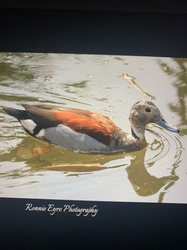
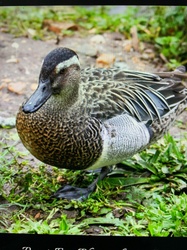
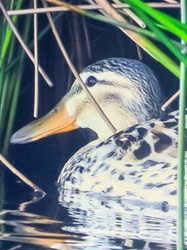
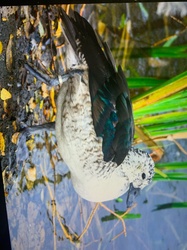
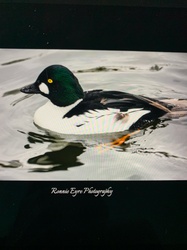
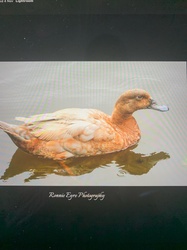
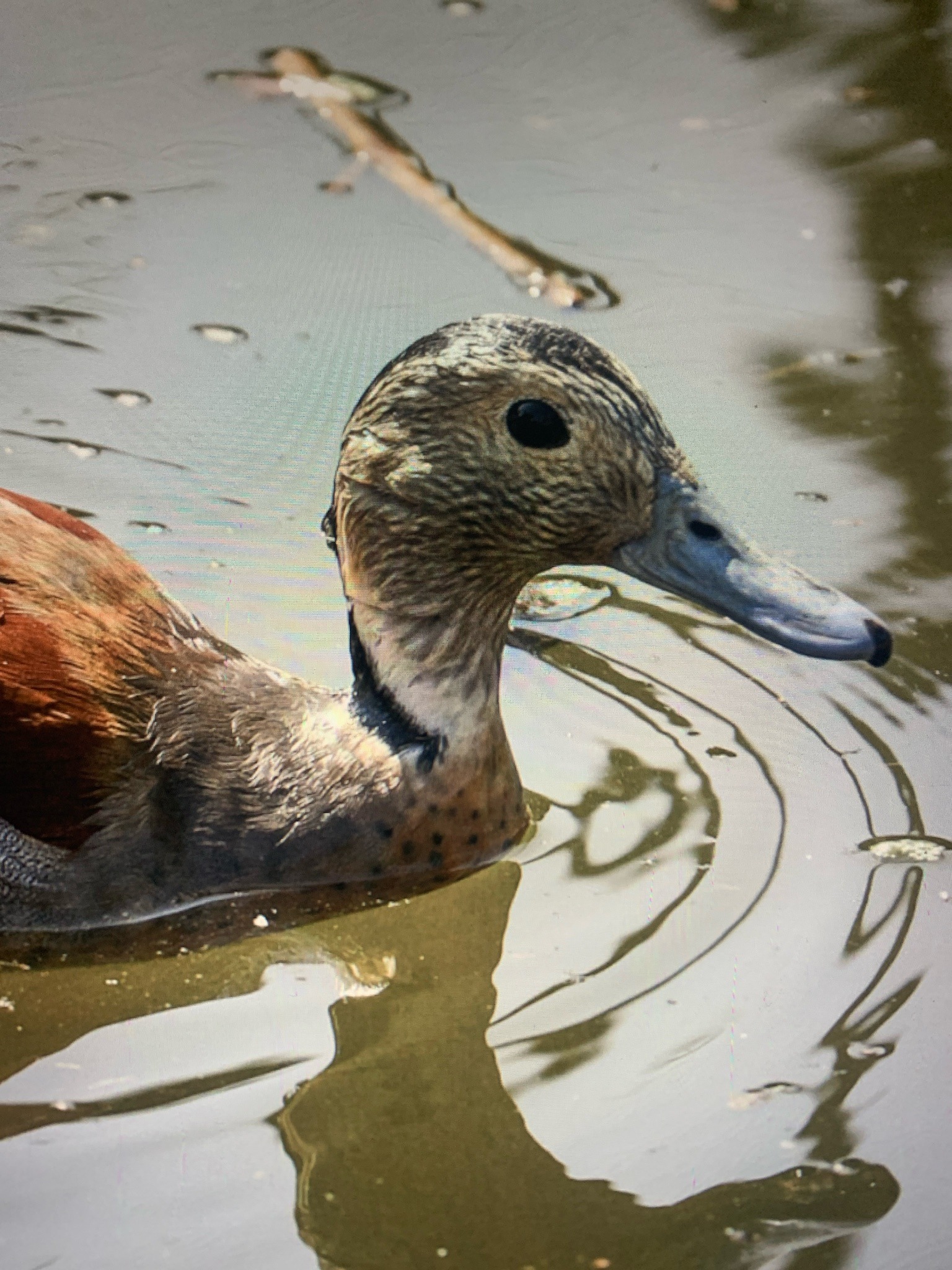
Adult males have a dark grey head, finely barred grey underparts, rich brown back and wings, and a distinct blackish lower neck and upper breast. Females have a similar pattern but feature white stripes above and below the eye and somewhat paler underparts with more pronounced spotting. Juveniles are duller and browner with less distinct markings.
Key field marks
Dark grey head, pale mottled cheek, short grey bill, black lower neck/breast band, and barred grey underparts.
Size & weight
Length: 45-51 cm, Wingspan: 75-85 cm, Weight: 700-900 g
Voice — call & song
A high-pitched, soft, descending purring call or a sharp, nasal double-note cry, particularly given in flight.
Diet & foraging
Primarily herbivorous, feeding on grasses, clover, leaves, seeds, and sometimes aquatic insects and small invertebrates.
Habitat
Found near freshwater wetlands, swamps, flooded pastures, and farmland, requiring nearby trees for nesting holes.
Migration & movement
Generally sedentary, but may undertake nomadic movements during severe droughts to find water.
Nesting & breeding
Nests in tree hollows lined with down feathers, typically near water. Lays a clutch of 9 to 13 creamy-white eggs.
Similar species
Can be confused with other small ducks or geese, but its goose-like stance, grey head, and barred breast distinguish it from species like the Pacific Black Duck or Maned Duck.
Ecological significance
Helps control aquatic vegetation and insects, and plays a role in seed dispersal through grazing and digestion.
Conservation status
Least Concern, with a stable population trend.
Observation tips
Look for them grazing on lawns, pastures, and wetlands, or perched high in dead trees near water sources. They are relatively approachable and tolerant of humans.
Interesting facts
Despite being called a wood duck, they spend a significant amount of time grazing on open grasslands rather than wooded areas, and their ducklings leap from high tree hollows to the ground shortly after hatching.
More like this