Order Anseriformes, Family Anatidae
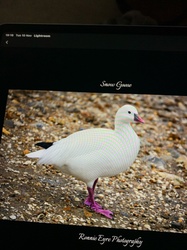
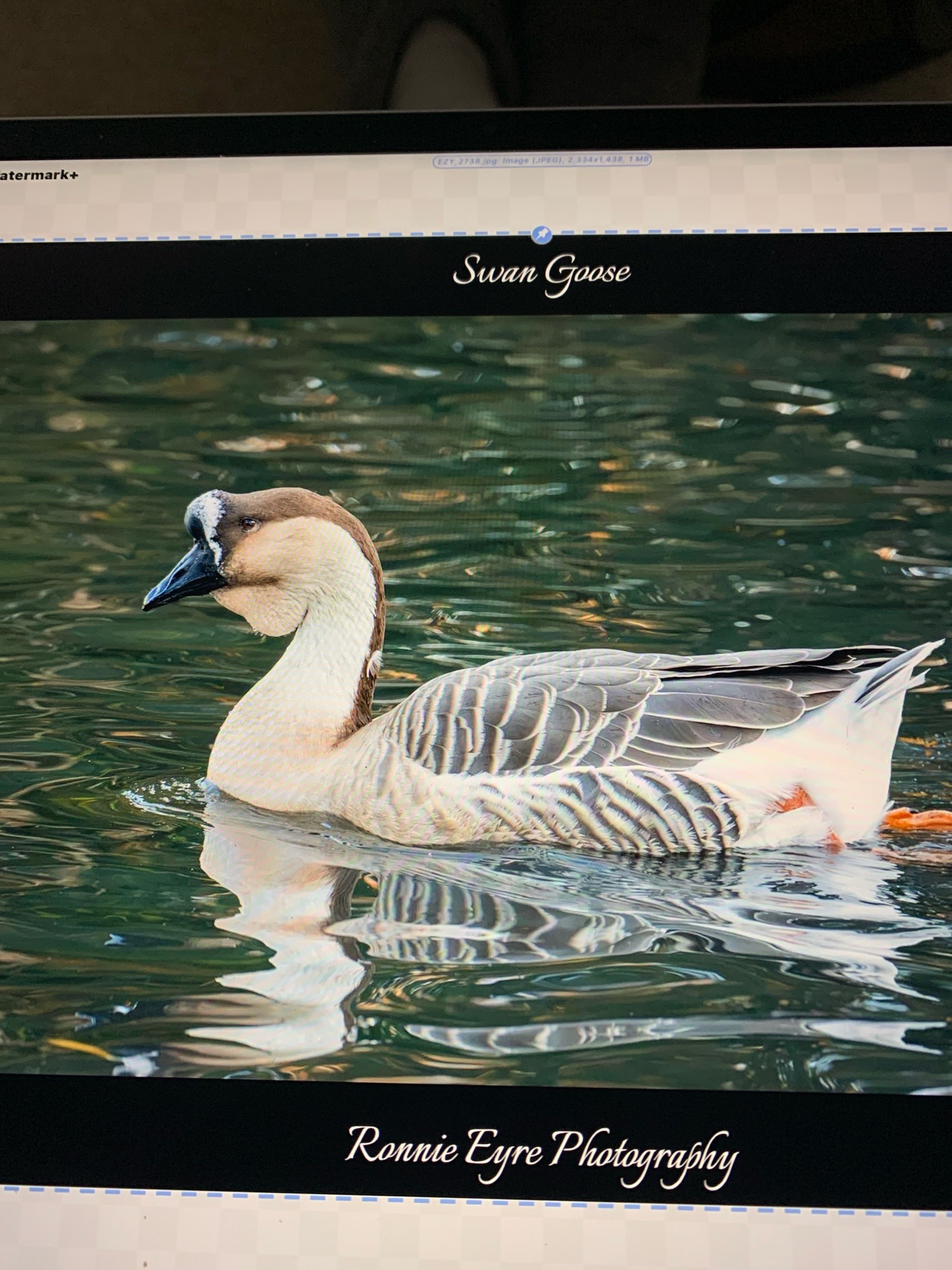
Swan Goose
Anser cygnoid
A large, elegant goose with a distinctive long, heavy black bill, a sloping forehead, and a striking two-toned neck pattern. It is often gregarious and spends considerable time grazing on land as well as swimming.
Explore Swan Goose in the encyclopedia →Identify your own birds.
Get a report just like this from any photo or call, free.
Plumage & appearance
Adults have a brown crown and hindneck with a contrasting pale cream or whitish foreneck and face. A distinct white band often rings the base of the black bill. The upperparts are greyish-brown with paler feather fringes giving a barred appearance, and the underparts are paler grey-brown with a whitish belly and vent. Sexes are similar in plumage, though males tend to be slightly larger with a longer bill.
Key field marks
Long, dark, heavy bill with a white base; distinct dark brown crown contrasting with a pale face and neck; grey-brown barred upperparts.
Size & weight
Length: 81-94 cm, Wingspan: 140-165 cm, Weight: 2.8-3.5 kg
Voice — call & song
A loud, echoing, trumpet-like honk, often described as a nasal 'ah-ong' or 'ka-ah', which resembles the call of a domestic goose.
Diet & foraging
Primarily vegetarian, feeding on grasses, sedges, aquatic plants, roots, and occasionally agricultural grains. Forages by grazing on land and dabbling in shallow water.
Habitat
Inhabits river valleys, freshwater lakes, marshes, swampy meadows, and steppes, often near water bodies surrounded by open grasslands or reeds.
Migration & movement
Migratory. Leaves breeding grounds in autumn to winter in large flocks along the Yangtze River valley and coastal wetlands of eastern China.
Nesting & breeding
Nests on the ground in a shallow depression lined with down and plant material, usually hidden in tall grass or reed beds near water. Lays a clutch of 4 to 8 eggs, incubated primarily by the female with the male standing guard.
Similar species
Domestic geese derived from the Swan Goose (such as the Chinese and African geese) can look very similar, often possessing a pronounced basal knob on the bill. Wild Greylag Geese can also overlap in range but lack the distinct dark cap and starkly contrasting pale neck.
Ecological significance
Acts as a primary consumer in wetland and grassland ecosystems, influencing vegetation structure and nutrient cycling through grazing and seed dispersal.
Conservation status
Endangered, with a declining population trend primarily driven by habitat loss, hunting, and overgrazing of breeding grounds.
Observation tips
Look for them in shallow freshwater lakes, marshes, river valleys, and adjacent agricultural fields. In parks, they can be quite approachable, but wild populations are wary and require spotting scopes for close observation.
Interesting facts
The Swan Goose is the wild ancestor of several domestic goose breeds, most notably the Chinese and African domestic geese. Despite its domestication worldwide, its wild populations are facing severe threats and are classified as endangered.
More like this