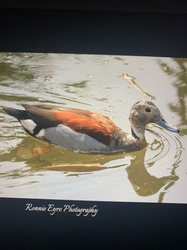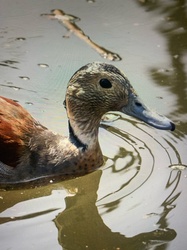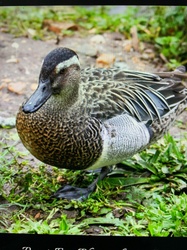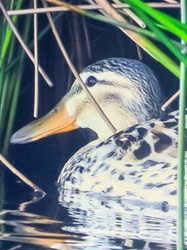
Order: Anseriformes, Family: Anatidae
Knob-billed Duck
Sarkidiornis melanotos
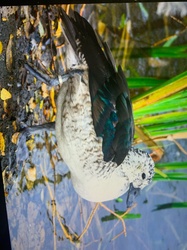
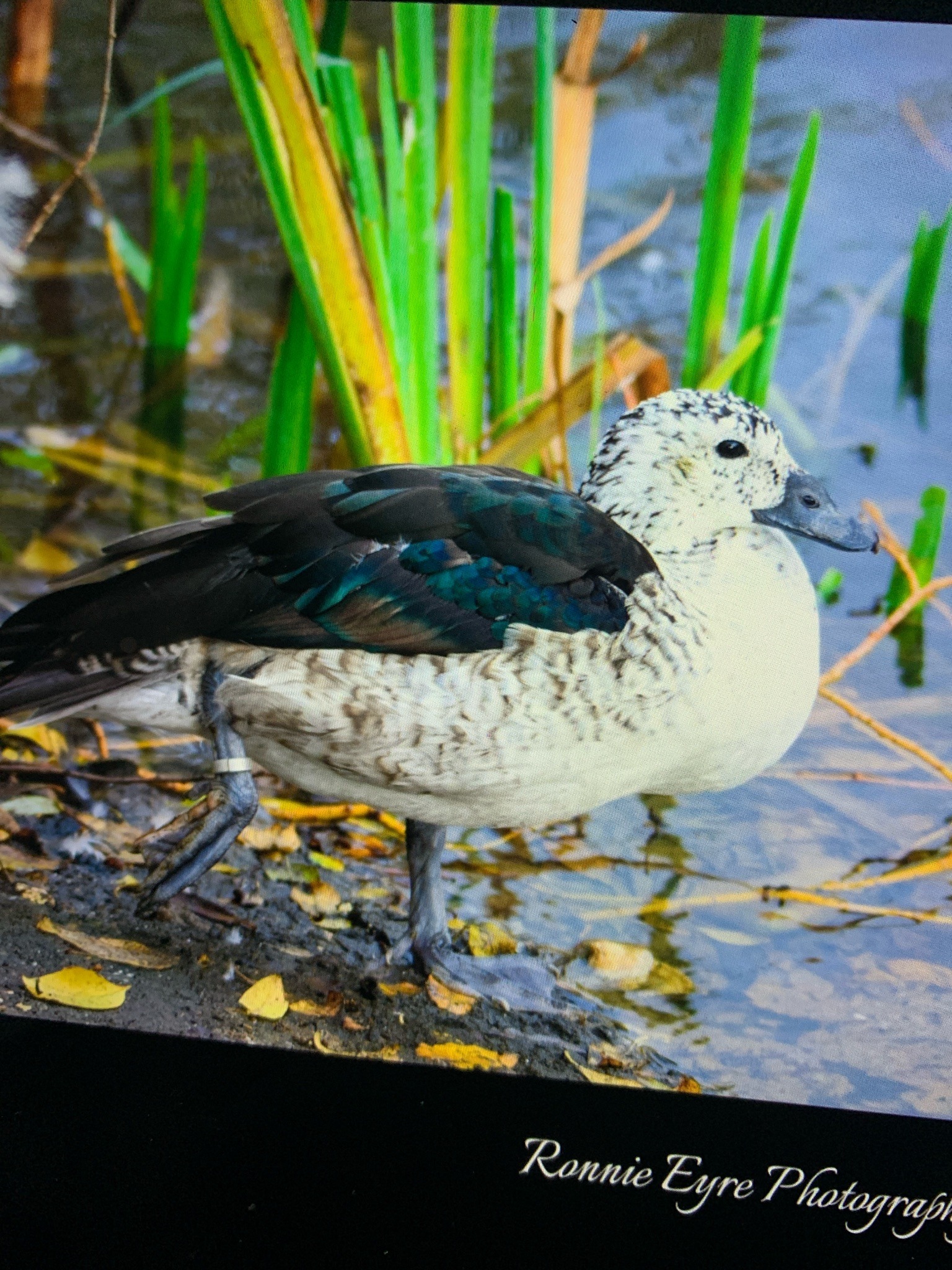
A large, goose-like perching duck easily recognized by its upright posture, striking black-and-white plumage, glossy dark back, and the prominent black knob on the male's bill.
Explore Knob-billed Duck in the encyclopedia →Identify your own birds.
Get a report just like this from any photo or call, free.
Plumage & appearance
Adults have a white head and neck speckled with dark spots, a glossy black back with iridescent green, blue, and purple hues, and whitish underparts. Males are significantly larger and feature a distinctive fleshy black comb (knob) on the bill during the breeding season. Females are smaller, lack the comb, and are duller in appearance.
Key field marks
White head and neck with fine dark flecking, iridescent black upperparts, white underparts, and the prominent fleshy black bill knob in breeding males.
Size & weight
Length: 56-76 cm (22-30 inches); Wingspan: 140-160 cm; Weight: 1.3-2.6 kg (males are notably heavier than females).
Voice — call & song
Generally quiet, but males emit a low, gruff whistle or grunt during courtship; females may give a low quack.
Diet & foraging
Primarily vegetarian, feeding on grasses, seeds, water plants, and fallen grain, supplemented occasionally by small fish, frogs, and insects.
Habitat
Freshwater wetlands, flooded grasslands, shallow lakes, marshes, and reservoirs, often with adjacent wooded areas suitable for perching.
Migration & movement
Mainly resident with some regional nomadic or partial migratory movements following seasonal water availability and rainfall.
Nesting & breeding
Nests in tree cavities, tall reed beds, or occasionally on the ground. Clutches usually consist of 7 to 15 yellowish-white eggs. Incubation is performed primarily by the female.
Similar species
Other large perching ducks or geese, but the combination of the black-and-white patterned head, dark glossy back, and especially the male's fleshy bill knob makes it unmistakable.
Ecological significance
As consumers of aquatic vegetation, seeds, and small organisms, they help regulate plant growth in wetlands and contribute to seed dispersal.
Conservation status
Least Concern, with a generally stable global population trend.
Observation tips
Look for them perched in dead trees near water or wading in shallow flooded grasslands and wetlands. Patience is key as they can be wary.
Interesting facts
Despite being ducks, they possess strong claws and frequently perch high up in trees, earning them the classification of perching ducks.
More like this