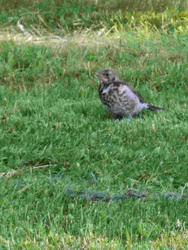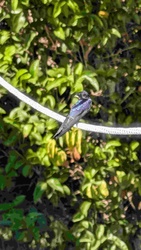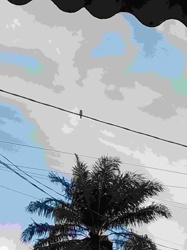
Order: Passeriformes; Family: Hirundinidae
Barn Swallow
Hirundo rustica
A small, agile songbird known for its deeply forked tail and swift, acrobatic flight. It is often seen nesting on man-made structures and foraging for insects over open fields.
Explore Barn Swallow in the encyclopedia →Identify your own birds.
Get a report just like this from any photo or call, free.
Plumage & appearance
Adults have steely blue-black upperparts and wings. The forehead and throat are rufous (cinnamon-colored), separated from the off-white or buff underparts by a dark blue-black breast band. Females are slightly paler. Immatures are duller with shorter tail streamers.
Key field marks
Deeply forked 'swallow-tail' with long outer streamers; rufous throat and forehead; steely blue back; dark breast band.
Size & weight
Length: 15–19 cm (5.9–7.5 in); Wingspan: 32–35 cm (12.6–13.8 in); Weight: 16–22 g.
Voice — call & song
A series of liquid, twittering warbles ending in a dry rattle or 'che-che-che'. Alarm call is a sharp 'twit-twit'.
Diet & foraging
Strictly insectivorous. They catch flies, beetles, bees, and wasps in mid-air (aerial insectivores).
Habitat
Open areas such as meadows, farmland, and marshes, usually near a water source and man-made structures for nesting.
Migration & movement
Long-distance migrant. North American populations winter in Central and South America.
Nesting & breeding
Builds cup-shaped nests made of mud pellets and grass, lined with feathers. Typically nests on ledges, under eaves, or on bridge girders. Lays 3-7 eggs.
Similar species
Cliff Swallows have shorter, square tails and a pale rump. Tree Swallows have white throats and emerald or blue-green upperparts.
Ecological significance
Provides vital pest control by consuming large quantities of flying insects. They serve as bioindicators for agricultural health.
Conservation status
Least Concern (IUCN), though some regional populations are showing declines due to habitat loss and pesticide use.
Observation tips
Look for them swooping low over fields or water. They are easily identified by their 'swallow-tail' and metallic blue backs when they bank in the sun. Check under eaves of barns and porches for nests.
Interesting facts
Legend holds that the Barn Swallow stole fire from the gods; in retaliation, a god threw a firebrand that singed its middle tail feathers, creating the iconic fork.
More like this