Order: Passeriformes; Family: Hirundinidae
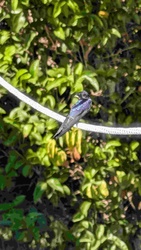
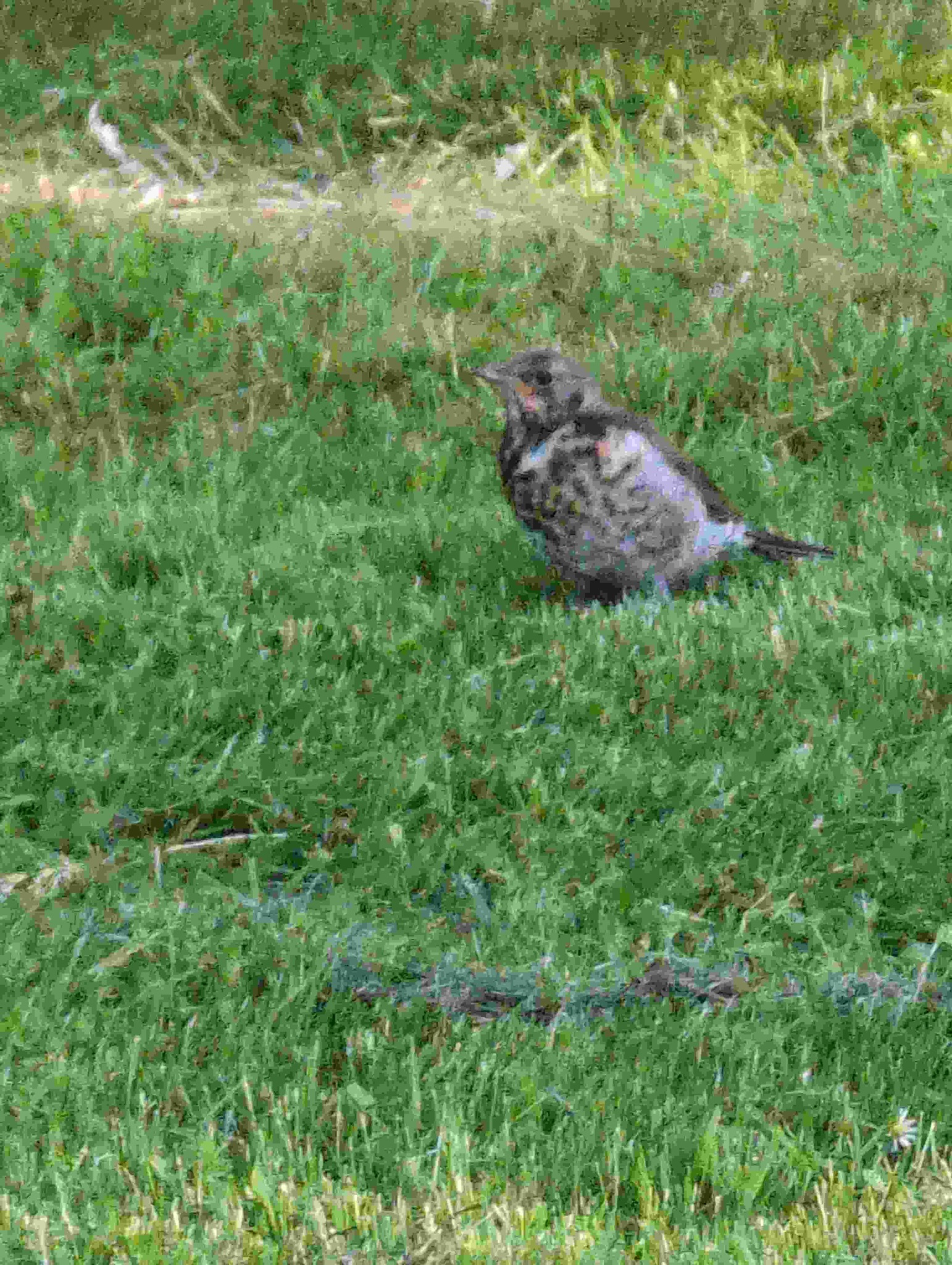
Barn Swallow (Juvenile)
Hirundo rustica
A small, agile songbird known for its graceful flight and long, pointed wings. Juveniles appear scruffier and lack the vibrant colors and long tail fork of adults.
Explore Barn Swallow (Juvenile) in the encyclopedia →Identify your own birds.
Get a report just like this from any photo or call, free.
Plumage & appearance
Juveniles have duller, more brownish upperparts compared to the metallic blue of adults. Their throat and forehead are a paler buff or cinnamon rather than the deep rufous red of adults. The long 'swallow-tail' streamers are absent or very short in juveniles.
Key field marks
Pointed wings, slightly forked tail (shorter in juveniles), buff-colored throat and underparts, and persistent perching on wires.
Size & weight
Length: 15-19 cm (including tail); Wingspan: 32-35 cm; Weight: 17-20 g.
Voice — call & song
A variety of soft, twittering warbles and a sharp 'vit' or 'che-vit' contact call. Also gives a high-pitched 'svee-er' alarm call.
Diet & foraging
Strictly insectivorous. They forage by catching insects in mid-air (aerial hawking), often flying low over fields or water.
Habitat
Open areas such as meadows, farmland, and near bodies of water. They rely heavily on man-made structures for nesting.
Migration & movement
Long-distance migrant. Northern populations winter in South America, Southern Africa, and South Asia.
Nesting & breeding
Builds cup-shaped nests out of mud pellets and grass, lined with feathers, usually on ledges of barns, bridges, or houses. Usually lays 4-5 eggs.
Similar species
Cliff Swallow (squared tail, pale rump) and Tree Swallow (pure white underparts, different blue-green sheen). Juvenile Barn Swallows are distinguished by their buffy throats and slightly forked tails.
Ecological significance
Highly beneficial as an insectivore, consuming large quantities of flying insects including flies, mosquitoes, and beetles. Their presence often indicates a healthy local ecosystem.
Conservation status
Least Concern (IUCN), though populations in some regions show declines due to habitat loss and pesticide use.
Observation tips
Look for them near open water, meadows, or farm buildings. They are often seen perched on wires or fences, especially as fledglings waiting for parents to feed them.
Interesting facts
Barn Swallows used to nest primarily in caves, but they have adapted so well to human structures that they now rarely nest in natural sites. The presence of swallows was historically considered a sign of good luck by farmers.
More like this