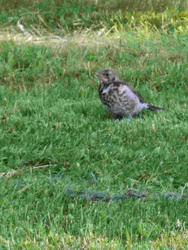
Order: Passeriformes; Family: Hirundinidae
Barn Swallow
Hirundo rustica
A small, agile songbird known for its deeply forked tail, acrobatic flight, and habit of nesting on man-made structures.
Explore Barn Swallow in the encyclopedia →Identify your own birds.
Get a report just like this from any photo or call, free.
Plumage & appearance
Steely blue-black upperparts; cinnamon-buff to rufous underparts; deep chestnut-red forehead and throat. Sexes look similar, but males have longer outer tail feathers.
Key field marks
Deeply forked tail with long outer streamers; dark throat patch; iridescent blue back.
Size & weight
Length: 15-19 cm (including tail); Wingspan: 29-32 cm; Weight: 17-20 g.
Voice — call & song
A cheerful, rapid-fire warble ending in a mechanical-sounding rattle or click.
Diet & foraging
Strictly insectivorous; feeds on flies, beetles, bees, and wasps caught in mid-air.
Habitat
Open areas such as meadows, fields, and ponds, often near human settlements with barns or bridges for nesting.
Migration & movement
Long-distance migrant; breeds in the Northern Hemisphere and winters in South America, Africa, and Southern Asia.
Nesting & breeding
Builds a cup-shaped nest of mud and straw lined with feathers, usually on a vertical wall or ledge; clutch size 3-7 eggs.
Similar species
Cliff Swallow (shorter, square tail and pale rump) and Tree Swallow (clean white underparts and greener back).
Ecological significance
Acts as a natural pest control by consuming large quantities of flying insects; serves as an indicator species for environmental health.
Conservation status
Least Concern (IUCN), though populations are declining in some regions due to habitat loss.
Observation tips
Look for them perched on wires or fences near open fields and water, or flying low over grass to catch insects.
Interesting facts
The Barn Swallow is the most widespread species of swallow in the world and is the national bird of Estonia.
More like this