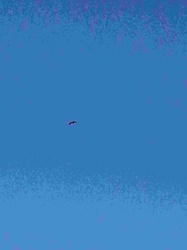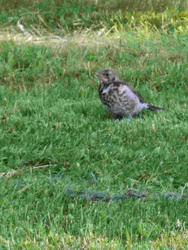
Order: Passeriformes, Family: Hirundinidae
Purple Martin
Progne subis
The largest North American swallow, known for its strong, graceful flight and habit of congregating in colonies, especially in human-made martin houses.
Explore Purple Martin in the encyclopedia →Identify your own birds.
Get a report just like this from any photo or call, free.
Plumage & appearance
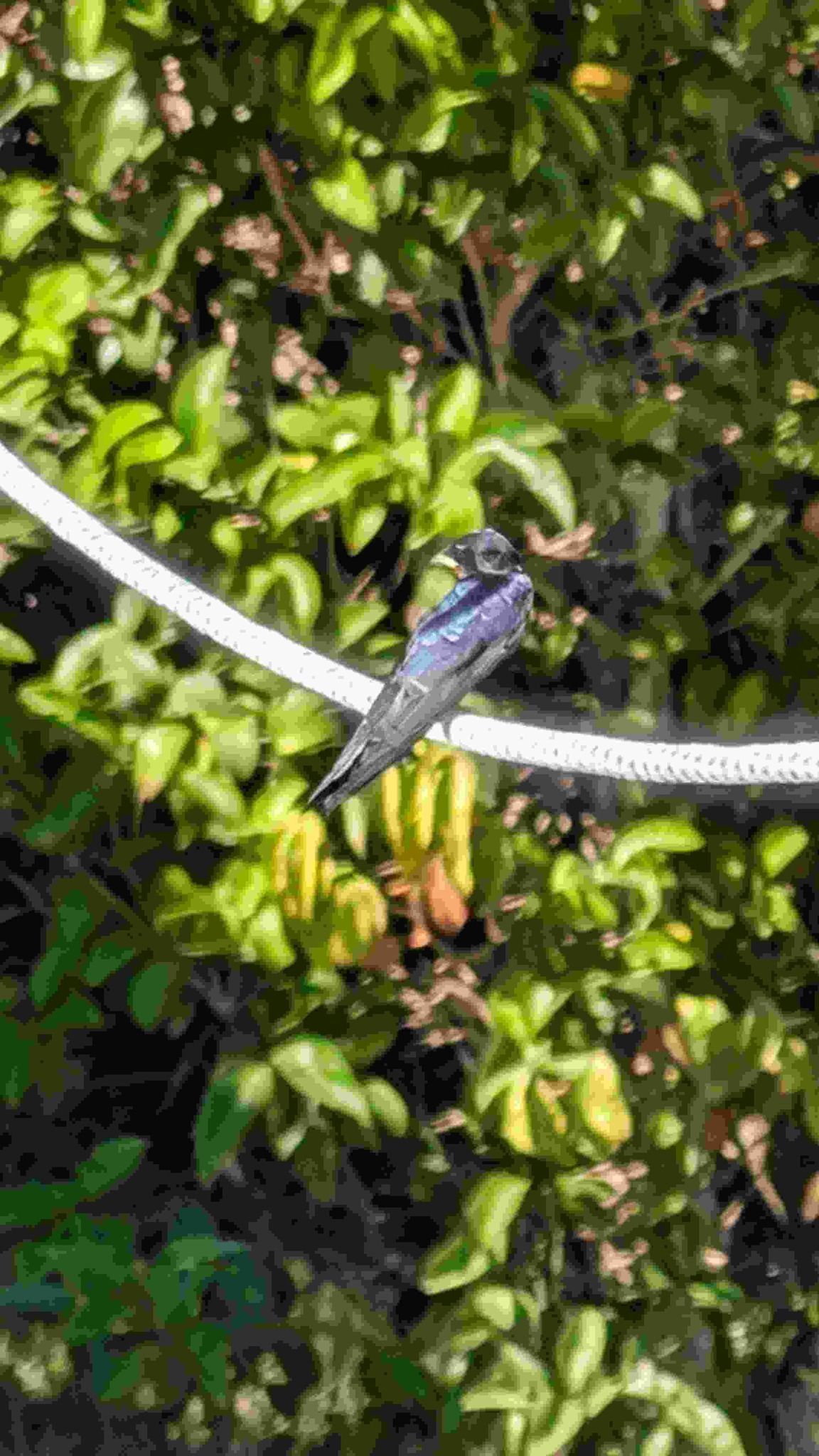
Adult males have glossy, dark purplish-blue plumage all over with brownish-black wings and tail. Adult females and juveniles have a duller appearance with dark gray-blue upperparts, a pale gray throat and breast, and a mottled whitish belly.
Key field marks
Large swallow size, forked tail, robust bill, and (in adult males) deep glossy purple-blue body; females show contrasting pale underparts.
Size & weight
Length: 19-22 cm, Wingspan: 38-41 cm, Weight: 45-60 g
Voice — call & song
A rich, gurgling warble often described as a series of bubbling or chattering notes given in flight or from a perch.
Diet & foraging
Consists almost entirely of flying insects including beetles, flies, dragonflies, and butterflies, captured exclusively on the wing.
Habitat
Open country near water sources, forest clearings, agricultural fields, and urban or suburban areas with artificial nesting structures.
Migration & movement
Neotropical migrant; travels long distances between North American breeding grounds and South American wintering areas.
Nesting & breeding
Social nesters that breed in colonies. They build a cup nest of twigs, leaves, and mud inside cavities, naturally in old woodpecker holes or frequently in multi-compartment human-made houses.
Similar species
Other swallows and martins, but the Purple Martin's larger size and the adult male's completely dark purple-blue coloration distinguish it.
Ecological significance
Acts as a natural insect controller by consuming large quantities of flying insects, helping to manage pest populations.
Conservation status
Least Concern, though populations have experienced localized declines due to competition with invasive species like house sparrows and European starlings.
Observation tips
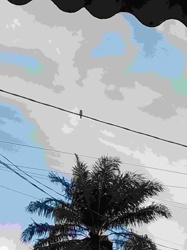
Look up near open areas, lakes, and parks where human-installed multi-compartment martin houses are present. They are often spotted perching on wires or soaring high in circles.
Interesting facts
In North America, the eastern subspecies of the Purple Martin has become almost entirely dependent on human-provided housing for nesting, making it one of the few species closely monitored and managed by citizen scientists known as 'martin landlords'.
More like this