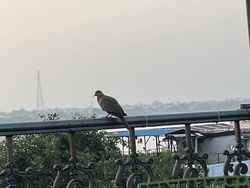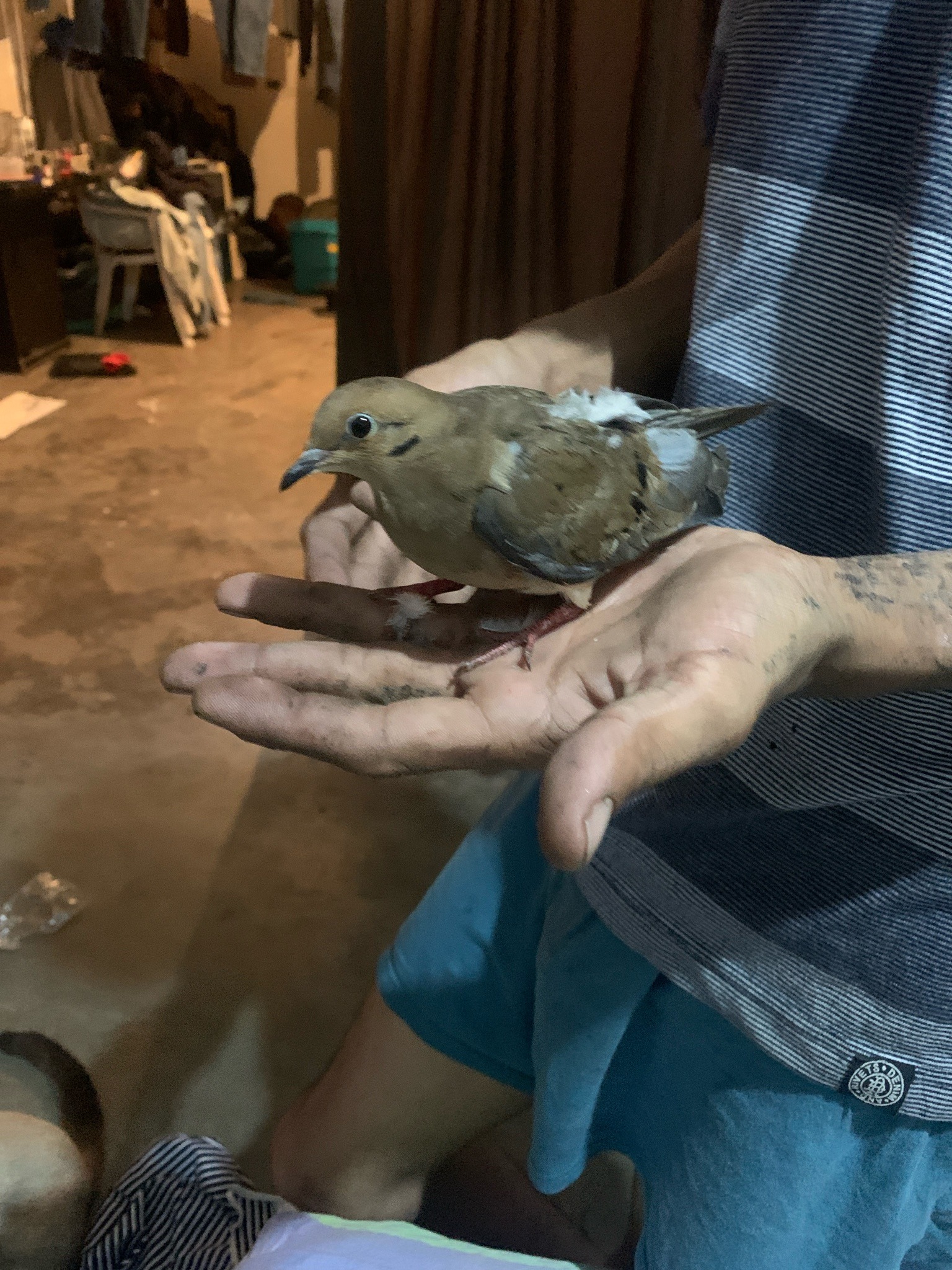
Order: Columbiformes, Family: Columbidae
Mourning Dove
Zenaida macroura
A slender dove with a long, tapering tail, graceful posture, and a mournful cooing call. Often seen walking on the ground in search of seeds.
Explore Mourning Dove in the encyclopedia →Identify your own birds.
Get a report just like this from any photo or call, free.
Plumage & appearance
Light grey-brown overall, with black spots on the wings and dark patches on the face. Males often show a rosy-pink iridescence on the neck, while females are slightly duller and browner.
Key field marks
Long pointed tail with white outer feathers, black spots on the upper wings, and a dark spot below the eye.
Size & weight
Length: 22-34 cm (9-13 in), Wingspan: 37-45 cm (15-18 in), Weight: 85-170 g (3-6 oz)
Voice — call & song
A haunting, sorrowful 'coo-oo, ooo, ooo, ooo' that is often mistaken for an owl hoot.
Diet & foraging
Primarily seeds (99%), including cultivated grains, weed seeds, and occasionally snails.
Habitat
Open country, scattered trees, farm fields, scrub, and suburban areas; avoids dense forests.
Migration & movement
Resident in the southern parts of its range; northern populations migrate south for the winter.
Nesting & breeding
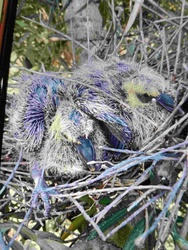
Builds a flimsy platform nest of twigs in trees or shrubs. Usually lays 2 white eggs per clutch, with multiple broods raised per year.
Similar species
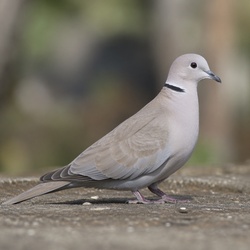
Eurasian Collared-Dove, which is larger, paler, has a square tail, and features a black collar on the neck.
Ecological significance
Acts as an important seed disperser and is a primary food source for many raptors and carnivores.
Conservation status
Least Concern, with a stable and very abundant population
Observation tips
Look along roadsides, open fields, and backyard bird feeders where they regularly gather in flocks on the ground.
Interesting facts
Mourning Doves are one of the most widely distributed and hunted game birds in North America. They can fly at speeds up to 55 mph (88 km/h).
More like this